Quality & Compliance: Industry Certifications
At Bengal Apparel BD, we are dedicated to upholding the highest standards in product quality, ethical labor practices, environmental responsibility, and supply chain security. Our partnerships with certified factories and adherence to international guidelines ensure that your workwear and uniforms are produced responsibly and to your exact specifications.
Below are the key certifications that underpin our operations, explaining what each means and why it’s important for you, our valued customer.
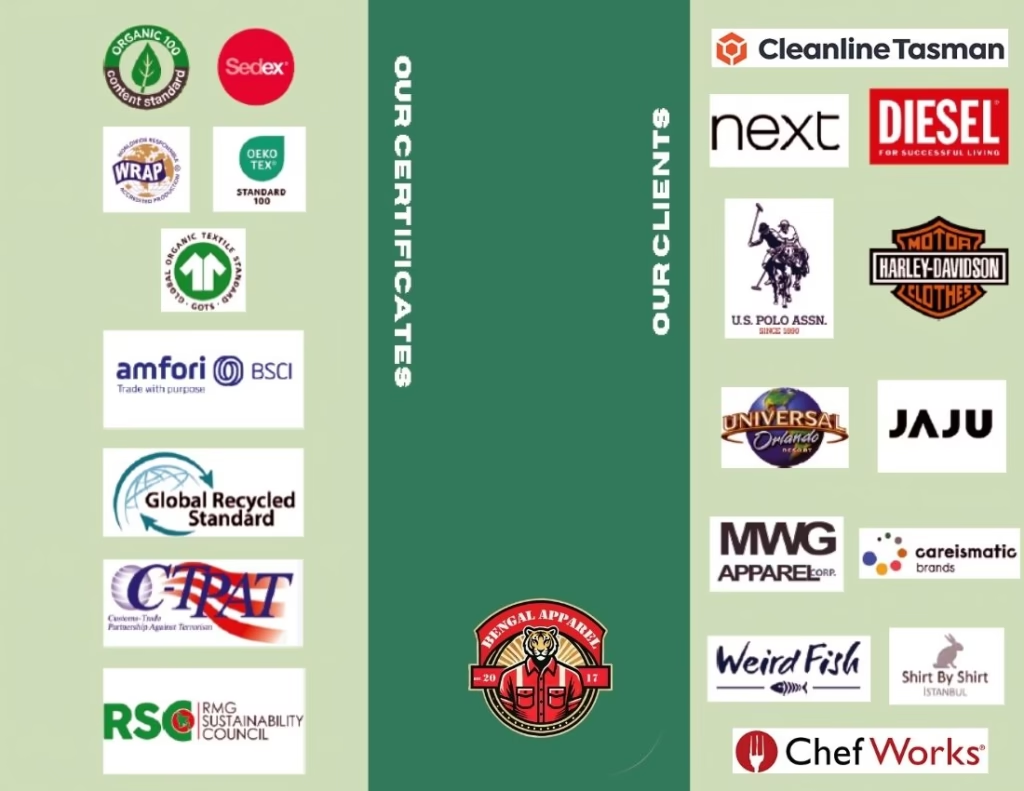
WRAP (Worldwide Responsible Accredited Production)
What it Means: WRAP is a globally recognized independent certification program that promotes safe, lawful, humane, and ethical manufacturing practices worldwide. It rigorously audits factories across 12 principles covering human resources, health and safety, environmental compliance, and customs adherence.
Why it’s Important for You: Partnering with WRAP-certified factories assures you that your workwear is produced under ethical conditions, free from child or forced labor, and in safe, healthy environments. This commitment mitigates reputational risks for your brand and aligns with your corporate social responsibility objectives.
Amfori BSCI (Business Social Compliance Initiative)
What it Means: Amfori BSCI is a leading supply chain management system that helps companies drive social compliance and continuous improvement within their global supply chain. It focuses on fair labor practices, including decent working hours, fair remuneration, no child labor, and a safe working environment.
Why it’s Important for You: Choosing Bengal Apparel BD, with its Amfori BSCI-compliant partners, demonstrates your commitment to ethical sourcing. You can be confident that your uniforms are sourced from factories that uphold international labor standards, ensuring a positive impact on the lives of workers.
OEKO-TEX (STANDARD 100 by OEKO-TEX)
What it Means: STANDARD 100 by OEKO-TEX is an independent testing and certification system for textile raw materials, intermediate, and end products at all stages of production. It rigorously tests textiles for harmful substances, ensuring they are safe for human health.
Why it’s Important for You: This certification guarantees that your workwear is free from harmful chemicals, making it safe and comfortable to wear against the skin. This is particularly crucial for uniforms worn for extended periods or by individuals with sensitive skin, enhancing overall wearer well-being.
Sedex (Supplier Ethical Data Exchange)
What it Means: Sedex is a membership organization that provides a platform for businesses to manage and share ethical supply chain data. It focuses on four key pillars: Labor Standards, Health & Safety, Environment, and Business Ethics.
Why it’s Important for You: Sedex membership enhances transparency and supports ethical sourcing. It means we actively work with our partners to ensure responsible business practices throughout the supply chain, allowing you to confidently procure products from suppliers committed to ethical and social performance.
SMETA (Sedex Members Ethical Trade Audit)
What it Means: SMETA is one of the most widely used ethical audit formats globally, utilized by Sedex members. It provides a standardized and recognized way to assess responsible supply chain practices across the four pillars of Labor, Health & Safety, Environment, and Business Ethics.
Why it’s Important for You: SMETA audits offer a comprehensive and robust assessment of our manufacturing partners’ ethical performance. This provides you with detailed, verified reports confirming compliance with ethical standards, ensuring your products are produced responsibly and sustainably.
Higg Index: A Quick Overview
What it Means:
The Higg Index is a suite of standardized, data-driven tools developed by Cascale (formerly the Sustainable Apparel Coalition, or SAC) to measure and assess environmental and social sustainability performance across the apparel, footwear, and textile supply chain. Launched in 2012, it provides a common framework for evaluating impacts like water and energy use, greenhouse gas emissions, chemical management, waste, labor conditions, health & safety, and wages. Key modules include:
- Higg Facility Environmental Module (FEM) — for factory environmental performance.
- Higg Facility Social & Labor Module (FSLM) — for working conditions and social impacts.
- Higg Materials Sustainability Index (MSI) and Product Module — for material and product-level environmental footprints.
- Higg Brand & Retail Module (BRM) — for overall brand/retailer sustainability.
It enables self-assessment, benchmarking, verification, and transparent sharing of data to drive measurable improvements industry-wide.
Why it’s Important for You:
As a brand, importer, wholesaler, or corporate buyer sourcing workwear and uniforms, the Higg Index matters because it helps you meet rising demands for responsible and transparent supply chains. Many major retailers, brands, and markets (especially in the USA, Europe, Canada, and Australia) now require or prefer suppliers with Higg-verified scores to ensure compliance with sustainability goals, reduce environmental footprints, and uphold ethical labor standards.
It delivers value by:
- Providing credible, comparable data to evaluate and select partners who align with your ESG (Environmental, Social, Governance) targets.
- Supporting risk management, regulatory compliance (e.g., upcoming reporting directives), and avoidance of greenwashing concerns.
- Enabling better decision-making on materials, factories, and programs to lower impacts like carbon emissions or water use—while enhancing your brand reputation with eco-conscious customers and stakeholders.
- Streamlining supplier assessments (reducing audit fatigue) and fostering long-term partnerships with verified, high-performing manufacturers.
In today’s market, Higg Index participation signals commitment to sustainability, helping you differentiate your workwear offerings, attract premium clients, and build trust in a increasingly regulated and conscious industry. If you’re evaluating suppliers or planning sustainable uniform programs, prioritizing Higg-aligned partners is a smart step forward!
RSC (Ready-made Garment Sustainability Council)
What it Means: The RSC is a national tripartite initiative in Bangladesh, involving trade unions, employers, and international brands, dedicated to ensuring the ongoing structural, fire, and electrical safety of garment factories. It oversees factory inspections, remediation, safety training, and a worker complaints mechanism.
Why it’s Important for You: Essential for sourcing from Bangladesh, the RSC assures you that our partner factories meet stringent safety standards. This not only protects the workers producing your garments but also significantly reduces the risk of incidents that could impact your brand’s reputation and supply chain.
C-TPAT (Customs-Trade Partnership Against Terrorism)
What it Means: C-TPAT is a voluntary government-business initiative designed to strengthen and improve overall international supply chain and U.S. border security. Partners agree to implement robust security measures throughout their global supply chains.
Why it’s Important for You: Our adherence to C-TPAT guidelines helps ensure a secure and efficient movement of goods across borders. For customers, this translates to faster customs clearance, reduced risk of delays, and increased predictability and security for the import of your workwear and uniforms.
GOTS (Global Organic Textile Standard)
What it Means: GOTS is the world’s leading processing standard for organic textiles. It covers the entire supply chain, from the harvesting of raw materials through environmentally and socially responsible manufacturing, ensuring the organic status of textiles, including strict ecological and social criteria.
Why it’s Important for You: If you’re seeking environmentally friendly and sustainable uniform options, GOTS guarantees that workwear made from organic fibers (e.g., organic cotton) is genuinely organic throughout its production. This ensures minimal environmental impact and respect for workers’ rights across the entire process.
Organic 100 (Organic Content Standard 100)
What it Means: The Organic Content Standard (OCS) applies to any non-food product containing 95-100% organic material. It provides a chain of custody standard to track and verify the presence and amount of organic material in a final product. It specifically verifies content but does not address processing, manufacturing, or social/environmental aspects beyond the raw material.
Why it’s Important for You: While GOTS certifies the entire process, OCS 100 provides clear verification of the organic material content. This assures customers that their garments indeed contain 100% certified organic raw material, which is vital for those prioritizing the purity of organic fiber content in their workwear.
At Bengal Apparel BD, these industry-leading certifications are more than just badges; they form the foundation of our promise to deliver workwear and uniforms that are safe, ethical, sustainable, and fully compliant with global standards. By partnering with us, you gain peace of mind knowing your products are manufactured responsibly in facilities that prioritize worker welfare, environmental protection, supply chain security, and product safety. Whether you’re building a private-label program, scaling industrial workwear, or sourcing sustainable uniforms for your brand, our certified operations help you meet buyer requirements, strengthen your ESG commitments, protect your reputation, and stand out in a competitive, conscious marketplace. Contact us today to discuss how our quality and compliance framework can support your next workwear project with confidence and reliability.