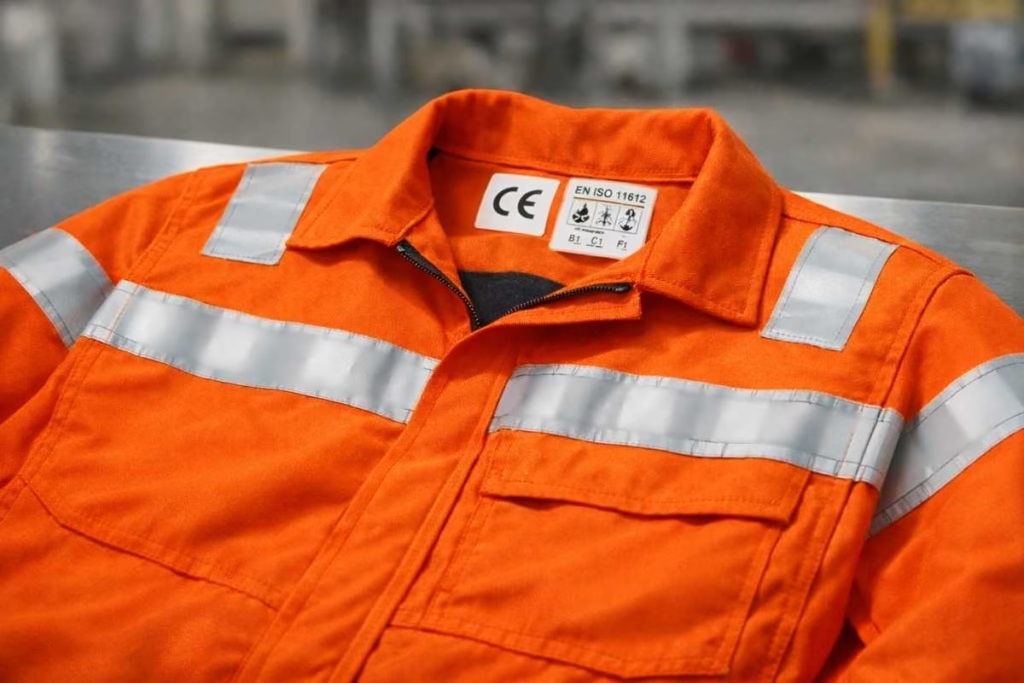
If you are sourcing flame-resistant workwear, EN ISO 11612 is the standard you will see on almost every supplier’s documentation. Most buyers know it as the FR certification. Fewer know what the letter and number codes on the label actually mean, or how to verify that a garment genuinely meets the standard rather than just carries a reference to it.
This guide explains what EN ISO 11612 tests for, how to read the performance codes, what responsibility sits with the fabric mill versus the production factory, and what questions to ask before you place an order.
What EN ISO 11612 Covers
EN ISO 11612 is an international standard for clothing that protects workers against heat and flame. It applies to garments worn in environments where workers face exposure to radiant heat, convective heat, contact heat, molten metal splash, or direct flame contact. Oil and gas, petrochemical, utilities, welding, and metalwork are the most common sectors that require it.
The standard does not test a garment against a single general hazard. It tests against six specific heat and flame scenarios, each with its own performance classification. A garment can pass some tests and not others, which is why the label codes matter.
How to Read the EN ISO 11612 Performance Codes
When a supplier says a garment is certified to EN ISO 11612, the certificate should include a set of letter and number codes. Each letter corresponds to a different test. Each number indicates the performance level achieved.
Here is what each code means:
A1 and A2: Limited Flame Spread These two tests measure how far a flame spreads across the fabric surface and whether the fabric continues to burn after the ignition source is removed. A1 and A2 are separate test methods. Both must be present on a garment intended for environments with flash-fire risk. If only one is listed, check which test method your end-use environment requires.
B: Convective Heat This test measures how well the fabric protects against hot air and flames passing over the garment surface. The number indicates the Heat Transfer Index, or HTI value. B1 is the minimum; B3 is the highest level. The higher the number, the longer the fabric provides protection before the wearer’s skin reaches a pain threshold.
C: Radiant Heat This measures protection against heat radiating from a source, such as a furnace or open flame at a distance. Again, C1 is the minimum, and C4 is the highest. For workers in petrochemical or steel environments with significant radiant heat exposure, a higher C classification is worth specifying.
D: Molten Aluminum Splash relevant for aluminum smelting and casting environments. Not always required in oil and gas programs.
E: Molten Iron Splash Relevant for steel and iron foundry workers. E3 is a common requirement in multi-norm programs for heavy industry. If your end use is oil and gas only, E is less likely to be a core requirement.
F: Contact Heat This tests what happens when the fabric comes into direct contact with a hot surface. F1 is the minimum performance level. Important for workers handling hot pipes, valves, or equipment surfaces.
A garment labeled EN ISO 11612 A1, A2, B1, and C1 covers flame spread, basic convective heat, and basic radiant heat. A garment labelled A1, A2, B2, C2, E3, and F1 covers a wider range of hazards at higher performance levels. The codes tell you exactly what was tested and to what level. A certificate without specific codes is not sufficient documentation for a compliant FR procurement program.
EN ISO 11612 and the Base Standard EN ISO 13688
EN ISO 13688 is the base standard that all protective clothing must meet before any hazard-specific certification applies. It covers ergonomics, material safety, sizing, labeling, and the information that must be included in the garment’s care and user instructions.
A garment certified to EN ISO 11612 must also comply with EN ISO 13688. If a supplier provides an EN ISO 11612 test report but cannot provide evidence of EN ISO 13688 compliance, the garment is not fully certified as a finished product.
Where the Certification Sits: Fabric Mill vs Production Factory
This is the part of EN ISO 11612 sourcing that most buyers do not fully understand until it causes a problem.
The protective performance of an FR garment comes from the fabric, not the factory. The flame resistance, convective heat resistance, and radiant heat resistance are all properties of the textile itself. This means the primary test documentation for EN ISO 11612 performance codes sits at the fabric mill level, not at the garment manufacturer level.
The fabric mill must provide test reports and Technical Data Sheets showing the fabric’s performance against each relevant EN ISO 11612 code. These reports are issued by accredited Notified Bodies such as BTTG, SGS, SATRA, or Centexbel.
The production factory’s responsibility is different. The factory must ensure correct garment construction, seam strength, labeling, and sizing in line with EN ISO 13688. The factory also holds the Declaration of Conformity and the CE Technical File for the finished garment. Without a valid fabric test report from the mill, the factory cannot complete the CE certification process for the garment.
When you ask a supplier for certifications, ask specifically for the fabric mill’s test reports alongside the factory’s CE documentation. One without the other is incomplete.
Inherent FR vs Treated FR: Why It Matters for EN ISO 11612 Compliance
Both inherent FR and treated FR fabrics can achieve EN ISO 11612 certification when tested as new. The difference becomes relevant when you consider performance over the garment’s working life.
Treated FR fabrics carry a flame-resistant chemical finish applied to the base material. This finish can degrade with repeated industrial washing. A treated FR garment that passes EN ISO 11612 when new may not perform to the same level after 50 wash cycles. For workers in continuous high-risk environments such as oil fields and refineries, this is a genuine concern.
Inherent FR fabrics are made from fibres that are naturally flame-resistant at the molecular level. The protection cannot wash out or wear away. The garment performs to the same EN ISO 11612 standard on the day it is first worn and on the last day of its service life. This is why most major oil and gas operators and petrochemical companies specify inherent FR as the minimum requirement for workers in hazardous zones.
For procurement teams building a compliant FR program, the choice between inherent and treated FR affects both the total cost of ownership and the liability exposure over the supply contract period.
What Buyers Should Ask Before Placing an FR Order
Before committing to a supplier for EN ISO 11612 certified workwear, these are the specific documents and answers you should request:
Fabric mill test reports: Ask for the EN ISO 11612 test report from the fabric mill, showing the specific performance codes achieved. The report should be issued by an accredited Notified Body, not a generic lab.
Fabric Technical Data Sheet: This confirms the composition, weight, and construction of the fabric, and cross-references the test results.
Declaration of Conformity: The factory-level document confirming the finished garment meets the relevant EN and ISO standards.
CE Technical File reference: For garments sold into European markets, the factory must hold a CE Technical File. Ask for the reference number and the Notified Body that issued it.
Wash care and user instructions: EN ISO 13688 requires that every certified garment comes with clear instructions on care, washing, and the expected service life of the protective properties.
Inherent or treated FR confirmation: Ask directly which fabric type is being used and request documentation to confirm it.
Industries That Require EN ISO 11612 Certified Workwear
EN ISO 11612 is a mandatory or strongly recommended requirement across the following sectors:
Oil and gas workers in upstream, midstream, and downstream operations face flash fire risk as a daily reality. EN ISO 11612 combined with EN 1149-5 anti-static certification is the standard specification for FR coveralls in this sector. Workers in refineries, offshore platforms, and pipeline operations typically require garments achieving A1, A2, B, and C classifications as a minimum.
Petrochemical and chemical plant workers face similar exposure to flammable materials and heat sources. EN ISO 11612 garments are a site safety requirement at most major facilities globally.
Electric utility workers are increasingly required to hold both EN ISO 11612 and IEC 61482-2 arc flash certification, particularly where workers operate near live equipment.
Welding and metal fabrication workers require EN ISO 11612 alongside EN ISO 11611, with E classifications relevant for those working with molten iron or steel.
Sourcing EN ISO 11612 Certified Workwear from Bangladesh
Bangladesh has become a reliable source for certified FR workwear, including garments meeting EN ISO 11612 to the full range of performance codes. Fabric mills supplying certified FR textiles to Bangladeshi production facilities hold test documentation from internationally recognised Notified Bodies, and the finished garment CE certification process follows the same Module B and Module D pathway as European manufacturers.
Bengal Apparel BD supplies EN ISO 11612 certified flame-resistant workwear to buyers in Europe, North America, the GCC, and Australia. Our FR programs cover inherent FR garments using Nomex and Kevlar blends as well as treated FR programs for lower-risk applications. Full fabric test reports, Technical Data Sheets, and Declarations of Conformity are provided with every order.
If you are evaluating FR workwear for an oil and gas, petrochemical, or industrial program, visit our Flame-Resistant Workwear page or our Oil and Gas FR Coverall page for product specifications and indicative pricing.
Frequently Asked Questions on EN ISO 11612
What is EN ISO 11612? EN ISO 11612 is the international standard for protective clothing against heat and flame. It defines performance requirements across six hazard categories and assigns letter and number codes to the test results. Garments certified to this standard are used in oil and gas, petrochemical, utilities, and metalwork environments.
What do the letter codes on an EN ISO 11612 certificate mean? Each letter represents a different test: A for flame spread, B for convective heat, C for radiant heat, D for molten aluminium, E for molten iron, and F for contact heat. The number next to each letter is the performance level achieved, with higher numbers indicating better protection.
Is EN ISO 11612 the same as flame-resistant certification? EN ISO 11612 is the specific European and international standard for heat and flame protection in workwear. It is the primary certification buyers should look for when sourcing FR workwear for industrial use.
What is the difference between inherent FR and treated FR for EN ISO 11612? Both can achieve EN ISO 11612 certification when tested as new. Inherent FR fabrics maintain their protection permanently because the flame resistance is part of the fibre itself. Treated FR fabrics carry a chemical finish that can degrade with washing over time.
Who issues EN ISO 11612 certificates? Certificates are issued by Notified Bodies, which are independent third-party laboratories authorised to test and certify against European safety standards. Examples include BTTG, SGS, SATRA, and Centexbel.