If you’ve ever looked at hi vis clothing and wondered why some gear is bright yellow while other pieces are blaze orange, you’re not alone. It’s a common question on job sites, in industrial yards, and in roadside work zones.
Both colors are designed to improve visibility. Both are bright. Both are used in safety gear around the world. So why do we see two different colors doing the same job?
The answer is simple. Yellow and orange are both effective, but they perform best in different environments. The real purpose of hi vis clothing is not just brightness. It is contrast. The goal is to stand out clearly from the background so workers can be seen quickly, easily, and from a distance.
Choosing the right color helps you stay visible where it matters most.
Hi Vis Clothing Works Best When It Stands Out
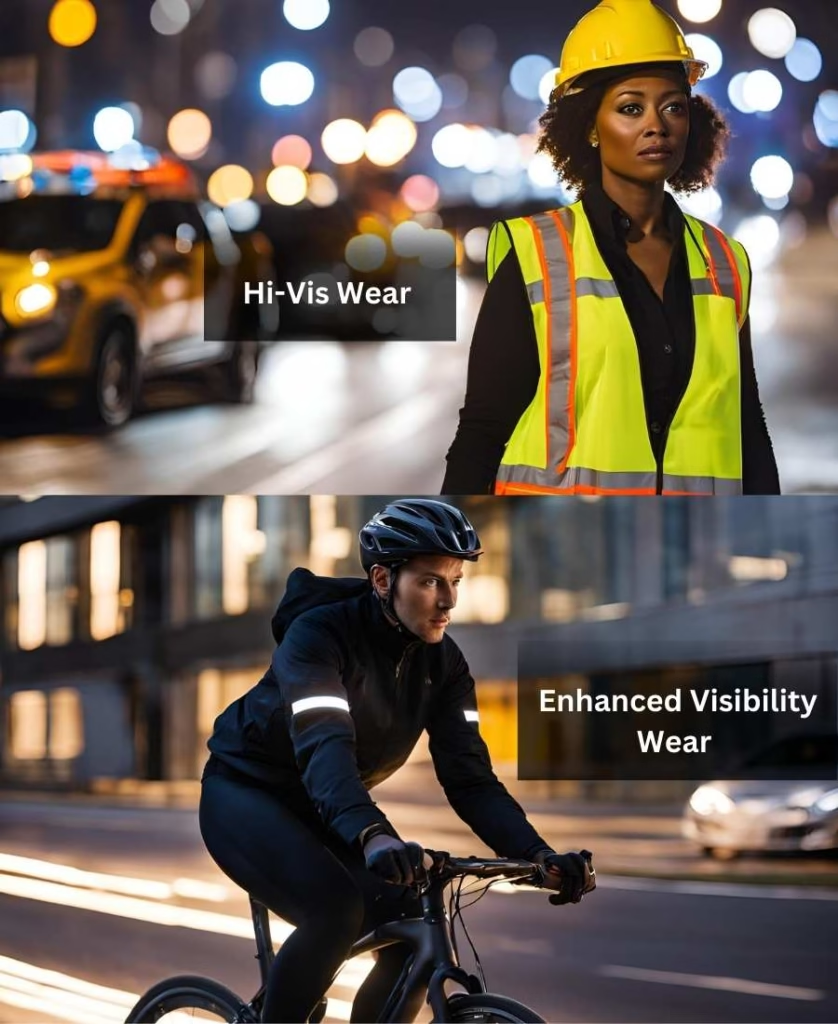
Hi vis clothing is designed for one main purpose: to help workers be seen.
But visibility is not just about using a bright color. It is about contrast with the surroundings. A color that looks bright in one environment can blend in more than expected in another.
That is why hi vis clothing is designed using different base colors, reflective materials, and striping patterns. The idea is always the same: make the worker stand out from their background in daylight, low light, shadows, rain, fog, and changing conditions.
This is also why no single color is perfect for every job site.
Why Yellow Hi Vis Clothing Is So Common
Yellow hi vis clothing is one of the most widely used options across many industries.
It performs extremely well in natural environments. Grass, trees, soil, gravel, sand, and open construction areas create backgrounds where yellow creates strong contrast. It also stays visible in mixed jobsite conditions where the background changes throughout the day.
Construction sites, industrial yards, utilities work, logistics zones, and outdoor operations often use yellow because it remains easy to spot across different surfaces and lighting conditions.
Another advantage of yellow hi vis clothing is its consistency. Whether workers move from shaded areas to open sunlight or from concrete to natural ground, yellow continues to stand out clearly.
That reliability is why yellow is often the default choice on many job sites.
Why Orange Hi Vis Clothing Is Used Around Traffic
Orange hi vis clothing dominates in traffic zones for a reason.
Orange creates strong contrast against asphalt, concrete roads, and busy roadway environments. It is also a color that people naturally associate with caution, hazards, and warning signals.
Drivers are conditioned to recognize orange as a danger or work-zone color. That instant recognition matters when vehicles are moving at speed and reaction time is limited.
This is why orange hi vis clothing is commonly used for:
Road construction
Traffic control
Highway maintenance
Roadside utilities
Rail and transport infrastructure work
In traffic-heavy environments, orange does not just stand out visually. It also triggers a mental response that signals caution and awareness.
Orange vs Yellow Hi Vis Clothing: Which Is Better?
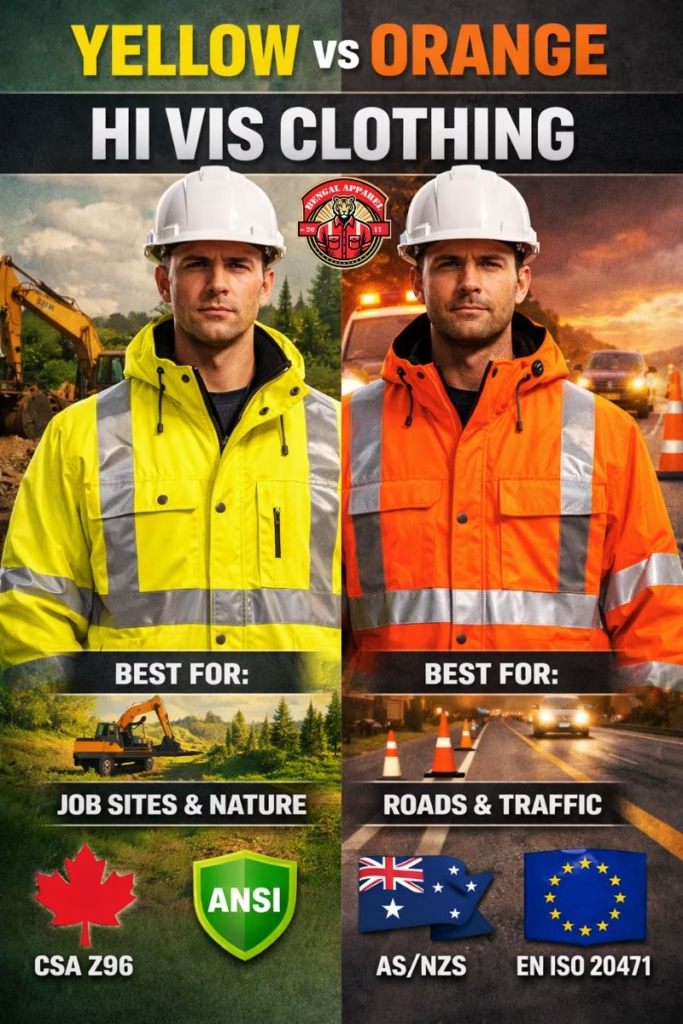
Neither color is automatically better. The safest choice depends on the environment you work in.
Yellow hi vis clothing usually performs best in:
Job sites
Industrial yards
Construction zones
Natural terrain
Outdoor work environments
Orange hi vis clothing usually performs best in:
Roadways
Traffic zones
Asphalt environments
Roadside work
Areas with moving vehicles
If you work across multiple environments, a practical rule is to prioritize your highest-risk exposure. For many workers, that means choosing visibility around traffic first.
Hi Vis Clothing Requirements and EN ISO 20471
In Europe and many international markets, high visibility safety apparel is regulated under the EN ISO 20471 standard. This is the internationally recognized standard for high-visibility clothing, developed under the International Organization for Standardization framework.
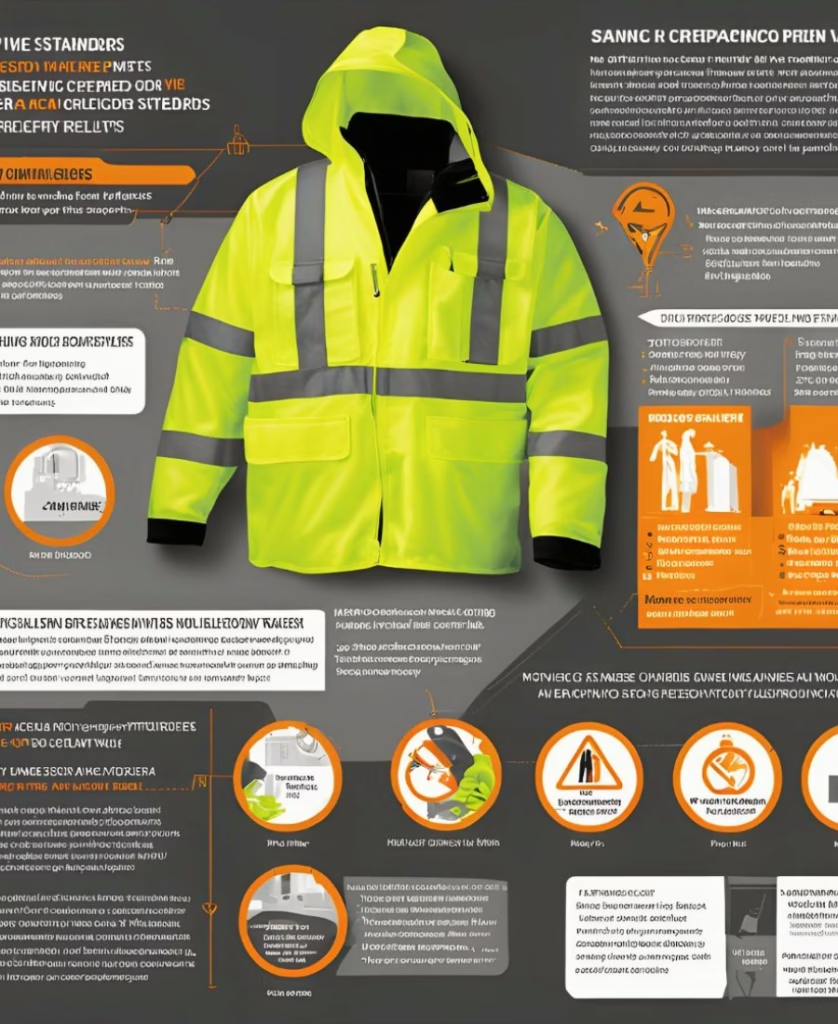
EN ISO 20471 focuses on how effectively a garment makes a worker visible in both daylight and low-light conditions. The standard is based on performance, not just appearance. It includes requirements for:
Approved fluorescent background colors
Minimum surface areas of visible material
Reflective striping quality and placement
Daytime visibility performance
Night-time visibility performance
Garment classification levels based on risk exposure
Under EN ISO 20471, both yellow and orange hi vis clothing can be fully compliant when designed correctly. The standard allows multiple colors because visibility depends on contrast with the surrounding environment, not on one universal color choice.
The system is based on visibility performance classes, meaning garments are graded by how much visible and reflective material they provide, not by their color alone.
This makes the standard flexible for different industries. Yellow may offer better contrast in industrial and natural environments, while orange may perform better in traffic and transport settings.
EN ISO 20471 ensures that hi vis clothing meets strict safety and visibility benchmarks, while the final color choice should always be guided by real working conditions and environmental contrast.
Hi Vis Clothing Requirements and ANSI
In the United States, high visibility standards are commonly based on guidelines set by ANSI (American National Standards Institute), specifically through the ANSI/ISEA 107 standard for high-visibility safety apparel.
ANSI standards focus on how well a garment helps a worker be seen in different environments and lighting conditions. This includes:
The color and brightness of the background fabric
The amount and placement of reflective material
Garment design and coverage area
Daytime and nighttime visibility performance
Like CSA Z96 in Canada, ANSI does not choose one color as “better” than the other. Both yellow and orange hi vis clothing can meet ANSI requirements when designed correctly.
Compliance is based on visibility effectiveness, not color preference. That means safety comes from proper garment design, reflective placement, and contrast performance, not just whether the clothing is yellow or orange.
So when selecting hi vis clothing under ANSI standards, the key decision is still the same: choose the color that gives the strongest contrast in your real working environment.
Hi Vis Clothing Requirements and AS/NZS Compliance
In Australia and New Zealand, high visibility clothing is regulated under the AS/NZS 4602.1 standard, which defines the requirements for high-visibility safety garments used in occupational environments. This standard is developed and maintained by Standards Australia and Standards New Zealand.
AS/NZS 4602.1 focuses on how effectively a garment improves worker visibility, not just the color itself. Key areas of the standard include:
Approved background fabric colors
Daytime visibility performance
Night-time visibility performance
Reflective tape quality and placement
Garment design and coverage zones
Use in different risk environments
Both yellow and orange hi vis clothing can be fully compliant with AS/NZS standards when designed correctly. The standard allows multiple colors because visibility depends on contrast with the environment, not just brightness.
For example, yellow may perform better in natural or industrial environments, while orange may perform better in traffic and roadway settings. AS/NZS compliance ensures the garment meets visibility performance requirements, but the final choice should still be based on where the worker needs to be seen most clearly.
In short, AS/NZS compliance ensures safety performance, while smart color selection ensures real-world visibility.
Hi Vis Clothing Requirements and CSA Z96 in Canada
In Canada, high visibility requirements are commonly based on CSA Z96, the national standard for high-visibility safety apparel.
CSA Z96 focuses on:
Visibility performance
Background material color
Reflective striping placement
Garment design
Overall visibility level
Both yellow and orange hi vis clothing can meet CSA Z96 requirements when designed properly. The standard is not about choosing one color over the other. It is about visibility effectiveness.
This means compliance is possible with both colors. The real decision still comes down to which color helps you stand out best in your specific work environment.
Hi Vis Clothing in Winter: Visibility Changes
Winter creates unique visibility challenges.
Shorter days, low-angle sunlight, fog, snow, frost, and flat lighting all reduce natural contrast. On top of that, winter workwear adds layers and bulk.
Even if you are wearing a hi vis shirt underneath, your visibility depends on what is worn on the outside.
Outerwear becomes the primary visibility layer. Jackets, coats, parkas, and winter coveralls are what others see first. This is especially important when selecting flame-resistant clothing or fire-resistant clothing for cold environments.
Whether you are comparing winter FR clothing, choosing warm FR jackets, or selecting protective outerwear for cold conditions, visibility should remain part of the decision. Safety is not only about protection from hazards. It is also about being seen clearly in poor conditions.
When to Wear Yellow vs Orange Hi Vis Clothing
If you want a simple way to choose, focus on where you need to be seen most often.
Choose yellow hi vis clothing when:
Your work is mainly on job sites
You operate in industrial yards
You work in natural terrain
Your environment changes throughout the day
Choose orange hi vis clothing when:
You work near traffic
You operate on or near roads
Vehicles are moving nearby
You are in asphalt-heavy environments
Stay Visible, Stay Protected
Orange and yellow hi vis clothing both exist for a reason. They both improve visibility, but they are not equally effective in every environment.
Yellow tends to stand out best in nature and on job sites.
Orange tends to stand out best around roads, traffic, and asphalt.
When you choose hi vis clothing based on your work environment, you improve visibility. Better visibility means better awareness. Better awareness means better protection.
If you have questions about high visibility requirements, EN ISO 20471, ANSI standards, AS/NZS Compliance, CSA Z96, or choosing the right hi vis clothing for your workplace, contact us. Bengal Apparel BD is here to help you make safer, smarter choices for your team.