In the global industrial landscape, worker safety is not merely a regulatory requirement. It is a fundamental pillar of operational efficiency. For procurement officers, safety directors, and wholesale distributors, the search for a reliable partner in the Reflective Workwear Pants Supply in Bangladesh has become a priority. As infrastructure projects expand across the Middle East, North America, and Europe, the demand for high-performance bottom wear that meets international safety standards is at an all-time high.
Sourcing these technical garments requires more than just finding a factory. It requires a partner that understands the intersection of textile science, human ergonomics, and legal compliance. At Bengal Apparel BD, we recognize that a pair of reflective trousers is a critical piece of personal protective equipment. This guide explores the technicalities of high-visibility pants and why the Bangladesh manufacturing sector is the premier choice for global B2B supply.
The Evolution of Technical Bottom Wear
Traditionally, workwear pants were viewed as simple durable clothing. However, modern safety protocols have transformed them into complex technical products. High-visibility pants now serve as the primary defensive barrier for workers in low-light environments, such as highway construction zones, airport tarmacs, and heavy-duty logistics hubs.
The shift toward specialized high-visibility clothing manufacturer partners in Bangladesh is driven by the country’s ability to handle technical fabrics. Unlike standard fashion garments, reflective pants must maintain their safety properties through extreme heat, moisture, and repeated industrial laundering. This level of durability is what defines a successful B2B supply chain.
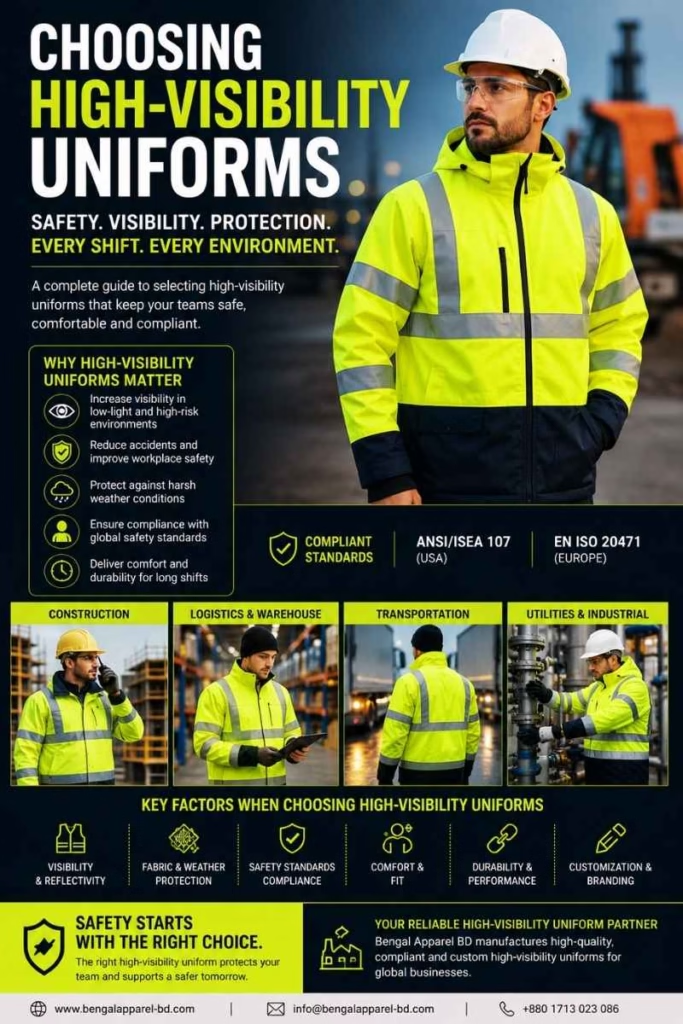
Understanding EN ISO 20471 Compliance
For any international buyer, the primary concern is compliance. In the European Union and many other regions, reflective workwear must adhere to the EN ISO 20471 standard. This standard categorizes garments based on the area of fluorescent material and the area of reflective tape.
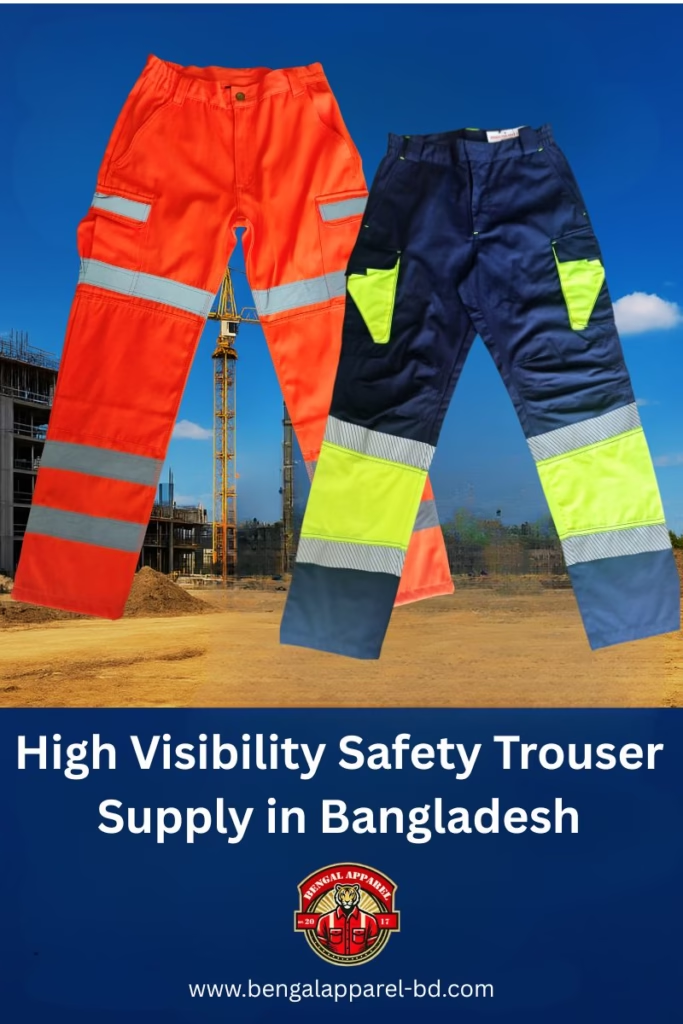
When managing Reflective Workwear Pants Supply in Bangladesh, we focus on Class 1 and Class 2 designations for trousers. Class 2 typically requires a higher surface area of reflective material, often achieved by adding vertical tape strips or multiple horizontal bands. For the buyer, receiving a garment that is labeled as compliant but fails a luminance test during a site audit is a massive legal liability. We mitigate this risk by using third-party tested materials that ensure every batch meets the exact photometric requirements of the intended market.
Technical Specifications: Engineered for the Industrial Environment
To provide the best value in a B2B context, the construction of the garment must prioritize longevity. If a pair of pants fails after only ten washes, the cost-per-wear increases significantly, hurting the buyer’s bottom line. Here are the technical specifications that define our professional-grade reflective trousers.
1. Fabric Composition and Weight
Most industrial workwear pants utilize a heavy-duty poly-cotton twill. We typically recommend a weight of 300gsm (grams per square meter) to ensure the fabric can withstand abrasion against concrete and metal surfaces. The polyester provides strength and color retention, while the cotton ensures breathability and comfort for the worker during long shifts.
2. Retro-Reflective Tape Quality
The reflective tape is the most critical safety component. We use premium glass-bead or micro-prismatic tapes that are triple-stitched to the garment. Many low-cost suppliers use adhesive-only tape that peels off after a few industrial washes. Our supply chain ensures that the tape is rated for 50 or more wash cycles at high temperatures.
3. Reinforced Construction
Industrial workwear is subject to intense physical stress. We incorporate Cordura-reinforced knee-pad pockets as a standard feature for construction and mining clients. Furthermore, we use triple-needle stitching on the crotch and side seams to prevent blowouts. These small technical details separate a professional heavy-duty industrial trouser from a generic garment.
The Manufacturer Advantage: OEM and Private Label Capabilities
One of the greatest benefits of the Reflective Workwear Pants Supply in Bangladesh is the ability to customize garments to specific brand requirements. Global distributors often need unique features that cater to their specific niche.
Through our OEM (Original Equipment Manufacturer) services, we can modify patterns to include:
Specialized Tool Loops: Reinforced loops for hammers, wrenches, or specialized utility tools.
Cargo Pocket Variations: Bellowed pockets with secure hook-and-loop closures for mobile devices and notebooks.
Technical Branding: We offer high-definition reflective heat transfers for company logos, ensuring that branding does not compromise the overall visibility of the garment.
Adjustable Waistbands: Utilizing elasticated sections or heavy-duty belt loops to ensure a secure fit for a diverse workforce.
Navigating the Supply Chain in Bangladesh
Managing a large-scale export order requires precise logistics and quality control. Bangladesh has invested heavily in its infrastructure to support the workwear sector. Our partner factories in Dhaka are equipped with specialized machinery for heavy-fabric stitching and reflective tape application.
When you partner with us, the process is transparent:
Sample Development: We create a prototype based on your technical spec-pack to ensure the fit and features are perfect.
Material Testing: Fabric and tape are sent for third-party safety certifications to verify color fastness and reflectivity.
In-Line Inspection: Our quality control teams monitor the production line daily to catch any deviations in stitching or sizing.
Final Audit: A final random inspection is conducted before the goods are dispatched to the port in Chittagong.
Sustainability in Safety Apparel
Modern B2B buyers are increasingly concerned with the environmental impact of their supply chains. The Reflective Workwear Pants Supply in Bangladesh is evolving to meet these green requirements. We now offer options for recycled polyester blends that maintain the same durability as virgin fibers.
Furthermore, our partner factories adhere to strict social compliance standards, including WRAP and BSCI certifications. This ensures that your safety gear is produced in an ethical environment where workers are treated fairly and safety protocols are followed. In the age of corporate social responsibility, knowing the origin of your garments is just as important as the quality of the stitching.
Why Choose Bengal Apparel BD for Your Reflective Pants Supply?
Sourcing from Bangladesh offers a unique combination of scale and cost-efficiency. However, the difference between a successful shipment and a failed one lies in communication and technical expertise. We act as your on-ground technical partner, bridging the gap between your requirements and the factory floor.
We understand that for a distributor, lead times and consistency are non-negotiable. Whether you are outfitting a regional utility company or a national construction firm, we provide a reliable stream of high-quality reflective trousers. Our focus is on building long-term partnerships where we help you optimize your product line for better performance and higher margins.
Final Procurement Checklist
Before finalizing your next order for reflective workwear pants, consider these four questions:
Is the tape stitched or heat-pressed? Stitched tape is essential for industrial durability.
Does the fabric have a water-repellent finish? This keeps workers dry and prevents the pants from becoming heavy and uncomfortable in the rain.
Are the stress points bartacked? Bartacking at pocket corners and fly openings prevents tearing.
Is there a full technical data sheet? Ensure your supplier provides documentation for all EN ISO 20471 Class 1 and 2 requirements.
Conclusion
The Reflective Workwear Pants Supply in Bangladesh represents a strategic opportunity for global B2B buyers to upgrade their safety apparel programs. By focusing on technical specifications, certified compliance, and ethical manufacturing, you can provide your clients with a product that truly protects.
At Bengal Apparel BD, we are committed to elevating the standard of industrial workwear. We invite you to reach out for a technical consultation or a quote for your next bulk project. Let us help you build a safer, more durable workforce today.
Request a Technical Quote Today If you are ready to discuss your specific requirements for reflective trousers, contact our team. We provide detailed indicative pricing and lead times for bulk orders of 3,000 pieces or more. Experience the difference that technical expertise and a reliable Bangladesh supply chain can make for your business.
Bengal Apparel BD | Dhaka, Bangladesh | Phone: +88 01706561468| Email: hello@bengalapparel-bd.com