Procurement managers and private-label brands sourcing workwear today face a specific problem that this article is written to solve. Sustainable fabric options are multiplying rapidly. Certification terminology is inconsistent across suppliers. And the commercial consequences of choosing the wrong material for a given garment category, whether that means failed wash tests, non-compliance with a tender specification, or a sustainability claim that does not hold up under buyer audit, land directly on the procurement team.
This guide covers the sustainable fabric types available for industrial, protective, and uniform workwear programs, their certified performance credentials, how they map to specific garment categories, and how fabric choice affects your production timeline and total program cost. It is written for buyers placing orders, not for general readers interested in sustainability.
Why Fabric Choice Is Now a Procurement Decision, Not a Marketing Decision
Sustainable fabrics in workwear moved from optional to commercially necessary for most B2B buyers in European, GCC, and North American markets for three concurrent reasons.
Regulatory pressure: The EU CSDDD (Corporate Sustainability Due Diligence Directive) requires importers to document the environmental and social compliance of their supply chain. A sustainable fabric claim without a GRS transaction certificate or GOTS scope certificate is not CSDDD-compliant documentation. It is marketing copy.
Tender specification requirements: GCC oil and gas operators, European infrastructure contractors, and public sector procurement bodies are increasingly embedding certified sustainable material requirements directly into tender specifications. A supplier who cannot provide GRS or OEKO-TEX Standard 100 certification at the fabric level is disqualified before pricing is reviewed.
Client sustainability reporting: Workwear distributors and private-label brands supplying into corporate accounts face growing pressure to provide Scope 3 emissions data and recycled content percentages for ESG reporting. This requires a supplier who can provide certified material data at the transaction level, not just a general sustainability statement.
The fabric decision is the foundation of all three requirements. Getting it right at specification stage prevents costly corrections later.
The Five Certified Sustainable Fabrics Used in Industrial Workwear Programs
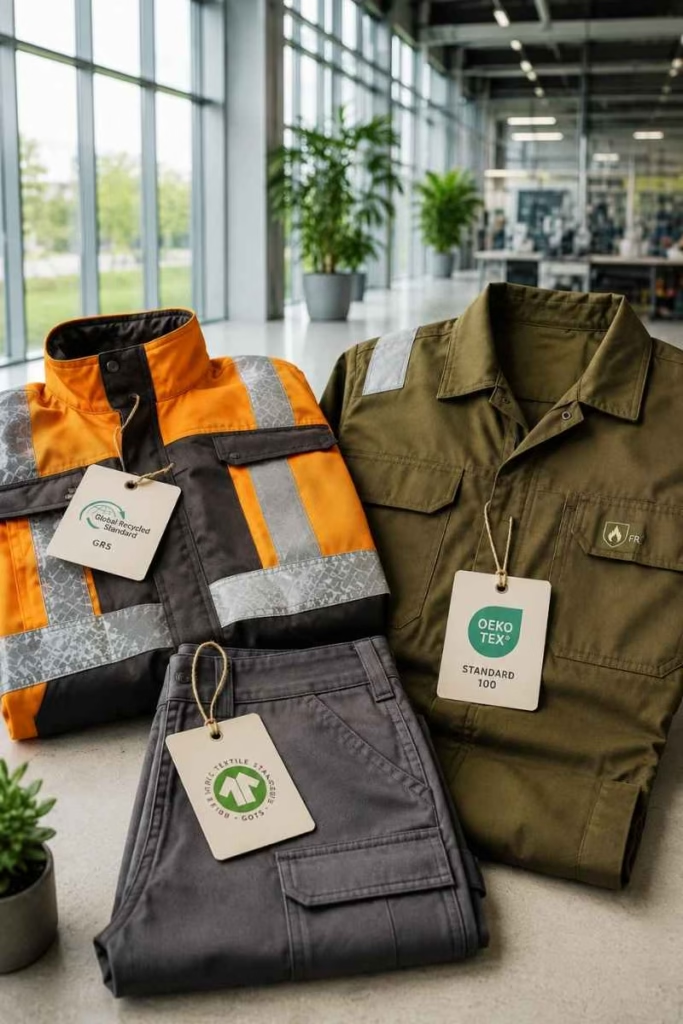
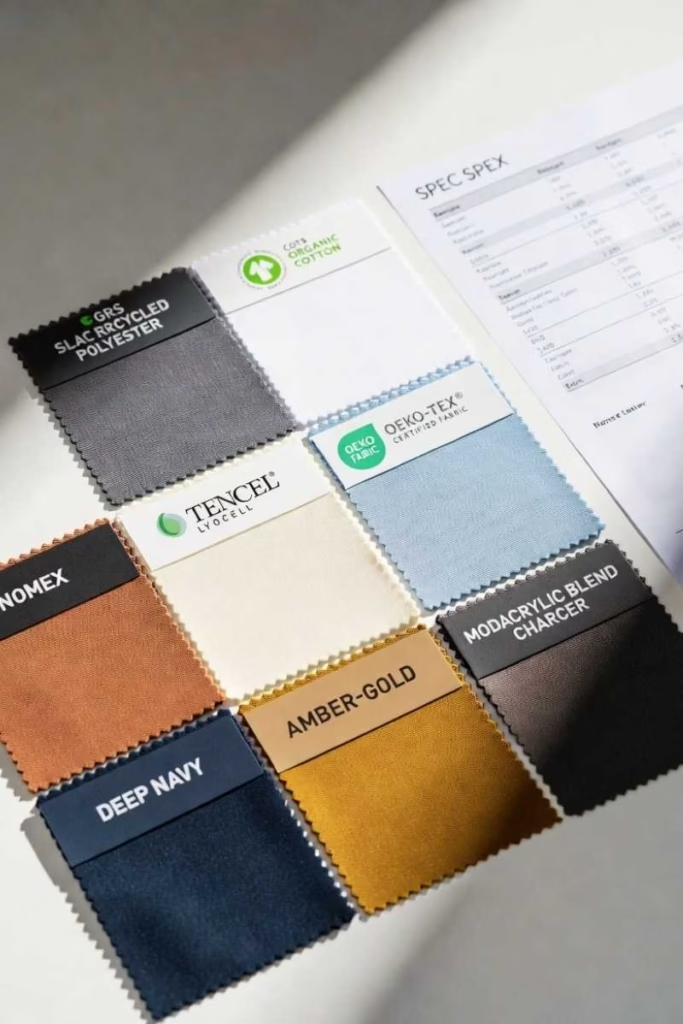
These are the sustainable fabric types currently available for B2B workwear programs from Bangladesh, with their relevant certifications, performance credentials, and the garment categories they are suited to.
1. GRS-Certified Recycled Polyester (rPET)
Source: Post-consumer PET waste, primarily plastic bottles and post-industrial textile offcuts
Certifying standard: Global Recycled Standard (GRS), administered by Textile Exchange
Minimum recycled content for GRS label: 20% recycled content (50% required for the full GRS label)
Certified performance benchmarks:
- Tensile strength: equal to virgin polyester, tested per ISO 13934-1
- Colourfastness to washing: Grade 4-5 per ISO 105-C06
- Pilling resistance: Grade 4 per ISO 12945-2
- Tear resistance: equivalent to virgin polyester per ISO 13937-2
Garment category fit:
| Garment Type | Suitability | Notes |
|---|---|---|
| Hi-vis outer shells (EN ISO 20471) | Excellent | GRS recycled polyester carries fluorescent pigment retention through 50+ wash cycles |
| 5-in-1 jackets and parkas | Excellent | Available in ripstop and Oxford weave constructions |
| Industrial coveralls | Good | Suitable for light to medium duty; not for arc flash or FR applications |
| Corporate and facility uniforms | Excellent | Flat weave constructions available in 200-300 gsm range |
| FR workwear | Not applicable | Recycled polyester does not carry inherent or treated FR certification |
Price premium at volume: 5-12% over standard polyester per metre at 5,000m+
Fabric sourcing lead time from certified mill: 21-28 days
Verification: Request scope certificate (facility) AND transaction certificate (batch). Verify at Textile Exchange certificate database.
GRS recycled polyester is the most commercially accessible certified sustainable fabric for large-volume workwear programs. It is the correct material specification for any program where recycled content claims are required and the garment does not need to meet FR or arc flash standards.
2. GOTS-Certified Organic Cotton
Source: Non-GMO cotton grown without synthetic pesticides or fertilisers
Certifying standard: Global Organic Textile Standard (GOTS), administered by GOTS international working group
Minimum organic content: 70% for “made with organic” label; 95% for “organic” label
Processing requirement: GOTS requires environmental and social compliance at every processing stage, including dyeing and finishing, not only at fibre level
Certified performance benchmarks:
- Tensile strength: tested per ISO 13934-1; slightly lower than conventional cotton in some weave constructions
- Colourfastness: Grade 3-4 per ISO 105-C06 in reactive dye processes (lower than polyester blends)
- Shrinkage: Pre-shrunk constructions available; specify pre-wash or sanforised finish in tech pack
- Breathability: Higher than polyester, suited to warm climate and high-exertion applications
Garment category fit:
| Garment Type | Suitability | Notes |
|---|---|---|
| Healthcare tunics and scrubs | Excellent | Skin-safe, OEKO-TEX compatible, low irritant |
| Hospitality and facility uniforms | Excellent | Premium positioning for client-facing roles |
| Polo shirts and summer shirts | Excellent | 180-220 gsm pique or jersey constructions |
| Hi-vis outer shells | Limited | GOTS organic cotton is not typically used in hi-vis; fluorescent coatings affect GOTS compliance |
| Heavy industrial coveralls | Not recommended | Weight and abrasion resistance insufficient for heavy industrial environments |
Price premium at volume: 15-25% over conventional cotton per metre
Fabric sourcing lead time from certified mill: 28-35 days
Verification: Verify the supplier’s GOTS certificate number directly at global-standard.org public database. If the company name does not appear, they are not currently certified.
GOTS-certified organic cotton is the correct specification for healthcare, hospitality, and corporate uniform programs where client-facing workers wear garments with direct skin contact and where the buyer’s sustainability policy specifically requires organic fibre certification.
3. OEKO-TEX Standard 100 Certified Fabrics
Certifying standard: OEKO-TEX Standard 100
What it tests: Harmful substances in the finished fabric and every component, including threads, zips, buttons, and labels. Tests cover heavy metals, formaldehyde, pH levels, pesticide residues, and over 100 additional parameters.
Product classes relevant to workwear:
- Product Class II: Clothing with direct skin contact for adults (shirts, trousers, coveralls)
- Product Class I: Products for infants and young children (applicable to childrenswear programs only)
OEKO-TEX Standard 100 certifies the safety of the finished material, not the environmental credentials of the production process. It is not a substitute for GRS (recycled content) or GOTS (organic fibre). The three certifications address different claims and can be combined on a single garment.
Garment category fit: All workwear categories. OEKO-TEX Standard 100 is a baseline material safety requirement for most European distribution channels and an increasing number of GCC corporate program specifications.
Verification: Request the certificate number and test report reference. Verify at oeko-tex.com using the certificate search function. Confirm the product class matches your garment category.
For a full explanation of OEKO-TEX product classes and testing scope for workwear programs, click here.
4. TENCEL Lyocell (Lenzing)
Source: FSC-certified sustainably managed wood pulp
Production process: Closed-loop solvent process; over 99% of water and chemicals are recovered and reused in production
Brand certification: Lenzing TENCEL certification, verified by Lenzing AG
Certified performance benchmarks:
- Moisture management: superior to cotton; absorbs 50% more moisture than cotton by weight
- Breathability: high airflow, suited to warm and high-exertion work environments
- Softness: notably softer than cotton on skin contact; low irritant
- Strength when wet: higher wet tensile strength than cotton per ISO 13934-1
Garment category fit:
| Garment Type | Suitability | Notes |
|---|---|---|
| Healthcare scrubs and tunics | Excellent | Moisture management and skin comfort |
| Hospitality and aviation uniforms | Excellent | Drape and appearance retention |
| Summer-weight corporate uniforms | Excellent | Breathable in warm climates |
| Heavy industrial coveralls | Not recommended | Insufficient abrasion resistance |
| FR workwear | Not applicable |
Price premium at volume: 20-30% over standard cotton per metre
Fabric sourcing lead time: 28-42 days; TENCEL-certified fabric is available through Lenzing-accredited mills in Bangladesh’s supply chain
TENCEL lyocell is the correct specification for programs supplying into sectors with high physical comfort and hygiene requirements, particularly healthcare, aviation, and premium corporate uniform programs.
5. Inherent FR Fabrics: Nomex, Kevlar, and Modacrylics
Inherent FR fabrics are not commonly categorised in sustainability discussions, but they meet the most important sustainability criterion for protective workwear programs: a single garment that performs correctly across its entire service life without re-testing, replacement for protection failure, or retreatment.
Nomex/Kevlar blend (93/5/2):
- Certifications: EN ISO 11612 (heat and flame), EN 1149-5 (anti-static), EN ISO 13688 (general requirements)
- FR protection: permanent; does not diminish with washing
- Service life: 5+ years under regular industrial use
- Compared to treated FR cotton: treated FR protection degrades after approximately 50 industrial wash cycles, requiring garment replacement for protection compliance at 12-18 month intervals
Modacrylic blends (Protex, Kanecaron):
- Certifications: EN ISO 11612, IEC 61482-2 (arc flash)
- Applications: electrical utility workwear, arc flash programs
- Sustainability positioning: longer service life than treated alternatives reduces per-worker waste output over a 3-year program cycle
For buyers supplying into oil and gas, electrical utility, or petrochemical sectors in the GCC or Europe, inherent FR fabric is frequently mandatory at the specification level, not optional. The longer service life of inherent FR garments reduces the total volume of garments produced, transported, and disposed of over a program cycle, which is a measurable sustainability outcome.
Fabric Selection Decision Matrix for B2B Buyers
Use this matrix to match your garment category and buyer requirement to the correct certified sustainable fabric specification.
| Garment Category | Primary Requirement | Recommended Fabric | Key Certification |
|---|---|---|---|
| Hi-vis jacket / 5-in-1 | Recycled content claim | GRS recycled polyester | GRS transaction cert |
| Industrial coverall (non-FR) | Recycled content + safety | GRS recycled polyester | GRS + OEKO-TEX S100 |
| FR coverall (oil and gas) | Permanent FR protection | Nomex/Kevlar 93/5/2 | EN ISO 11612 + EN 1149-5 |
| Arc flash coverall | Arc rating compliance | Modacrylic blend | IEC 61482-2 + EN ISO 11612 |
| Healthcare tunic / scrub | Skin safety + comfort | GOTS organic cotton or TENCEL | GOTS or OEKO-TEX S100 |
| Hospitality / aviation shirt | Appearance + sustainability | TENCEL or GOTS cotton | OEKO-TEX S100 |
| Corporate polo / summer shirt | Organic content claim | GOTS organic cotton | GOTS transaction cert |
| Heavy winter parka | Recycled insulation + shell | GRS recycled polyester shell + recycled fill | GRS scope + transaction cert |
This matrix reflects the fabric options Bengal Apparel BD currently sources from certified mills in Bangladesh and through verified supply chain partners. Request a Certified Fabric Specification Sheet
How Sustainable Fabric Choice Affects Your Production Timeline
This is the practical sourcing constraint that procurement managers need to plan for and that no supplier communication typically addresses upfront.
Standard workwear programs from Bangladesh operate on a 75-day lead time from sample approval to FOB Chittagong shipment. Certified sustainable fabric programs add fabric procurement time at the front end. Here are the realistic timeline impacts by fabric type:
| Fabric Type | Certified Mill Lead Time | Impact on Total Lead Time |
|---|---|---|
| GRS recycled polyester | 21-28 days | Minimal if planned; adds 0-7 days if stock available |
| GOTS organic cotton | 28-35 days | Plan for 10-14 additional days vs. standard cotton |
| TENCEL lyocell | 28-42 days | Plan for 14-21 additional days |
| Nomex/Kevlar blend | 35-45 days | Standard for FR programs; plan 90-day total lead time |
| Modacrylic blend | 35-50 days | Plan 90-100 day total lead time for arc flash programs |
The key planning principle: order the fabric before finalising sampling, not after. For programs using GOTS organic cotton or TENCEL, the certified fabric needs to be committed at the point the tech pack is approved, not after pre-production samples are signed off. This is a standard practice at Bengal Apparel BD for all certified material programs. It prevents the most common cause of lead time overruns in sustainable workwear sourcing.
The Full Supply Chain Documentation Stack
Specifying a certified sustainable fabric is the first step. What procurement managers also need is the documentation trail that proves the certified fabric actually went into the specific garment in the specific shipment.
The complete documentation stack for a certified sustainable workwear program:
From the fabric mill (before bulk production starts):
- Scope certificate covering the certified facility
- Transaction certificate covering the specific material batch for your order
- OEKO-TEX Standard 100 test certificate covering all fabric components
From the production factory:
- RSC (RMG Sustainability Council) monitoring report confirming factory safety compliance
- ISO 9001:2015 quality management certificate
- WRAP or BSCI social compliance audit report
From Bengal Apparel BD at shipment:
- Supplier declaration of compliance referencing CSDDD Articles 7 and 8 (for European buyers)
- Cross-reference confirmation that the transaction certificate batch corresponds to the shipped goods
- Scope 3 emissions data where required by buyer ESG reporting framework
This full documentation package is prepared as standard for every certified program. Buyers can verify every certificate against the issuing body’s public database before bulk production commits.
Greenwashing in Sustainable Fabric Claims: Four Checks Before You Place an Order
Fabric sustainability claims are inconsistently verified across Bangladesh’s supplier base. These four checks take under 30 minutes and confirm whether a supplier’s claim is backed by current, verifiable certification.
Check 1: GRS
Request the transaction certificate (not just the scope certificate) for the specific fabric batch in your order. The scope certificate covers the facility. The transaction certificate covers the material you are buying. Both must be current at the time of bulk production. Verify the certifier’s accreditation at Textile Exchange.
Check 2: GOTS
Request the GOTS certificate number and verify it at global-standard.org using the public database. Search by company name or certificate number. A facility whose name does not appear is not currently GOTS certified.
Check 3: OEKO-TEX
Request the certificate number and test report reference. Verify at oeko-tex.com. Confirm the product class stated on the certificate is appropriate for your garment category (Class II for adult workwear with skin contact).
Check 4: TENCEL
For TENCEL lyocell, request the Lenzing TENCEL brand licence confirmation. TENCEL is a registered trademark of Lenzing AG; only licensed manufacturers can use the brand name on certified products.
Frequently Asked Questions
Can sustainable fabrics meet EN ISO 11612 or EN ISO 20471 performance standards?
GRS recycled polyester can meet EN ISO 20471 hi-vis performance standards when the fluorescent fabric is tested and certified. It cannot meet EN ISO 11612 FR requirements. Inherent FR fabrics (Nomex, Kevlar, modacrylics) meet EN ISO 11612 and maintain FR performance permanently regardless of wash cycles. GOTS organic cotton and TENCEL do not meet EN ISO 11612 requirements.
What is the minimum order for a program using GOTS-certified organic cotton?
Standard MOQ is 3,000 pieces per style. For GOTS-certified fabric programs, we commit the certified fabric batch at tech pack approval stage. We can provide certified fabric swatches before bulk commitment.
Can you combine GRS recycled polyester with OEKO-TEX Standard 100 certification on the same garment?
Yes. GRS certifies the recycled content of the material. OEKO-TEX Standard 100 certifies the absence of harmful substances in the finished fabric. They address different claims and are fully compatible on the same garment. Most of our certified programs use both.
Does sustainable fabric choice affect the FOB price significantly at MOQ 3,000 pieces?
GRS recycled polyester adds 5-12% on fabric cost per metre. GOTS organic cotton adds 15-25%. TENCEL adds 20-30%. At garment level, the per-piece premium is lower as fabric is one cost component among several. We provide itemised costing on every quote so the per-piece impact is transparent before you commit.
How do I specify a certified sustainable fabric in my tech pack?
Specify the fabric type, the required certification (GRS, GOTS, or OEKO-TEX), the minimum recycled or organic content percentage, the weight in gsm, and the weave construction. We can provide certified mill specifications and fabric datasheets before tech pack finalisation if you need them. Contact us to request a fabric specification sheet.
Bengal Apparel BD | Uttara, Dhaka, Bangladesh | Phone: +88 01706561468 | Email: hello@bengalapparel-bd.com
Certified programs available: GRS Recycled Polyester · GOTS Organic Cotton · OEKO-TEX Standard 100 · TENCEL Lyocell · Nomex/Kevlar FR · Modacrylic Arc Flash