1. Bangladesh’s Transformation Toward Sustainable Workwear
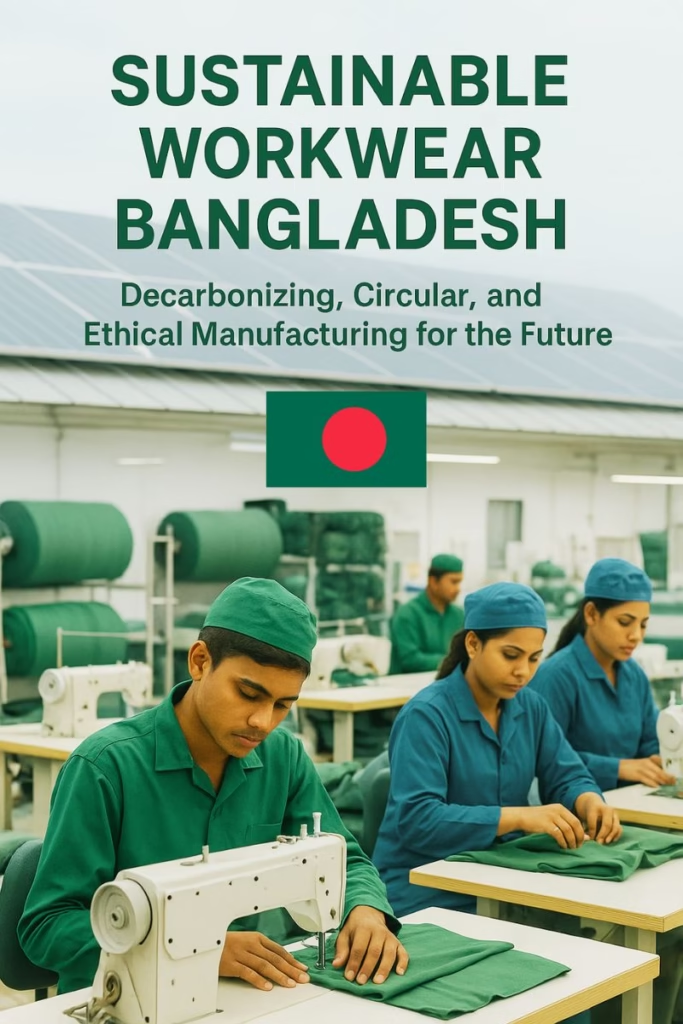
Bangladesh has long been known as the world’s second-largest exporter of Ready-Made Garments (RMG) — a sector contributing about 10–12% to national GDP and generating $36.15 billion in export earnings in 2023–2024. Once driven by volume and price, the industry is now rapidly evolving toward sustainability, traceability, and circularity.
Today, international buyers seeking sustainable workwear Bangladesh are prioritizing verified ethical sourcing, eco-certified materials, and carbon reduction commitments. Global regulations and shifting consumer expectations are pushing manufacturers to adopt cleaner production methods while maintaining high performance and durability — the cornerstones of industrial workwear.
2. The Strategic Importance of Sustainable Workwear Bangladesh
2.1. Why Sustainability Is a Business Imperative
In B2B sourcing, sustainable workwear isn’t just a trend, it’s a compliance requirement. Sustainable workwear is defined as apparel designed to minimize environmental and social harm across its lifecycle — from raw material extraction to end-of-life recycling.
For companies sourcing sustainable workwear in Bangladesh, this means ensuring ethical labor practices, energy-efficient production, and certified sustainable materials. With the EU Corporate Sustainability Due Diligence Directive (CSDDD) setting strict expectations, sustainability has become central to long-term supplier relationships and market access.
2.2. The Shift Toward Circular Manufacturing
The move toward a circular economy is transforming Bangladesh’s apparel landscape. Factories are now prioritizing recycling, waste minimization, and extended product lifecycles — replacing traditional “make-use-dispose” models with closed-loop systems. This shift aligns perfectly with the vision of a more responsible global textile supply chain, solidifying Sustainable Workwear Bangladesh as a major sourcing destination for eco-conscious buyers.
3. Sustainable Materials and Performance Standards
3.1. Blending Functionality with Sustainability
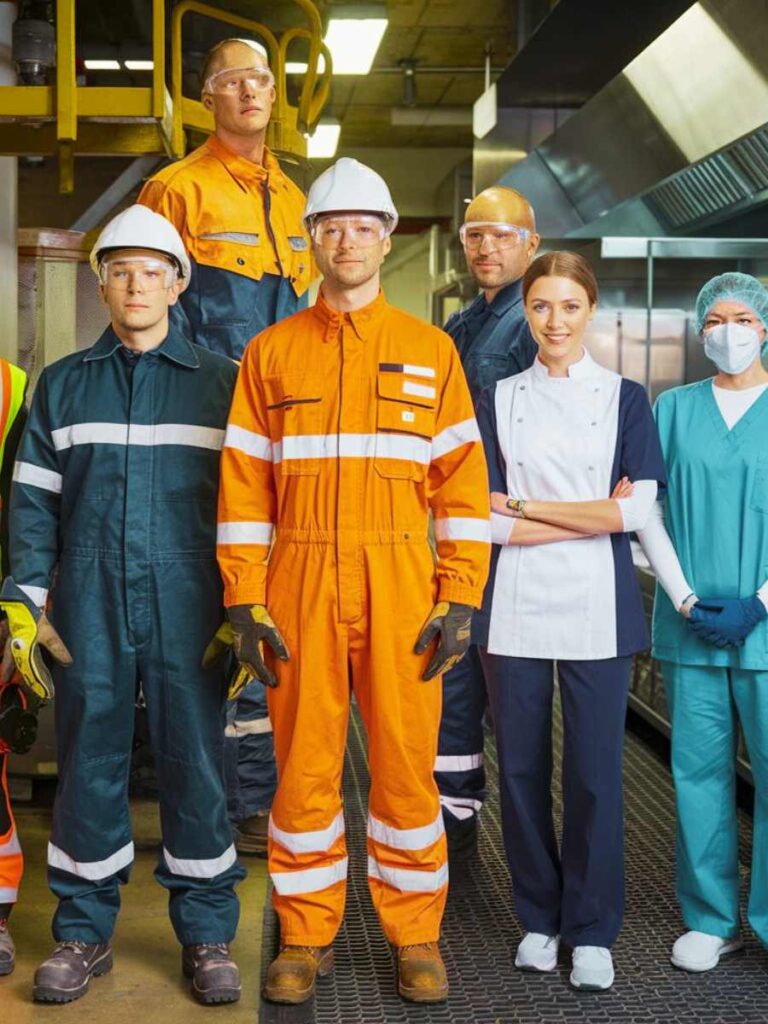
For industrial applications, workwear must endure high wear and tear while also meeting sustainability targets. The innovation behind sustainable workwear Bangladesh lies in combining eco-certified materials with technical performance fabrics that meet demanding industry standards.
Manufacturers are developing advanced blends such as ECONYL® + T400® or recycled polyester + spandex, which deliver stretch, strength, and sustainability. These innovations require significant investment in R&D and automation, pushing Bangladeshi suppliers into the premium workwear segment.
3.2. Core Sustainable Materials Used in Workwear
| Material Type | Key Functionality | Sustainability Certification | Workwear Application |
|---|---|---|---|
| Organic Cotton | Breathability, comfort | GOTS, OEKO-TEX® | T-shirts, light workwear |
| Recycled Polyester | Durability, low impact | GRS (Global Recycled Standard) | Jackets, pants, uniforms |
| ECONYL® (Recycled Nylon) | Abrasion resistance | GRS | Heavy-duty protective gear |
| Hemp/Linen Blends | Lightweight, strong | Fairtrade, eco-labels | Summer workwear, blends |
4. Compliance, Safety, and Ethical Sourcing
4.1. Strengthening Worker Safety Through the Accord and RSC
Since the establishment of the International Accord and its successor, the RMG Sustainability Council (RSC), Bangladesh has significantly improved workplace safety and compliance. The RSC has conducted over 56,000 factory inspections and rectified 140,000+ safety hazards, protecting 1.4 million garment workers.
| Compliance Measure | Status/Achievement | Significance for B2B Buyers |
|---|---|---|
| Total Factory Inspections | 56,000+ | Continuous safety verification |
| Corrected Safety Hazards | 140,000+ | Proves large-scale compliance |
| Workers Educated | 1.4M+ | Meets CSDDD labor standards |
| Ongoing Support | Sustained under RSC | Encourages ethical sourcing |
These verified safety standards make Bangladesh a reliable choice for sustainable workwear sourcing, aligning perfectly with international compliance frameworks like the CSDDD.
4.2. Meeting the CSDDD and Global Supply Chain Due Diligence
The EU’s CSDDD Directive (2023) enforces human rights and environmental accountability across entire supply chains. Non-compliance can result in fines of up to 2% of global revenue, making supply chain transparency essential.
Factories in Bangladesh that are RSC-monitored and ISO 14001 certified are best positioned to meet these stringent expectations. For global workwear brands, Sustainable Workwear Bangladesh offers a low-risk, high-compliance sourcing destination that satisfies EU and corporate sustainability benchmarks.
5. Environmental Leadership and Decarbonization in Bangladesh
5.1. The Rise of Green-Certified Factories
Bangladesh leads the world in LEED-certified green factories, a clear testament to its environmental leadership. Facilities such as Pakiza Knit Composite Ltd. and Fashion Pulse Ltd. have achieved LEED Platinum certification, integrating energy-efficient design and waste-reducing technology — critical credentials for buyers seeking sustainable workwear Bangladesh.
5.2. BGMEA Vision 2030: Decarbonizing Apparel Production
Under the BGMEA Sustainability Vision 2030, the industry aims to:
| Key Metric | BGMEA 2030 Target | Current Challenge |
|---|---|---|
| GHG Emissions Reduction | 30% | National grid depends on 57% gas |
| Sustainable Material Sourcing | 50% | Requires stronger traceability |
| Renewable Energy Share | 20% | Needs private investment (e.g., solar PV) |
| Hazardous Chemicals | Zero Discharge | Achieved in select factories |
Manufacturers like Beximco Power Company Ltd., which operates a 200 MW solar plant, demonstrate leadership by generating renewable energy independently — helping decarbonize the supply chain and strengthening the Sustainable Workwear Bangladesh ecosystem.
5.3. Water and Resource Efficiency Initiatives
DBL Group conserves 25 million liters of water annually through biological treatment systems.
Envoy Textiles has achieved 40% water reduction via zero-discharge dyeing.
These success stories prove that sustainable manufacturing in Bangladesh extends far beyond fabrics — it’s about resource-efficient production systems that balance productivity with environmental protection.
6. Circularity, Automation, and the Future of Workwear
6.1. Automation as a Sustainability Enabler
Automation and digitalization are reshaping garment production. 3D knitting, AI-driven cutting, and automated dyeing reduce waste and improve consistency. For manufacturers of sustainable workwear Bangladesh, these tools deliver both environmental and financial benefits, often achieving ROI within just a few years.
6.2. Circular Textile Innovation
Bangladesh’s move toward textile-to-textile recycling is gaining momentum. For example, Pacific Jeans operates a recycling line that transforms 800 kg of fabric waste per hour into usable fibers for new production.
However, limited policy support and investment incentives hinder circular expansion. Strengthening these areas will be essential for Bangladesh to remain competitive with countries like India and Vietnam in the global circular workwear market.
7. Sourcing Best Practices: Mitigating Risk for Buyers
To ensure ethical and compliant sourcing, procurement professionals should follow these guidelines when selecting sustainable workwear suppliers in Bangladesh:
| Risk Area | Nature of Risk | Regulatory Driver | Mitigation Strategy |
|---|---|---|---|
| Social Compliance | Labor violations | CSDDD, Accord | Choose RSC-monitored factories |
| Environmental Impact | Carbon & water intensity | BGMEA Vision 2030 | Source from LEED-certified factories |
| Circularity | Lack of traceability | EU Circular Economy | Select GRS/ECONYL® verified partners |
These due diligence practices protect brands from compliance risks while aligning them with the future of Sustainable Workwear Bangladesh.
8. Conclusion: The Future of Sustainable Workwear Bangladesh
Bangladesh is now a recognized global leader in sustainable workwear manufacturing, combining ethical labor standards, renewable energy initiatives, and high-performance technical fabrics. With its network of green-certified factories, transparent governance under the RSC, and strong alignment with EU sustainability directives, the country stands as a preferred sourcing hub for responsible workwear buyers.
To maintain its competitive edge, continued focus on energy diversification, recycling innovation, and policy reform will be essential. For now, sourcing from Sustainable Workwear Bangladesh isn’t just a smart business decision — it’s a commitment to building a greener, fairer, and future-ready apparel industry.
👉 Learn more about sustainable production at Bengal Apparel BD – Sustainable Uniform Manufacturing