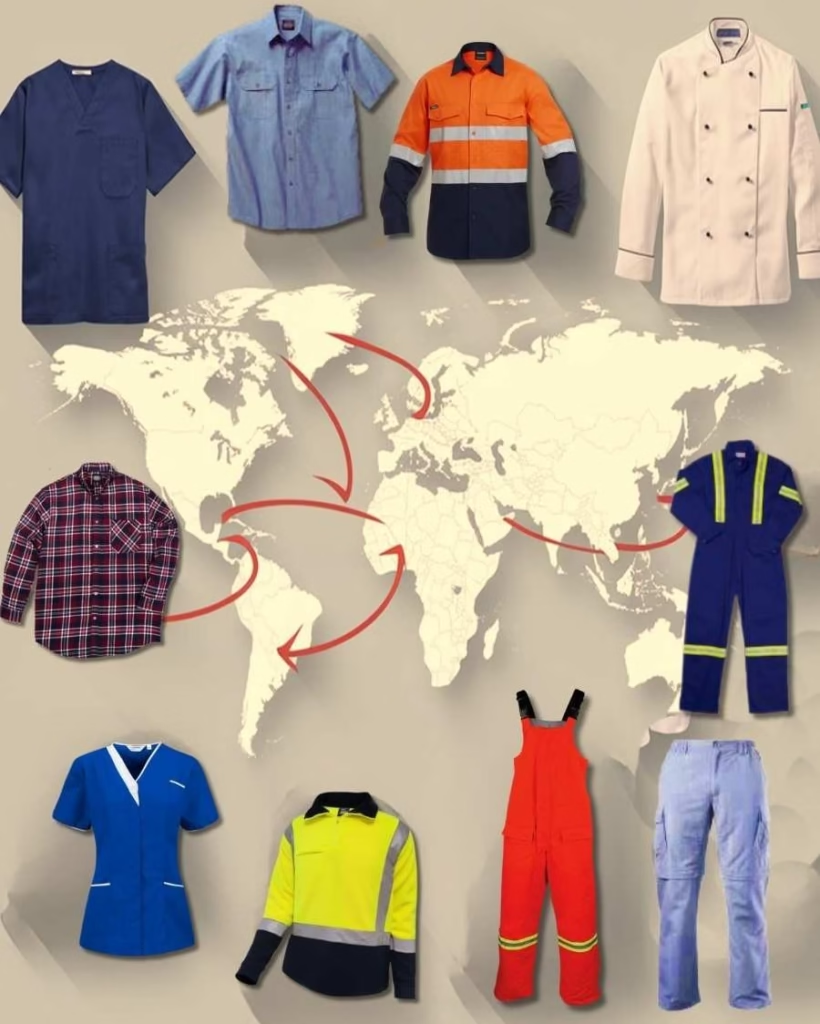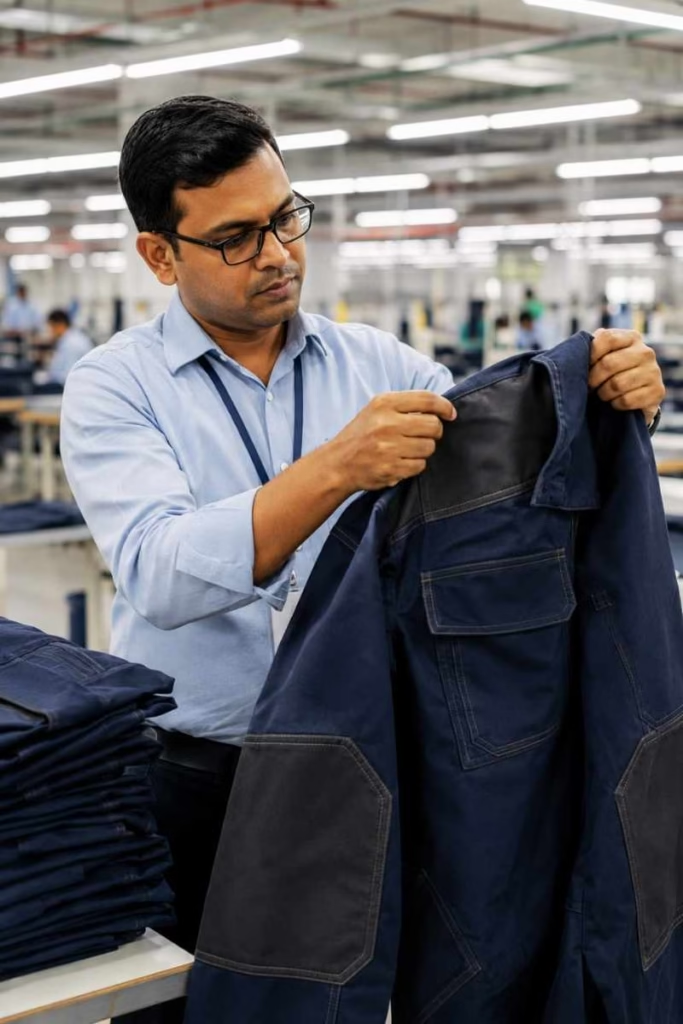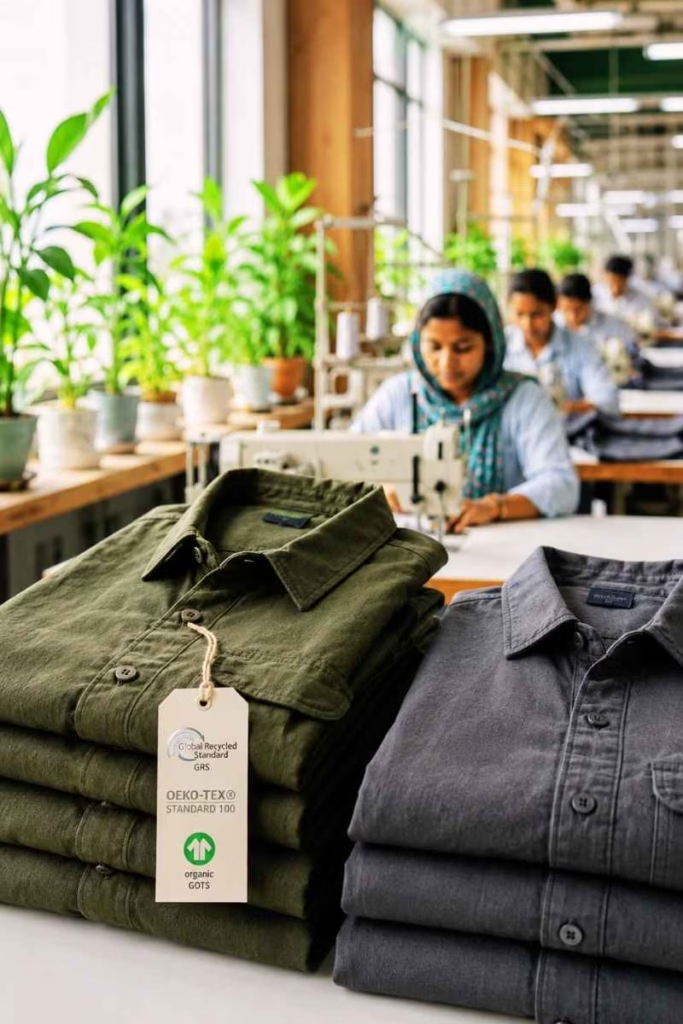
Sustainability requirements in uniform procurement have moved from optional to contractual in most major markets. European buyers face CSDDD supply chain due diligence obligations. GCC operators are embedding sustainability criteria into tender qualification. North American buyers are responding to client ESG reporting requirements that now extend into the supply chain.
For procurement managers and importers, this creates a practical problem: how do you verify that a supplier’s sustainability claims are genuine, documentable, and audit-ready? And how does sustainable uniform manufacturing actually work at the factory level in Bangladesh, where most large-volume programs are now produced?
This guide answers both questions. It covers what certified sustainable uniform manufacturing looks like in practice, which certifications matter for which markets, how fabric choices affect both sustainability claims and garment performance, and what documentation buyers should require before placing an order.
What Sustainable Uniform Manufacturing Actually Means for B2B Buyers
The term sustainable uniform manufacturing covers a broad range of practices, and not all of them carry equal weight with buyers, auditors, or regulators. For procurement purposes, it is useful to separate genuine, verifiable sustainability from marketing language.
Verifiable sustainable uniform manufacturing is defined by three things: certified raw materials with documented chain of custody, independently audited factory practices covering environmental and social compliance, and documentation that holds up under third-party scrutiny.
A supplier who references sustainability without providing current certificates from recognised bodies is not offering compliant sustainable uniform manufacturing. The certifications are the proof, not the language used to describe the program.
As a workwear supplier from Bangladesh, Bengal Apparel BD manages sustainable uniform manufacturing through a network of nine certified partner factories in Dhaka. Every sustainability claim we make is backed by current, verifiable documentation from the relevant certification body.
Certified Fabric Options for Sustainable Uniform Manufacturing
Fabric specification is where sustainable uniform manufacturing begins. The choice of material determines which certifications the finished garment can carry, what documentation the buyer receives, and how the garment performs across its working life.
GRS Certified Recycled Polyester
Recycled polyester certified under the Global Recycled Standard is produced from post-consumer PET waste, most commonly plastic bottles. It carries the same durability, colour retention, and wash performance as virgin polyester. For sustainable uniform manufacturing programs supplying outer shells, hi-vis jackets, softshell constructions, and 5-in-1 jackets, GRS-certified recycled polyester allows buyers to meet client sustainability requirements without a significant cost premium.
The GRS covers the entire chain of custody from the recycling facility through to the finished garment. Buyers should request both the fabric mill’s scope certificate and the transaction certificate for each shipment. The transaction certificate confirms the recycled content claim applies to the specific batch in the order, not just the facility in general.
GOTS Certified Organic Cotton
GOTS certified organic cotton is grown without synthetic pesticides or fertilisers and processed without prohibited chemicals through every stage including dyeing and finishing. It is the correct certification for sustainable uniform manufacturing programs using cotton base fabrics, including polo shirts, duty shirts, summer-weight coveralls, and healthcare uniforms.
GOTS certification must cover every production stage. A supplier who holds GOTS for raw fibre but not for the dyeing and finishing stage is not providing a fully compliant GOTS garment. Verify the certificate scope before accepting the claim.
OEKO-TEX Standard 100
OEKO-TEX Standard 100 certifies that every component of the finished garment, including threads, buttons, zippers, and labels, has been tested for harmful substances. It is a baseline requirement for sustainable uniform manufacturing programs entering European retail and distribution channels and is increasingly specified in GCC corporate procurement programs.
OEKO-TEX certification covers the finished article, not just the fabric. A mill-level OEKO-TEX certificate does not automatically cover the finished garment if additional components are added during production.
Recycled Nylon and Blended Performance Fabrics
For technical workwear programs requiring both sustainability credentials and performance characteristics, recycled nylon certified under GRS offers abrasion resistance and durability suitable for heavy-duty applications. Blended constructions combining GRS-certified recycled polyester with stretch components are available for active industrial workwear programs where mobility is a specification requirement alongside sustainability certification.
Green Factory Standards in Bangladesh
Bangladesh has more LEED-certified green factories than any other country. This is the physical manufacturing infrastructure behind sustainable uniform manufacturing claims. LEED certification covers energy efficiency, water use reduction, indoor environmental quality, and materials sourcing at the factory level.
For buyers building CSDDD-compliant supply chains, LEED factory documentation alongside RSC monitoring reports provides verifiable evidence of environmental practice at the production facility level. This is more substantive than a supplier sustainability statement and more useful for supply chain due diligence evidence files.
Our partner factories operate under independent monitoring through the RSC, the successor body to the Bangladesh Accord, which has conducted over 56,000 factory safety inspections across the Bangladesh garment sector. Factory compliance status, inspection history, and remediation records are publicly accessible through the RSC portal.
Regulatory Compliance: CSDDD, REACH, and EU Procurement
CSDDD Supply Chain Due Diligence
The EU Corporate Sustainability Due Diligence Directive requires companies importing into European markets to demonstrate that their supply chain meets human rights and environmental standards. Non-compliance carries fines of up to 2% of global annual revenue.
For sustainable uniform manufacturing programs supplying EU buyers, the documentation package must include RSC or equivalent factory monitoring reports, certified fabric documentation (GRS, GOTS, or OEKO-TEX as applicable), and a supplier declaration of compliance that maps to the directive’s requirements. Bengal Apparel BD prepares this documentation as a standard part of every export package.
REACH and Chemical Safety
REACH compliance confirms that no restricted chemical substances, including azo dyes and heavy metals, are present in fabrics or trims. This is a mandatory requirement for garments entering EU markets and is directly relevant to sustainable uniform manufacturing programs using dyed or finished fabrics.
GCC Sustainability Requirements
In the GCC, sustainability requirements are increasingly embedded in oil and gas, construction, and infrastructure project tender specifications. For technical workwear programs in the GCC, combining EN ISO 11612 FR certification, EN 1149-5 anti-static compliance, and GRS or OEKO-TEX material certification in a single garment is the direction the market is moving. Our multi-norm workwear programs now include sustainable fabric options as a standard offering for GCC buyers.
The Cost Question: Is Sustainable Uniform Manufacturing More Expensive?
The most common concern procurement teams raise when evaluating sustainable uniform manufacturing programs is cost per unit. Certified sustainable fabrics, particularly GOTS organic cotton and GRS-certified recycled nylon, carry higher per-metre prices than standard equivalents.
The relevant comparison is total cost of ownership across the supply program, not cost per garment at point of purchase.
GRS-certified recycled polyester at volume typically carries a modest premium over standard polyester. The durability and wash performance of certified recycled fibres is comparable or better than standard equivalents, which means replacement frequency does not increase. For most programs, the total cost difference over a two-year supply period is smaller than the per-unit price gap suggests.
For buyers who need to demonstrate value for money alongside sustainability credentials, the most practical approach is to request both standard and sustainable options in an initial costing and compare total program cost, not unit price. This is the approach we use for all new sustainable uniform manufacturing inquiries.
Greenwashing: How to Verify Claims Before You Place an Order
Greenwashing is a genuine risk in sustainable uniform manufacturing sourcing. A supplier can reference GRS or GOTS in marketing materials without holding a current, valid certificate covering the specific garments in your order.
For GRS, request the transaction certificate for the specific fabric batch, not just the facility scope certificate. Transaction certificates are issued per shipment and can be verified directly through the Textile Exchange database.
For GOTS, ask for the certificate number and verify it at global-standard.org. GOTS certificates are publicly searchable by facility name and number.
For OEKO-TEX, request the certificate number and test report. Verifiable at oeko-tex.com by certificate number.
For factory social compliance, RSC inspection reports are publicly accessible via the RSC portal. Factory inspection status and remediation history are available to buyers before they place an order.
How to Start a Sustainable Uniform Manufacturing Program
The process for starting a certified sustainable uniform manufacturing program with Bengal Apparel BD follows the same structure as any production inquiry, with additional documentation steps built in from the beginning.
Share your garment specification, target certifications (GRS, GOTS, OEKO-TEX), required compliance documentation for your destination market, and target volume. We identify the certified fabric options available within your specification and price range, confirm which partner facility is appropriate, and prepare an indicative FOB quote with a full documentation list.
For buyers who want to evaluate sustainable fabric quality before committing to bulk, samples of GRS-certified recycled polyester and GOTS organic cotton constructions are available on request.
MOQ: 3,000 pieces per style Lead time: 75 days from sample approval Incoterms: FOB Chittagong Documentation included: Fabric mill certification, transaction certificates, factory compliance documentation, OEKO-TEX test certificate, RSC monitoring report, and full export documentation
For a full overview of our manufacturing capabilities and compliance certifications, see our capabilities and compliance pages.
Frequently Asked Questions on Sustainable Uniform Manufacturing
What certifications should I require from a sustainable uniform manufacturer?
For materials: GRS for recycled content, GOTS for organic cotton, OEKO-TEX Standard 100 for chemical safety across all garment components. For factory social compliance: RSC, BSCI, WRAP, or SEDEX audit reports. For CSDDD-compliant programs entering EU markets, all of the above are required as a minimum.
Does sustainable uniform manufacturing cost significantly more than standard production?
GRS-certified recycled polyester carries a modest premium at volume. GOTS organic cotton carries a larger premium. However, certified sustainable fabrics typically match or outperform standard equivalents on durability and wash life. Total program cost over a two to three year supply period is usually closer than the per-unit price gap suggests.
How do I verify a supplier's GRS or GOTS certificate is genuine?
For GRS, request the transaction certificate for the specific fabric batch and verify through the Textile Exchange database. For GOTS, ask for the certificate number and check it directly at global-standard.org. Both databases are publicly searchable.
Does sustainable uniform manufacturing from Bangladesh meet CSDDD requirements?
Our documentation package is designed to support CSDDD compliance for buyers importing into European markets. This includes RSC factory monitoring reports, certified fabric documentation, OEKO-TEX test certificates, and a supplier declaration of compliance.
What is the MOQ for a sustainable uniform program?
Our standard MOQ is 3,000 pieces per style. Contact us with your specification and volume for a specific recommendation.
Can sustainable and standard fabric options be quoted together?
Yes. We routinely provide both standard and sustainable fabric costings for the same garment specification so procurement teams can compare total program cost and make an informed decision.