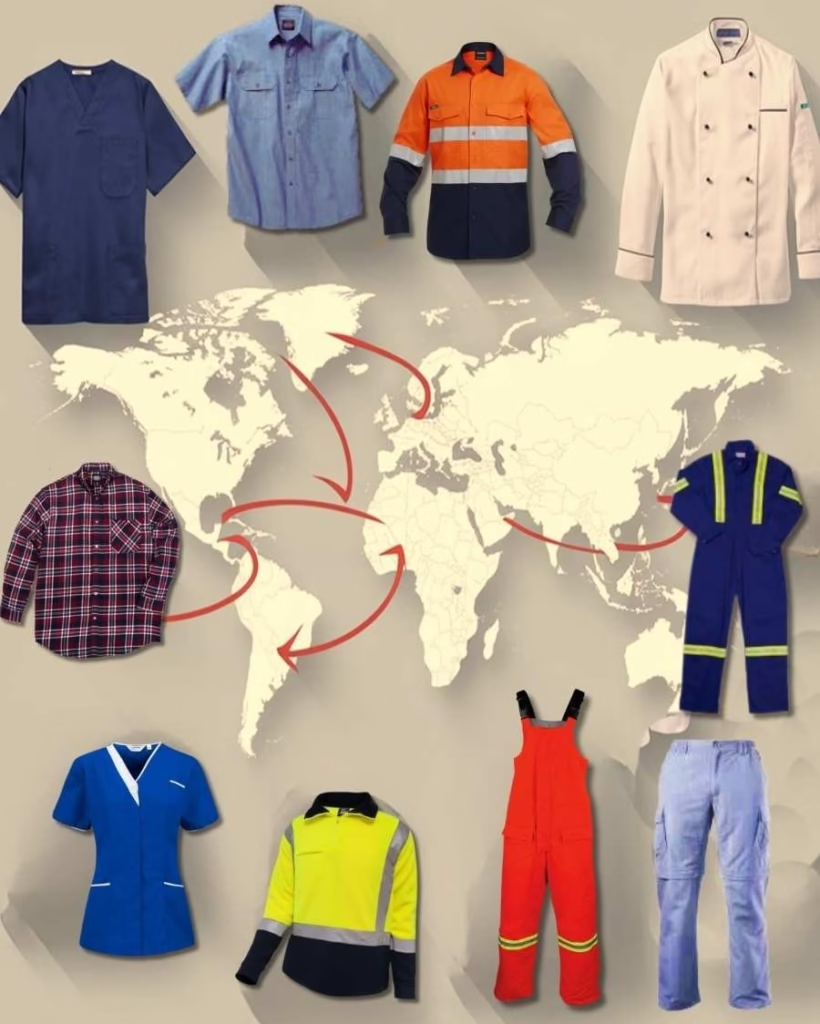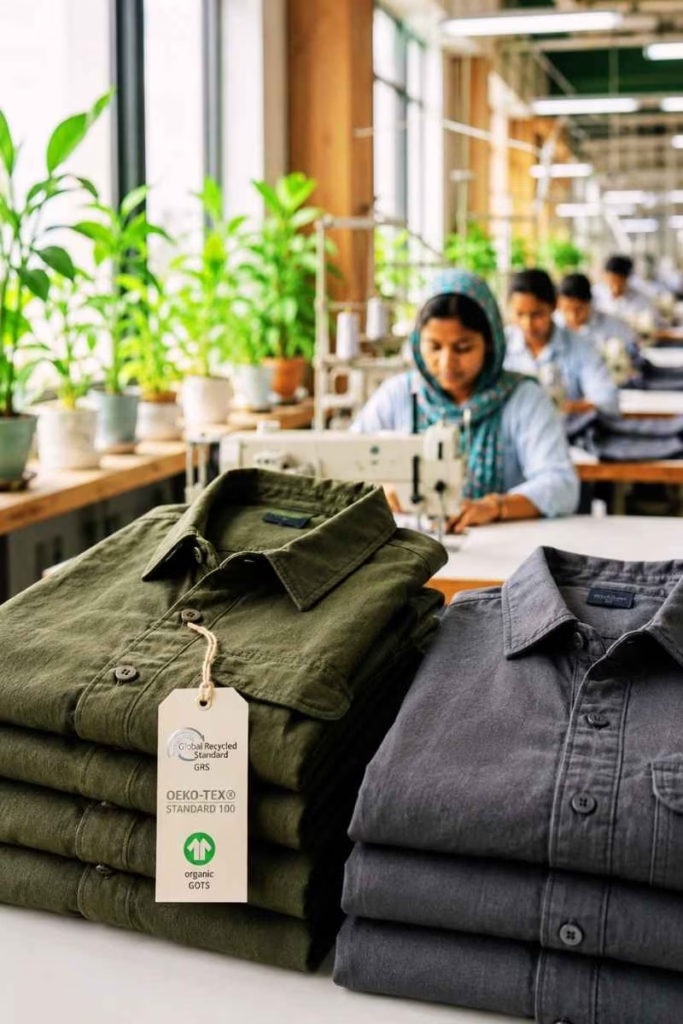
Importing safety clothing from Bangladesh is a well-established supply chain route for B2B buyers across the United States, Canada, Europe, and Australia. Bangladesh is the world’s second-largest apparel exporter, and its certified workwear factories have spent the past decade building the compliance infrastructure that international safety clothing programs require: FR coveralls certified to NFPA 2112 and EN ISO 11612, hi-vis garments tested to ANSI/ISEA 107 and EN ISO 20471, and multinorm PPE combining several hazard certifications in a single piece. The commercial case is well established. What trips buyers up is not the sourcing decision itself but the import process: knowing which documentation is required, how to classify the goods correctly for customs, and what happens at the port if something is missing.
This guide walks through the full import process step by step, from confirming certification requirements before production begins to customs clearance at the destination port, with specific guidance for US and European buyers.
Why Importing Safety Clothing from Bangladesh Makes Commercial Sense in 2026
Bangladesh’s position as a sourcing destination for certified safety clothing has strengthened considerably over the past three years. Bangladesh apparel exports to the United States grew by nearly 22 percent year-on-year through the first seven months of 2025, outpacing overall US apparel import growth for the same period, as buyers diversified supply chains away from China following sustained tariff pressure and shipping disruption.
For safety clothing specifically, the combination of low unit costs, a wide network of export-certified factories, and improving third-party test documentation capability makes Bangladesh competitive on a total program cost basis, not just a per-unit price basis. A buyer sourcing FR coveralls, hi-vis jackets, and multinorm garments from a single managed Bangladesh partner consolidates compliance documentation, factory auditing, and shipping logistics under one relationship rather than managing several regional suppliers.
The tariff landscape is also worth noting before committing to a long-term sourcing arrangement. Bangladesh is scheduled to graduate from Least Developed Country status in November 2026, which will gradually phase out the zero-duty access it currently enjoys in the European Union. US buyers face a different but also shifting picture, with a flat 10 percent reciprocal tariff currently in effect for Bangladesh-origin goods following the April 2025 trade policy changes, compared to significantly higher rates for Chinese-origin apparel. For buyers whose programs were previously sourced from China, Bangladesh remains substantially more favorable on landed duty cost even with the new flat rate in effect.
Step 1: Confirm Certification Requirements Before Production Begins
The single most expensive mistake buyers make when importing safety clothing from Bangladesh is confirming certification requirements after production has started rather than before. Safety clothing is not generic apparel. FR coveralls, hi-vis garments, and PPE each carry specific certification requirements that affect which factory produces them, which fabric is used, which third-party lab conducts testing, and which documentation is produced. Changing these after production begins either means starting over or shipping non-compliant product.
Before placing any order, confirm three things in writing with your Bangladesh supplier. First, which specific standard is required for your destination market, since NFPA 2112 and ASTM F1506 govern the US market, EN ISO 11612 and EN ISO 20471 govern the EU and UK, and these are not interchangeable on a compliance document. Second, which third-party certifying body has issued the certification for the specific fabric and garment construction you are ordering, since certification applies to a specific style and fabric combination, not the factory generally. Third, whether the certification is current, since NFPA 2112 requires annual recertification with ongoing factory audits, and an expired certificate is not a valid compliance document at the destination port.
For buyers sourcing NFPA 2112 certified FR coveralls for US and Canadian programs, this confirmation step is especially important because the manikin flash fire test required for certification is conducted on a specific garment construction, not a fabric alone, and any change to the garment design after certification requires retesting.
Step 2: Understand Your HS Code and Duty Exposure
Every shipment of safety clothing entering the US or EU is classified under a Harmonized System code, which determines the applicable import duty rate. Safety clothing falls under several different HS headings depending on the fabric composition, construction, and intended use, and misclassification is one of the most common customs compliance failures for apparel importers.
For the US market, all textile and apparel imports are subject to US Customs and Border Protection classification rules, and duty rates vary by fiber content, fabric construction, and end use. FR coveralls made from synthetic inherent fiber such as Nomex or Kevlar typically fall under different HTS subheadings than treated cotton FR garments, and hi-vis vests carry different classifications again. The first six digits of the HS code are internationally standardized, but the full ten-digit HTS code used for US customs entry is US-specific and determines your exact duty rate. Confirming the correct ten-digit code with a licensed customs broker before your first shipment is not optional: CBP actively penalizes misclassification, and correcting an error after cargo has arrived at port is significantly more disruptive and costly than confirming it in advance.
For European buyers, the EU Combined Nomenclature applies. The duty rate for Bangladesh-origin apparel under the EU Generalized Scheme of Preferences will change as Bangladesh’s LDC graduation takes effect from November 2026, phasing in over a transition period, so buyers placing long-term programs should confirm the current and transitional duty rates with their customs broker before committing to multi-year pricing agreements with a Bangladesh supplier.
Step 3: Choose the Right Incoterm: FOB, CIF, or DDP
The Incoterm you agree with your Bangladesh supplier determines which party is responsible for freight, insurance, and customs clearance costs, and at which point risk transfers from the seller to the buyer. Most Bangladesh workwear export transactions use one of three Incoterms.
FOB (Free on Board) is the most common term for Bangladesh garment exports. The supplier’s responsibility ends when the goods are loaded onto the vessel at Chittagong port. From that point, the buyer arranges and pays for freight, marine insurance, and import customs clearance at the destination. FOB gives the buyer full control over the shipping relationship and is usually the most cost-transparent option for experienced importers with their own freight forwarder in place.
CIF (Cost, Insurance, and Freight) means the supplier arranges and pays for freight and insurance to the destination port, but the buyer still handles customs clearance at the destination. CIF is convenient for buyers new to international importing since it reduces the number of logistics decisions to manage on the origin side, but it gives the buyer less visibility into the actual freight cost, since the supplier builds a margin into the CIF rate.
DDP (Delivered Duty Paid) means the supplier delivers the goods to the buyer’s warehouse with all freight, insurance, duties, and customs clearance costs included in the price. DDP is the simplest from the buyer’s perspective but is the least common for Bangladesh garment exports and typically reflects a higher unit price that includes the logistics margin the supplier builds in.
For most first-time importers of safety clothing from Bangladesh, FOB Chittagong with a buyer-nominated freight forwarder and a licensed customs broker at the destination is the recommended starting arrangement. It gives you cost transparency, full control over shipping timelines, and a direct relationship with your customs broker for compliance questions.
Step 4: Assemble Your Shipping Documentation Pack
A complete shipping documentation pack is essential for smooth customs clearance at the destination port. Missing or incorrect documents are the primary reason safety clothing shipments are held at customs, and the delay cost in demurrage and re-inspection fees typically far exceeds the cost of getting the documentation right before the vessel sails.
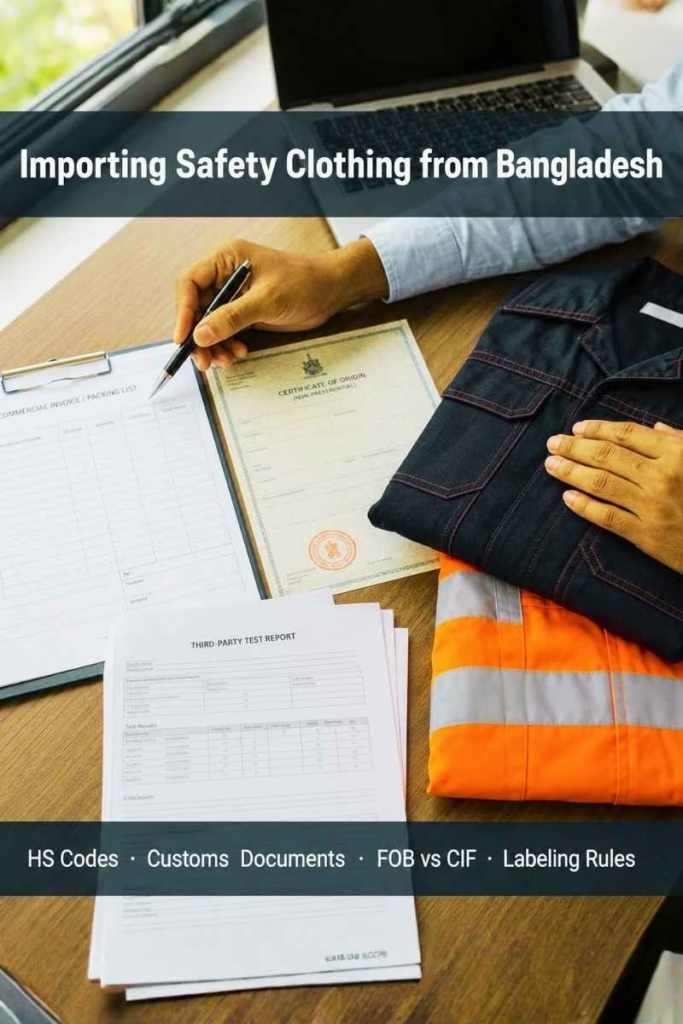
The standard documentation pack for a Bangladesh safety clothing export includes the commercial invoice showing the buyer and seller details, garment description, quantity, unit price, and total FOB value. The packing list details the carton count, piece count per carton, gross and net weights, and dimensions. The Bill of Lading is the contract of carriage issued by the shipping line, and the original is required to release goods at the destination port. The Certificate of Origin confirms Bangladesh as the country of manufacture and is required for duty preference claims under the EU GSP or other preferential trade arrangements. The third-party test report and certification documents for each certified garment type must accompany the shipment documentation, since safety clothing classified as PPE may be subject to customs examination at the destination.
For US-bound shipments, the Importer Security Filing, also called the 10+2 filing, must be submitted to CBP no later than 24 hours before the vessel departs from Chittagong. Your freight forwarder or customs broker typically files the ISF on your behalf, but as the importer of record you are responsible for its accuracy. Late ISF filings attract fines of $5,000 to $10,000 per violation and can result in CBP holds on arrival.
Step 5: Labeling Requirements for US and European Markets
Safety clothing imported into the US and EU must carry permanent garment labels that satisfy the requirements of the relevant regulatory authorities, regardless of what certification labels the garment carries for its safety standard.
For the US market, the Federal Trade Commission requires that every imported garment carry a permanent label specifying fiber content by percentage, country of origin (Made in Bangladesh), care instructions, and the identity of the manufacturer or the business responsible for marketing the product in the US. Labels must be in English and permanently sewn into the garment, not attached by hangtag. For safety clothing specifically, the CPSC also has flammability requirements that apply to certain categories, and FR garments must carry the correct standard designation (such as NFPA 2112 or ASTM F1506) on their compliance label.
For the European market, CE marking is required for PPE sold in the EU, including certified FR and hi-vis safety clothing. The CE mark must appear on the garment or its label, and a Declaration of Conformity must be available to buyers and market surveillance authorities confirming the garment meets the relevant EN ISO standard. UK-bound shipments require UKCA marking rather than CE marking since Brexit, and the two are not interchangeable in their respective markets.
Step 6: Customs Clearance, ISF Filing, and What Can Go Wrong
Even a well-prepared shipment can face customs delays if specific triggers are present. Safety clothing is more likely than generic apparel to attract customs examination because it is classified as PPE in several product categories, and customs officers in both the US and EU are trained to verify that PPE certification documentation matches the declared product.
The most common reasons safety clothing shipments are held at customs are: incorrect HTS code classification leading to a duty rate discrepancy, missing or expired certification documentation for the specific garment type declared, a mismatch between the garment description on the commercial invoice and the description on the third-party test report, and failure to submit the ISF on time for US-bound ocean freight. Each of these is preventable with proper preparation, but none of them can be resolved quickly once the vessel has arrived at port and CBP or EU customs has initiated an examination.
For buyers sourcing multinorm workwear combining FR and hi-vis certifications, the documentation requirements are more complex since each certification in the garment must be documented separately, and the combined-standard label on the garment must match what appears in the test report and on the commercial invoice.
Step 7: Working with a Freight Forwarder and Customs Broker
A licensed customs broker at the destination market is not optional for buyers importing safety clothing commercially. For US buyers, CBP requires all commercial imports where duties, taxes, and fees exceed $2,500 to post a customs bond, and the practical administration of that bond, the ISF filing, the entry summary, and duty payment is handled by your customs broker as importer of record. For EU buyers, the customs declaration and VAT accounting at the point of entry require a local customs representative.
Choosing a freight forwarder with specific experience in Bangladesh garment exports is also worth the additional effort for first-time importers. Transit times from Chittagong to US East Coast ports typically run 21 to 28 days. Transit to European ports runs 18 to 25 days depending on the routing. Air freight is available for urgent orders or samples but at significantly higher cost per kilogram, and is generally reserved for time-critical proto-sampling rather than bulk production shipments.
How Bengal Apparel BD Supports the Import Process
Bengal Apparel BD manages the export documentation process from the Bangladesh side for every order, including the commercial invoice, packing list, certificate of origin, and third-party test report pack. For buyers using FOB Chittagong terms, we coordinate with your nominated freight forwarder on booking confirmation, container stuffing, and bill of lading issuance. For buyers newer to Bangladesh sourcing who need CIF terms, we work with established freight partners on Chittagong-to-destination routing.
All certification documents for FR workwear and hi-vis programs are provided as a standard part of the pre-shipment pack rather than on request after shipment. If your customs broker or end customer requires additional documentation, such as a mill test certificate for the specific fabric lot or an inspection report from a named third party, confirm this at the quoting stage so it can be built into the production and pre-shipment inspection schedule rather than chased after the vessel has sailed.
FAQs
What documents are required to import safety clothing from Bangladesh into the US?
The standard documentation pack includes a commercial invoice, packing list, bill of lading, certificate of origin, and third-party test report and certification documents for any certified safety garments. For US ocean freight, an ISF filing must be submitted to CBP at least 24 hours before vessel departure from Chittagong.
What is the import duty rate for safety clothing from Bangladesh into the US?
Following the April 2025 trade policy changes, Bangladesh-origin apparel is subject to a flat 10 percent reciprocal tariff in the US, applied in addition to the standard MFN duty rate for the relevant HTS code. Confirm your specific ten-digit HTS code and the applicable combined duty rate with a licensed customs broker before your first shipment, since rates vary by fiber content and construction.
Does CE marking affect customs clearance for safety clothing entering the EU?
Yes. PPE sold in the EU including certified FR and hi-vis safety clothing must carry CE marking and be accompanied by a Declaration of Conformity. Goods presented at EU customs as PPE without valid CE documentation can be refused entry or held for inspection.
What is the difference between FOB and CIF for Bangladesh garment imports?
FOB means the supplier’s responsibility ends when goods are loaded onto the vessel at Chittagong. The buyer arranges and pays for freight, insurance, and customs clearance from that point. CIF means the supplier arranges and pays for freight and insurance to the destination port, but the buyer still handles customs clearance on arrival. FOB gives the buyer more cost transparency and control. CIF is more convenient for buyers without an established freight forwarder relationship.
How long does shipping from Bangladesh to the US or EU take?
Ocean freight from Chittagong to US East Coast ports typically runs 21 to 28 days. Transit to European ports runs 18 to 25 days depending on routing. Add a production lead time of 45 to 90 days from sample approval, and plan your order timeline accordingly. FOB means the supplier’s responsibility ends when goods are loaded onto the vessel at Chittagong. The buyer arranges and pays for freight, insurance, and customs clearance from that point. CIF means the supplier arranges and pays for freight and insurance to the destination port, but the buyer still handles customs clearance on arrival. FOB gives the buyer more cost transparency and control. CIF is more convenient for buyers without an established freight forwarder relationship.