If you order flame-resistant clothing for your team, the supplier you pick matters as much as the fabric they use. A wrong choice does not just cost money. It puts workers in gear that may not perform when it matters.
This guide walks through what to check before you commit to an FR workwear supplier, what questions to ask, and what red flags to watch for. It is written for procurement managers, safety officers, and distributors who buy in bulk and need a supplier they can rely on order after order.
What FR workwear actually needs to do
Flame resistant clothing has one job: slow down heat transfer to the skin during a flash fire or arc flash event, and give the wearer enough time to escape or be rescued. The fabric must not ignite easily, must self-extinguish if it does catch fire, and must not melt onto skin.
That sounds simple. Meeting it consistently, batch after batch, factory after factory, is where supplier quality starts to show.
Step 1: Confirm the certification, not just the claim
Any supplier can say their fabric is “FR” or “flame resistant.” The phrase has no legal weight on its own. What matters is which standard the garment is certified against, and whether that certification is current and verifiable.
The two standards buyers ask about most often are EN ISO 11612 and NFPA 2112.
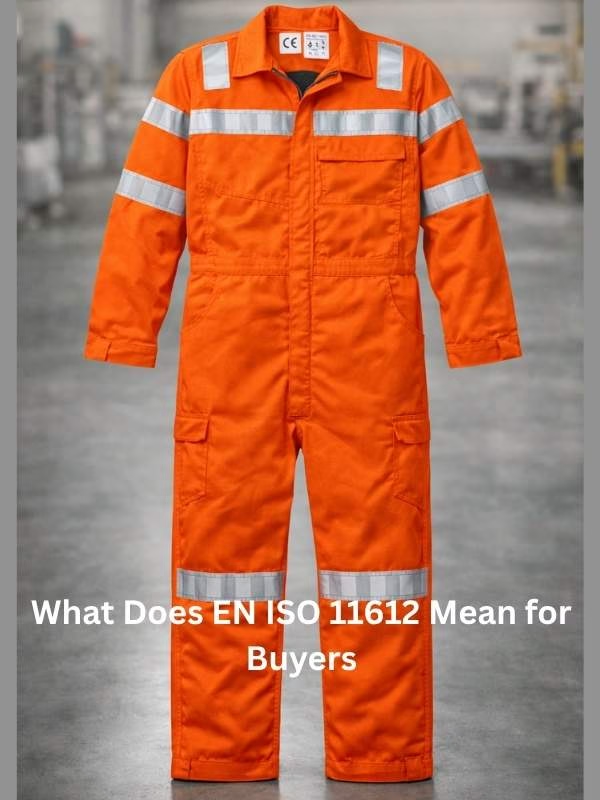
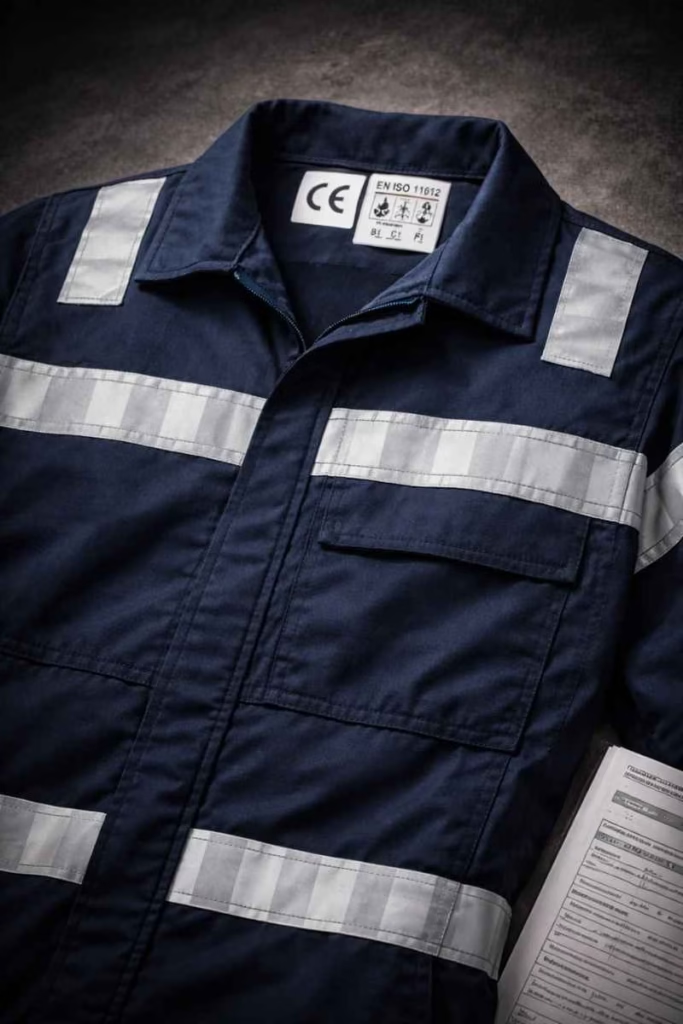
EN ISO 11612 is the European and international standard for clothing that protects against heat and flame. It covers the wearer’s body against flame, plus convective heat, radiant heat, contact heat, and exposure to molten aluminum or molten iron, depending on the hazard. Each hazard category has performance levels, so a garment can be rated for low, medium, or high exposure risk, with a fourth level reserved for extreme radiant heat protection using materials like heat reflective aluminized fabric. It is the standard most commonly specified across Europe, the Middle East, and Asia, particularly for welding, foundry work, and general industrial safety.
NFPA 2112 is the United States standard, and it is narrower by design. It governs flame resistant clothing built specifically to protect workers from flash fire exposure in high risk industries such as oil, gas, and construction, and requires that coveralls limit body burn to less than 50 percent in a three second flash fire test. It is the standard most widely used in oil, gas, and petrochemical sectors in North America.
The practical difference for a buyer: NFPA 2112 focuses tightly on flash fire protection and pushes harder on durability testing across the garment’s working life, while EN ISO 11612 covers a wider range of thermal hazards and gives buyers more granular performance classes to select from. Both standards run a vertical flammability burn test with only minor procedural differences, and the NFPA version is marginally more demanding on that specific test. Where they diverge more is heat transfer testing: the US standard runs one combined convective and radiant heat test with a pass or fail threshold, while the EN standard offers five separate heat transfer tests so buyers can compare garment performance hazard by hazard.
EN ISO 11612 | NFPA 2112 | |
Region | Europe, Middle East, Asia | United States |
Core hazard | Heat and flame, multiple types | Flash fire specifically |
Heat transfer test | Up to five separate tests by hazard type | One combined convective and radiant test |
Performance levels | Three levels per hazard, plus an extreme level | Pass or fail against the flash fire threshold |
Typical industries | Welding, foundry, general industrial safety | Oil, gas, petrochemical |
Wash cycle retest | Required per fabric specification | Required at 100 cycles |
If your buyers are in the US oil and gas sector, ask for NFPA 2112. If your buyers are in Europe, the Middle East, or anywhere under CE marking requirements, ask for EN ISO 11612. If you sell into both markets, ask your supplier whether the same garment line can be dual certified, since many multinorm fabrics now are.
A reliable supplier will hand you the actual test certificate from an accredited lab, not a one-page compliance statement they wrote themselves. The certificate should show the lab name, the test method, the date, and the specific garment or fabric batch it covers.
Step 2: Ask which lab issued the test report
Self-declared compliance is the single most common shortcut weak suppliers take. A real FR certification comes from a third-party accredited testing lab, not the factory’s own quality team.
Ask for:
- The lab’s name and accreditation body
- The specific test method used (for example, ASTM D6413 for vertical flame test)
- The report date and whether it covers the current fabric batch or an older one
- Whether retesting happens after a fixed number of wash cycles
Good FR fabric should be tested under ISO/IEC 17025-accredited labs and should hold its protective performance through repeated washing, often verified to 100 wash cycles. Under NFPA 2112, every fabric layer is tested both as received and after 100 cycles of washing, drying, or dry cleaning, because flame resistance that only works on day one is not flame resistance that protects a worker on day two hundred.
If a supplier cannot produce a lab report with a date and a method, or only offers a certificate of conformity they printed themselves, treat that as a serious red flag.
Step 3: Check fabric composition and how it holds up to washing
FR protection comes from one of two routes: inherently flame resistant fibers (like meta-aramid blends), or chemically treated fibers (like FR-treated cotton). Both can meet the same standard, but they behave differently in the field.
Inherently treated cotton blends are commonly built around roughly 88 percent cotton and 12 percent tough nylon, where the nylon improves abrasion resistance and helps the fabric hold together during a flash fire event, while the flame resistant chemical is pushed deep into the cotton fiber using an ammonia-based process.
Ask your supplier directly:
- Is this an inherent FR fiber or a chemically treated fabric?
- How many wash cycles before the FR property is verified to degrade?
- Does the fabric melt, drip, or continue burning after the flame source is removed?
A garment that meets NFPA 2112 must not melt, drip, or continue to burn after the flame is removed, in addition to passing the standard flame resistance test. That single requirement eliminates a lot of cheaper synthetic fabrics that might otherwise pass a basic burn test.
Step 4: Understand what "multinorm" really covers
Many buyers in oil, gas, utilities, and heavy industry need a single garment that protects against more than one hazard, for example flame plus arc flash, or flame plus high visibility. This is usually marketed as “multinorm” workwear.
Multinorm does not mean a supplier slapped two labels on one garment. It means the fabric and construction have been tested and certified against each relevant standard independently. A garment can carry EN ISO 11612 certification for heat and flame protection and separately carry EN 61482-1-2 certification for electric arc protection, and both certificates need to specify their own performance classes.
When a supplier offers a multinorm garment, ask for every certificate that applies, not just the headline one. If you need flame resistance and arc protection in the same coverall, you need two test reports, not one marketing claim.
Step 5: Verify production consistency across batches
A certificate proves the fabric passed a test once. It does not prove every roll of fabric coming off the line six months from now will perform the same way. This is where supplier reliability separates from a one-time compliant sample.
This matters more for FR fabric than almost any other textile category, because the flame resistant property is either built into the fiber at the chemical level or applied through a treatment process, and both routes are sensitive to raw material variation. A supplier sourcing FR yarn from multiple mills, or switching mills to manage cost, introduces variation that a single certificate from year one will not catch.
Ask:
- How does the factory test incoming raw fabric before cutting?
- Is there a retained sample policy, so a batch can be re-tested if a claim arises?
- What is the rejection rate on incoming FR fabric, and why?
- Can they provide batch-level traceability if a buyer requests it years later?
- Does the factory single-source FR fabric from one certified mill, or does it switch suppliers based on availability?
A supplier that cannot answer these clearly is asking you to trust a single test result indefinitely. That is not a position any safety officer should accept for life-safety garments. The factories Bengal Apparel BD works with retain fabric samples against each production batch specifically so a query raised after delivery can be checked against the actual material that shipped, not a generic reference sample.
Step 6: Confirm construction details that affect protection
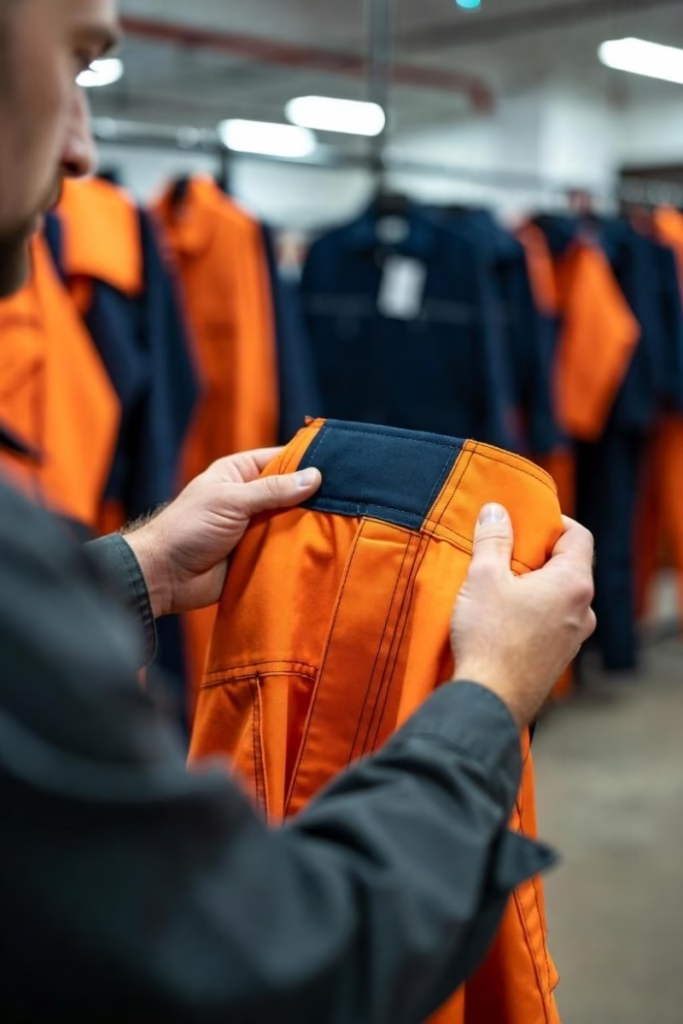
Certification covers the fabric. It does not automatically cover thread, zippers, buttons, or trim, all of which can compromise protection if they are not FR-rated themselves.
Check that the supplier uses:
- FR-rated sewing thread (not standard polyester thread, which can melt)
- Non-metallic or FR-rated zippers and fasteners where required by the standard
- Reflective tape rated for the relevant standard if the garment is also hi-vis
- Seam construction that does not create gaps in protection
- Pocket linings and interior trims made from the same certified fabric family, not a cheaper unrated lining
A garment can use perfectly certified fabric and still fail in the field if the thread holding it together melts before the fabric does. This is a detail many first-time buyers overlook entirely, because the certificate they receive references the outer fabric only. Ask specifically whether the certification scope covers the complete garment as assembled, or the fabric in isolation.
Common mistakes buyers make when switching suppliers
Procurement teams moving an FR program from one supplier to another, or sourcing from a new region for the first time, tend to repeat a small set of avoidable mistakes.
Assuming a lower price means the same specification. A coverall quoted 15 percent below your current supplier is either using a thinner fabric weight, a different fiber blend, or has not actually been tested against the standard you need. Ask for the gsm (grams per square meter) and fiber composition alongside any quote, not after you have already placed a deposit.
Treating “FR” and “multinorm” as interchangeable. A garment can be flame resistant without meeting arc flash, chemical splash, or hi-vis requirements your site may also need. Confirm exactly which hazards your job site requires before requesting quotes, so you are comparing suppliers against the same scope.
Not requesting a pre-production sample. Even with a valid certificate on file, fabric color, hand feel, and stitching quality can vary between a lab-tested sample and a full production run. A pre-production sample, inspected against your spec sheet before bulk cutting begins, catches issues while they are still cheap to fix.
Skipping a trial order. Moving an entire program to a new supplier in one order concentrates all the risk in a single shipment. A trial order, even a partial one, gives you a real-world check on lead time, quality consistency, and communication before you commit your full annual volume.
Step 7: Ask about lead time and minimum order quantity honestly
Reliable FR suppliers are upfront about lead time and MOQ before you sign anything. Watch for suppliers who quote unrealistically short lead times to win the order, then renegotiate timelines after deposit.
A fair conversation includes:
- Standard lead time from order confirmation to shipment
- Whether that lead time changes for multinorm or custom color requirements
- MOQ per style and per color
- What happens if a batch fails internal QC before shipment
If a supplier cannot give you a straight answer on any of these before you place an order, expect surprises after.
Step 8: Request references or an existing buyer who will speak with you
A supplier confident in their compliance and consistency will not hesitate to connect you with an existing buyer in a comparable industry. This is especially useful if you are sourcing for the first time from a new region.
If a supplier resists this, or only offers testimonials they wrote themselves, factor that into your decision.
Step 9: Keep the right documentation after you place an order
Once you have chosen a supplier and placed an order, the paperwork does not end at the purchase order. For FR and multinorm workwear specifically, procurement and safety teams should retain documentation that proves due diligence, both for internal audits and in case a garment’s performance is ever questioned.
Keep on file for every order:
- The fabric or garment test certificate, matched to the specific PO or batch number
- The accredited lab’s contact details, in case verification is needed later
- A retained physical sample from the shipped batch, stored separately from issued stock
- Written confirmation of fiber composition and gsm
- Any wash-care instructions provided by the supplier, since improper laundering can degrade FR performance over the garment’s working life
- Records of any retesting performed during the life of the program
This is a habit many buyers build only after an incident or an audit forces them to. Building it into your standard receiving process from the first order avoids that gap entirely, and it gives your safety team a clean paper trail if a regulator, insurer, or client audit ever asks for it.
It is also worth setting an internal review date, typically annual, to confirm your supplier’s certifications have not lapsed and that no changes have been made to the fabric mill or construction process without your knowledge. Standards bodies periodically update test methods, and a certificate issued under an older revision of EN ISO 11612 or NFPA 2112 may need to be reissued under the current edition.
A quick checklist before you place your first order
- Certificate names the exact standard (EN ISO 11612, NFPA 2112, or both)
- Certificate comes from a named, accredited third-party lab
- Test report includes method, date, and batch reference
- Fabric tested after wash cycles, not just as received
- Multinorm claims backed by separate certificates per hazard
- FR-rated thread, zippers, and trim confirmed
- Batch traceability and retained samples confirmed
- Lead time and MOQ confirmed in writing before deposit
- At least one verifiable reference buyer available
- Documentation process in place to retain certificates and samples per batch
Where Bengal Apparel BD fits in
Bengal Apparel BD works as a single accountable sourcing partner across nine certified partner factories, so buyers get one point of contact instead of chasing multiple vendors for certification documents. For FR and multinorm programs specifically, every fabric batch is matched to its lab certificate before it goes into production, and buyers can request the full test report for EN ISO 11612, NFPA 2112, or combined arc and flame programs before committing to an order.
If you are evaluating suppliers for an FR or multinorm workwear program, the FR clothing page covers certification scope and FOB quote requests in more detail.
Frequently asked questions
Can one garment be certified to both EN ISO 11612 and NFPA 2112?
Yes, many fabrics are built to pass both, but each certification requires its own test report. Ask for both documents separately rather than accepting a single combined claim.
How often should FR certification be retested?
At minimum, after the wash cycle count specified in the standard (commonly 100 cycles for NFPA 2112). Reliable suppliers retest on a fixed schedule rather than only at initial certification.
Is chemically treated FR fabric less safe than inherently FR fiber?
Not necessarily. Both can meet the same standard. The difference shows up over the garment’s working life, in how the FR property holds up to washing and abrasion, which is why wash-cycle retesting matters more than fiber type alone.
What is the most common shortcut weak suppliers take?
Self-declared compliance without a third-party accredited lab report. Always ask which lab issued the certificate and confirm it independently if the order volume justifies it.