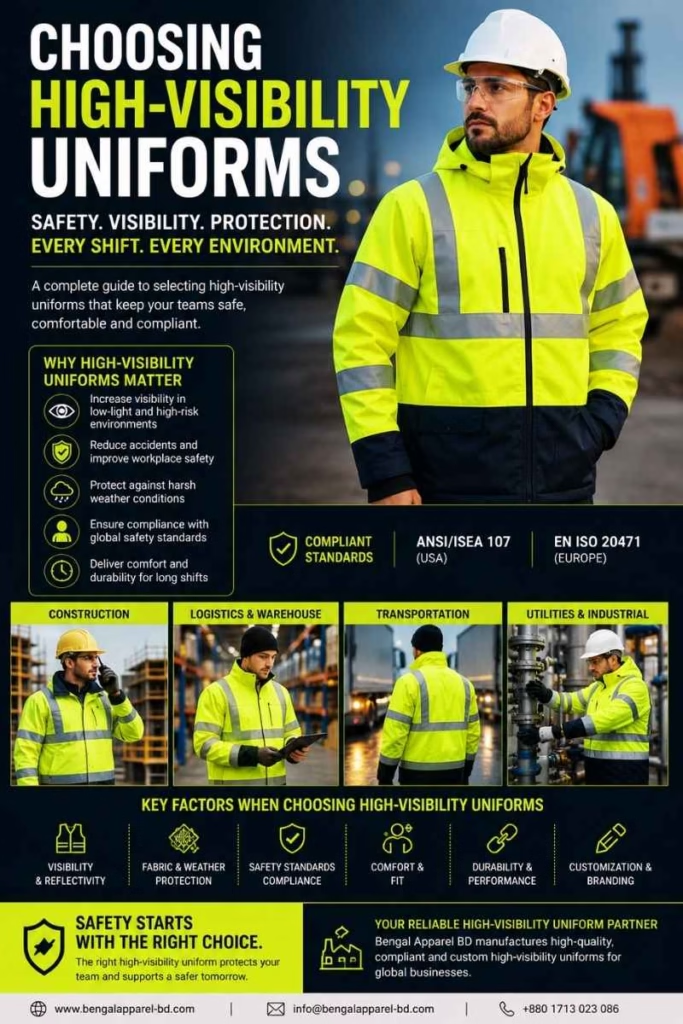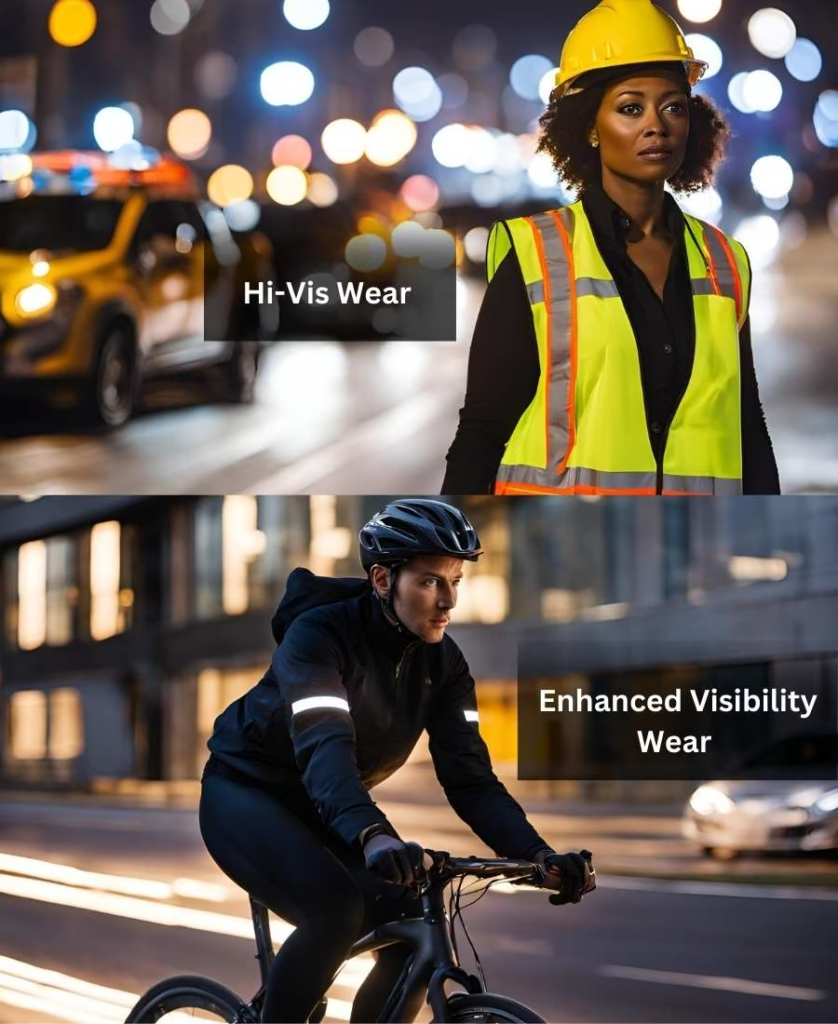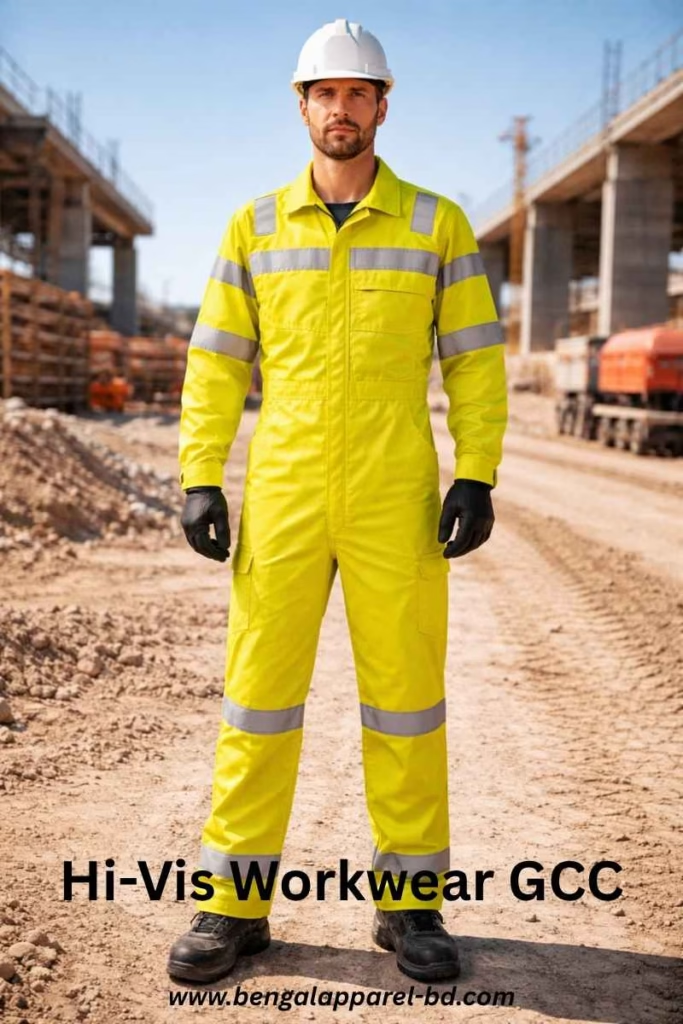
High-visibility workwear is one of the most consistently enforced PPE categories across the Gulf Cooperation Council. Whether you are supplying workwear to a construction project in Dubai, a highway maintenance contractor in Riyadh, or an oil and gas operator in Kuwait, the requirements go well beyond simply buying something bright yellow.
This guide covers the regulatory frameworks by country, how EN ISO 20471 classes work in practice, what the GCC climate demands from fabric specifications, and what buyers and procurement teams need to verify before placing an order.
Why Hi-Vis Workwear Requirements in the GCC Are More Complex Than Europe
Most international buyers are familiar with EN ISO 20471 as the benchmark standard for high-visibility clothing. The GCC adopts this standard as its primary reference through the GCC Standardization Organization, known as GSO. However, each member state also enforces its own additional requirements through local labor ministries, sector-specific safety protocols, and in some cases, major operator standards that exceed national regulations entirely.
The result is that sourcing compliant hi-vis workwear for the GCC market requires understanding both the base standard and the country-level or sector-level requirements that sit on top of it.
EN ISO 20471 Classes: What They Mean for GCC Buyers
EN ISO 20471 classifies garments by the total area of fluorescent background material and retro-reflective tape on the garment. There are three classes, each suited to a different risk level.
Class 1 is the lowest classification, with a minimum of 0.14 square metres of background material and 0.10 square metres of reflective tape. It is acceptable for off-road, indoor warehouse, and low-traffic environments. It is rarely sufficient for active construction or road-adjacent work in the GCC.
Class 2 requires at least 0.50 square metres of background material and 0.13 square metres of reflective tape. It covers general construction, logistics, and delivery drivers. Many GCC contractors use Class 2 as the site-wide minimum for general labour.
Class 3 is the highest classification, requiring 0.80 square metres of background material and 0.20 square metres of reflective tape. It is mandatory for highway maintenance crews, airport ground staff, and workers on night shifts. In Qatar, Class 3 is commonly required on Ashghal public works projects. Saudi Aramco mandates Class 2 or Class 3 for all personnel on its sites.
All three classes require reflective tape strips of at least 50mm width, and the tape must encircle the torso and limbs to provide 360-degree visibility from all angles.
Country-by-Country Regulatory Overview
United Arab Emirates
The UAE enforces hi-vis PPE requirements through the Ministry of Human Resources and Emiratization under Federal Decree-Law No. 33 of 2021 and Ministerial Decision No. 44 of 2022. Employers are required to provide suitable PPE, including high-visibility vests and coveralls, at no cost to the worker.
In Dubai specifically, the Road and Transport Authority and Dubai Municipality enforce stricter color and reflectivity standards for any work carried out on or near public roads. Buyers supplying workwear into Dubai road infrastructure projects should verify compliance with RTA specifications in addition to the base EN ISO 20471 standard.
Saudi Arabia
Saudi Arabia requires all PPE, including hi-vis workwear, to register through the SABER platform, which SASO, the Saudi Standards, Metrology, and Quality Organization, manages. This requirement has been in place since 2019 and applies to all imported PPE entering the Saudi market. Without SABER registration, goods can be held at customs.
For the oil and gas sector, Saudi Aramco’s Construction Safety Manual and General Instructions frequently exceed the national baseline. Aramco specifies Class 2 or Class 3 visibility for all site personnel, and procurement teams supplying into Aramco projects should request the specific GI reference applicable to their contract before finalising garment specifications.
Qatar
Qatar follows EN ISO 20471 closely, with additional enforcement through the Qatar Construction Specifications for projects under Ashghal, the Public Works Authority. Qatar Labour Law requires employers to provide compliant PPE, and compliance is actively inspected on major infrastructure and construction projects.
Kuwait
The Kuwait Oil Company uses its own internal PPE standard, KOC-L-010, which provides detailed requirements for retro-reflective striping on coveralls and jackets used on KOC sites. Buyers supplying into Kuwait’s oil sector should obtain the KOC-L-010 specification and verify that garment construction meets its striping requirements, which in some cases are more specific than EN ISO 20471 alone.
Fabric Specification for GCC Conditions
Standard European hi-vis workwear is typically made from heavier polyester fabrics designed for cool or temperate climates. In the GCC, where summer temperatures regularly exceed 45 degrees Celsius and humidity along coastal cities such as Dubai, Doha, and Dammam is consistently high, fabric selection is as important as certification class.
Weight and Composition
For hi-vis coveralls worn in the GCC, 100% cotton or high-cotton blends at 180 to 200gsm are the standard recommendation. Cotton breathes, absorbs moisture, and does not trap heat against the skin the way synthetic fabrics do. Lightweight polyester mesh is preferred for hi-vis vests where maximum airflow is the priority.
Reflective Tape Grade
Segmented reflective tape, also called heat-transfer tape, is widely used across GCC construction and oil and gas sites rather than solid tape. Segmented tape allows the fabric to flex and breathe through the gaps between tape segments, which reduces heat buildup and allows sweat to evaporate. This is a meaningful difference for workers wearing hi-vis garments for eight to twelve hours in high heat.
Color Fastness
The intensity of UV exposure in the GCC accelerates the fading of fluorescent pigments. A garment that meets EN ISO 20471 color requirements when new may fall out of compliance within months if the fabric has not been tested for UV resistance under the conditions typical of the region. When sourcing hi-vis workwear for GCC distribution, request color fastness test data alongside the standard certification documentation.
Color Coding on GCC Sites
While EN ISO 20471 permits fluorescent yellow, orange-red, and red as compliant colors, GCC construction and industrial sites operate an additional self-regulated color hierarchy that buyers and importers should be aware of.
Fluorescent yellow and lime green are the standard colors for general labourers, technicians, and contractors. Fluorescent orange is typically reserved for road workers, traffic marshals, and crane signalers, providing high contrast against asphalt and ground surfaces. Blue and green vests are commonly used for visitors or environmental safety officers. Red vests are frequently worn by fire marshals and designated first aid responders.
This color system is not enforced by regulation in most GCC countries but is widely observed across major project sites. Supplying the wrong color for a specific role can result in garments being rejected at site level regardless of certification class.
Employer Obligations Across the GCC
Across all GCC member states, employers are legally required to provide hi-vis PPE free of charge to workers. Garments must be replaced when the reflective tape shows cracking or separation, or when the fluorescent color has faded to the point where it no longer meets the visibility standard. In extreme GCC conditions, this can mean replacement cycles of six months rather than the twelve-month cycle typical in European climates.
Sizing compliance is also enforced in several GCC jurisdictions. An oversized hi-vis vest that covers a safety harness or tool belt is considered a violation in some markets. The hi-vis material must be worn as the outermost layer and must not be obscured by other equipment.
The Midday Work Ban, enforced across GCC countries from June to September, brings increased PPE inspections. Employers found to be non-compliant with hi-vis requirements during these inspections face significant fines.
What Buyers Should Verify Before Sourcing Hi-Vis Workwear for the GCC
EN ISO 20471 class is required for the specific end use and site type. Class 2 is the common minimum for general construction; Class 3 is required for highway and high-risk environments.
Fabric weight and composition suitable for GCC climate conditions. 180 to 200gsm cotton or cotton-rich blends are the practical standard, not the heavier polyester constructions used in European markets.
Segmented reflective tape rather than solid tape for garments worn in high-heat environments.
Color fastness test data show UV resistance appropriate for the intensity of sunlight in the GCC region.
SABER registration for goods entering Saudi Arabia. This is a legal import requirement, not optional.
KOC-L-010 compliance documentation for any supply to Kuwait Oil Company projects.
The supply program includes a built-in replacement cycle planning feature. Six-month replacement cycles are realistic for garments in continuous outdoor use in the GCC.
Sourcing Certified Hi-Vis Workwear from Bangladesh
Bangladesh produces a significant volume of certified hi-vis workwear for GCC buyers, European importers, and North American distributors. Fabric mills supplying EN ISO 20471 certified materials to Bangladeshi production facilities hold test documentation from accredited Notified Bodies, and finished garments can be produced with full certification packages including color fastness data and segmented tape options suited to GCC conditions.
Bengal Apparel BD supplies certified hi-vis workwear to buyers across the Middle East, Europe, Canada, and Australia. Our hi-vis programs cover Class 2 and Class 3 garments in cotton and cotton-rich fabrics, with segmented reflective tape options and full EN ISO 20471 certification documentation provided with every order.
If you are sourcing hi-vis workwear for GCC distribution or site supply, visit our Hi-Vis Workwear page for product specifications and to request indicative pricing.
Frequently Asked Questions
What standard governs hi-vis workwear in the GCC?
The GCC primarily adopts EN ISO 20471 through the GCC Standardization Organization. Individual countries enforce additional requirements through their labor ministries and sector-specific standards. Saudi Arabia requires SABER platform registration for all imported PPE, including hi-vis garments.
What EN ISO 20471 class is required for construction sites in the GCC?
Most GCC construction sites require Class 2 as a minimum for general workers. Class 3 is required for highway maintenance, airport ground crews, and night-shift workers. Saudi Aramco mandates Class 2 or Class 3 for all personnel on its sites.
What fabric is best for hi-vis workwear in the GCC climate?
100% cotton or high-cotton blends at 180 to 200gsm are the standard recommendation for coveralls worn in GCC conditions. Lightweight polyester mesh is preferred for vests. Segmented reflective tape is recommended over solid tape to allow airflow and reduce heat buildup.
How often should hi-vis workwear be replaced in the GCC?
In extreme GCC conditions with continuous outdoor use, garments typically need replacement every six months rather than the twelve-month cycle common in cooler climates. Replacement is required when reflective tape shows cracking or the fluorescent color has visibly faded.
Does hi-vis workwear need SABER registration to enter Saudi Arabia?
Yes. Since 2019, all PPE, including hi-vis workwear, must be registered on the SABER platform managed by SASO before it can be imported into Saudi Arabia. Without registration, goods can be held at customs.