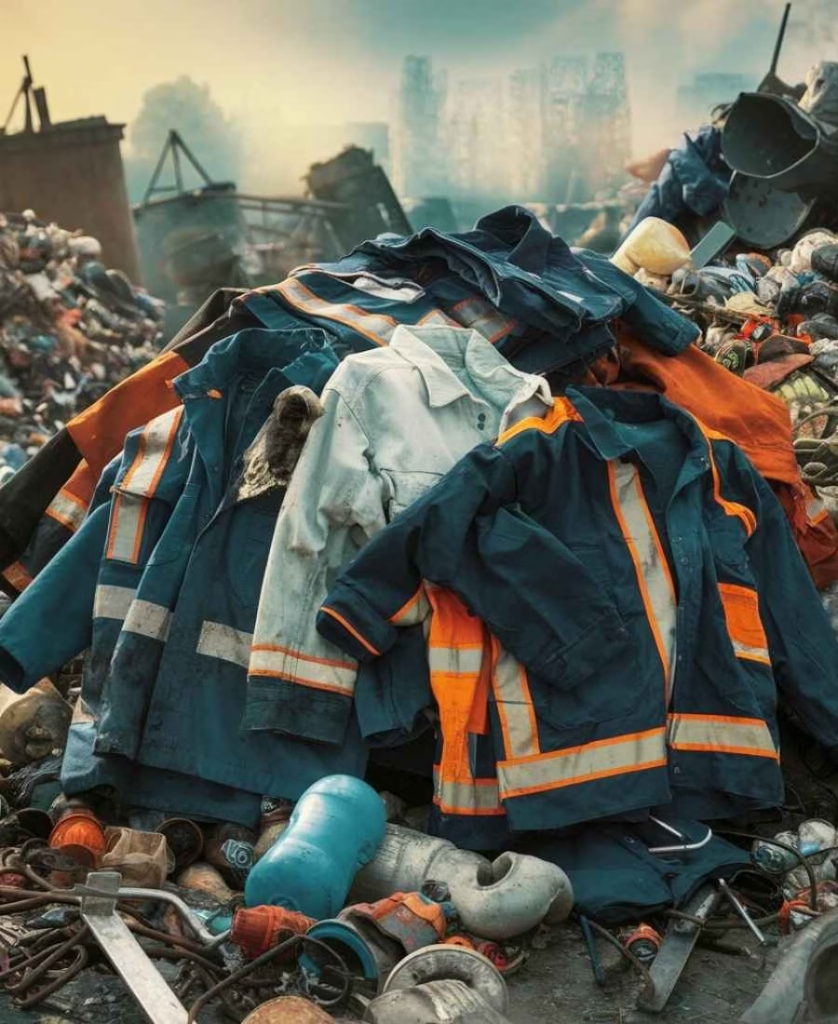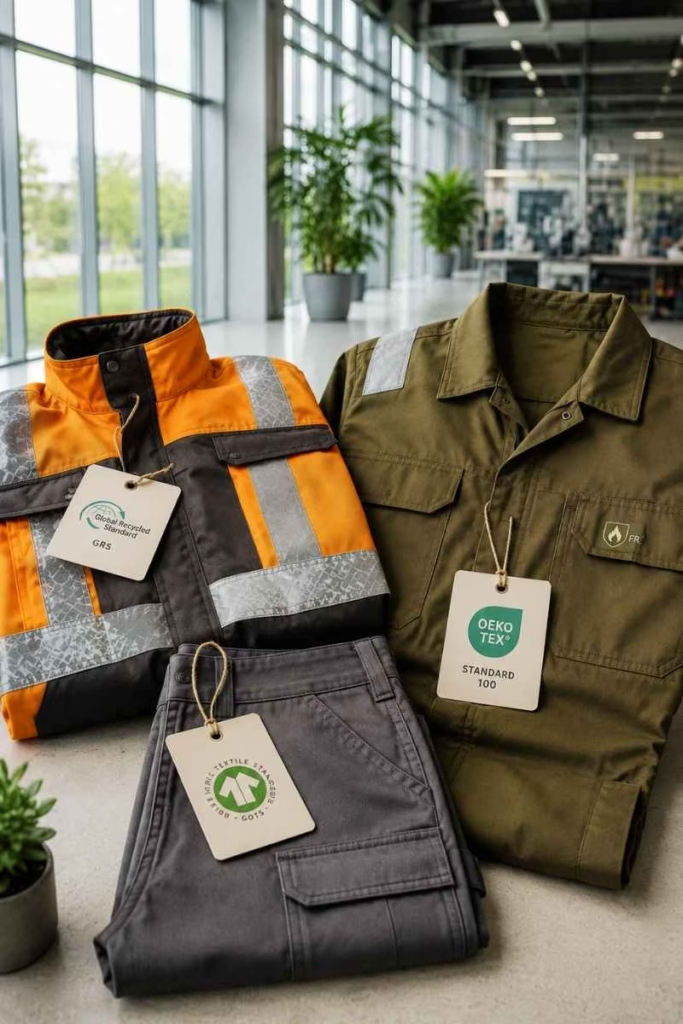
Procurement managers sourcing industrial workwear today face pressure that goes beyond physical protection standards. Buyers, corporate clients, and regulatory frameworks increasingly require documented evidence that the fabrics used in workwear programmes are free from harmful chemical residues. OEKO-TEX certified workwear fabrics provide that evidence at the material level, giving procurement teams a verifiable foundation for ESG compliance and chemical safety claims.
This guide explains the OEKO-TEX system across its three distinct layers, the certification roadmap for securing compliant materials, and how Bangladesh-based manufacturing gives global buyers access to OEKO-TEX-certified workwear fabrics at production scale. Our full compliance and certifications documentation covers the factory-level standards that sit alongside fabric certification in a complete sourcing programme.
Lorem ipsum dolor sit amet, consectetur adipiscing elit. Ut elit tellus, luctus nec ullamcorper mattis, pulvinar dapibus leo.
Why Chemical Safety in Workwear Fabrics Is a B2B Procurement Priority
Physical protection standards such as EN ISO 11612 and EN ISO 20471 address what happens when a garment meets heat, flame, or low-light conditions. OEKO-TEX certification addresses a different but equally important question: what is already inside the fabric when the worker puts it on?
Industrial workwear is worn in direct contact with skin for eight to twelve hours per shift, laundered repeatedly under high-temperature conditions, and replaced on a cycle that spans months or years. During this time, workers are continuously exposed to whatever chemicals remain in the fabric from the dyeing, finishing, and treatment processes applied during manufacturing.
Formaldehyde used in wrinkle-resistance treatments, heavy metals used as dye fixatives, PFAS chemicals used in water-repellent finishes, and pH imbalances in poorly processed textiles are all documented causes of skin irritation, sensitisation, and longer-term health risk in occupational settings. For procurement managers sourcing workwear for healthcare, food processing, and pharmaceutical environments, fabric chemical safety is not a secondary concern. It is a primary specification requirement.
OEKO-TEX certified workwear fabrics address this by requiring independent laboratory verification of the finished material against a regularly updated list of over 1,000 restricted substances before the fabric or garment can carry the certification label.
Decoding the OEKO-TEX System for OEKO-TEX Certified Workwear Fabrics
The OEKO-TEX system is not a single certification. It is a framework operating across three distinct levels of the supply chain. Understanding which level applies to your sourcing decision is the critical starting point for any procurement manager building a compliant workwear programme.
OEKO-TEX Certified Mills: STeP Certification
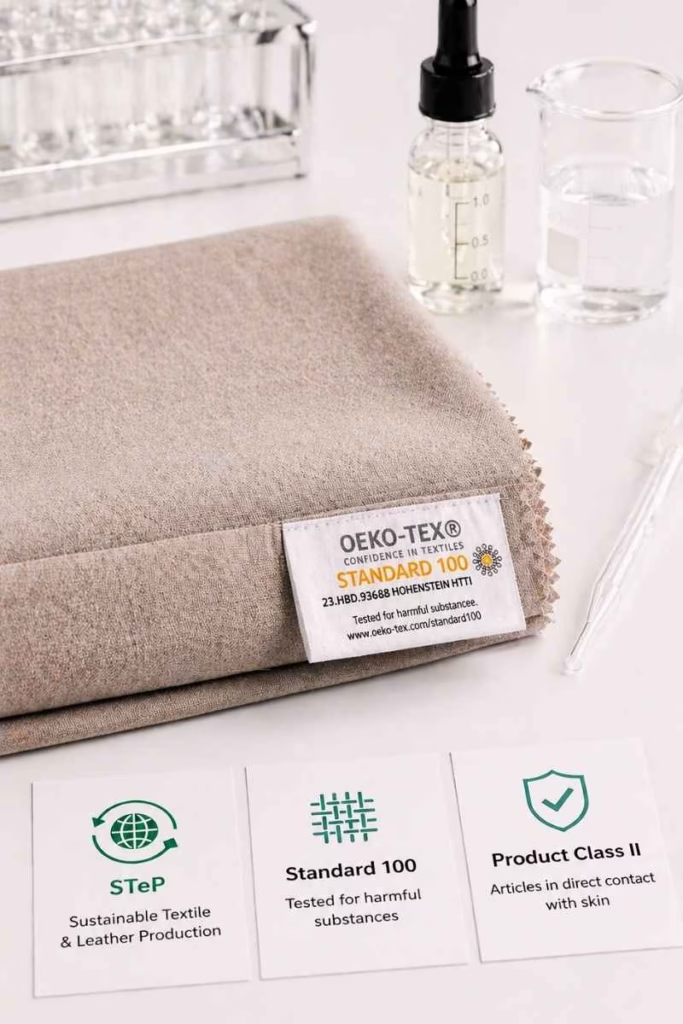
STeP (Sustainable Textile and Leather Production) is the OEKO-TEX certification that applies to the manufacturing facility rather than the material. A STeP-certified mill has been independently audited on six modules covering chemical management, environmental performance, environmental management, social responsibility, health and safety, and quality management.
For procurement managers, sourcing from a STeP-certified mill means that the facility producing your fabric manages wastewater discharge, chemical storage, and worker welfare according to verified international standards. This is the factory-level documentation that satisfies supply chain due diligence requirements under frameworks such as the EU Corporate Sustainability Due Diligence Directive.
OEKO-TEX Tests: Standard 100 Laboratory Analysis
OEKO-TEX Standard 100 testing refers to the laboratory analysis applied to the material itself. Samples from current production are submitted to an accredited testing body such as Hohenstein or SGS, where they are analyzed for restricted substances across the full list, including heavy metals, formaldehyde, pesticide residues, pH levels, colourfastness, and PFAS chemicals.
These limits are reviewed and updated annually by OEKO-TEX and are deliberately set stricter than most national regulatory thresholds. This means OEKO-TEX Standard 100 test compliance provides a stronger chemical safety assurance than regulatory minimum compliance alone.
OEKO-TEX Certified Fabrics: Standard 100 Product Certification
When a material passes the Standard 100 laboratory analysis, the finished fabric or garment becomes an OEKO-TEX certified product. For industrial workwear, materials are typically classified under Product Class II, which covers textiles that come into direct and prolonged skin contact.
The critical point for procurement managers is that every component of the finished garment must comply to carry the label. Threads, buttons, zippers, interlining, labels, and trims are all tested alongside the main fabric. A garment where the shell fabric is certified but the thread or zip pull contains restricted substances cannot legally carry the OEKO-TEX Standard 100 label.
OEKO-TEX Standard 100 vs. STeP: Which Applies to Your Programme
These two certifications answer different questions and serve different functions in a workwear supply chain.
| Feature | OEKO-TEX Standard 100 | STeP Certification |
|---|---|---|
| What it certifies | The finished fabric or garment | The manufacturing facility |
| Who it protects | The end wearer | The supply chain and environment |
| Primary use | Product-level chemical safety claims | ESG and supply chain due diligence |
| Testing body | Accredited lab (Hohenstein, SGS) | Third-party factory audit |
| Renewal cycle | Annual | Annual |
For most B2B workwear procurement programmes, both certifications are relevant. Standard 100 provides the product-level assurance your buyers and end clients need. STeP provides the factory-level documentation your compliance and legal teams require for supply chain reporting.
How to Secure OEKO-TEX Certified Workwear Fabrics: The Certification Roadmap
Step 1: Application and Accredited Body Selection
Identify an accredited testing and certification body. Hohenstein and SGS are the two most widely recognised for workwear applications. Define the product class that applies to your garment based on the level of skin contact and wearer age group. For industrial workwear with direct skin contact, Product Class II is the correct classification in most cases.
Step 2: Sample Submission
Submit representative fabric and component samples from your current production run. This must include all trims and accessories included in the finished garment. Samples from a different production batch than the one being certified will not produce valid results for that production run.
Step 3: Laboratory Testing
The accredited lab conducts chemical analysis against the full OEKO-TEX Standard 100 restricted substance list for your product class. Testing timelines vary by lab and complexity but typically run two to four weeks from sample receipt.
Step 4: Factory Quality System Review
Following successful laboratory testing, the certification process includes a review of the manufacturer’s internal quality assurance system. This confirms that future production batches will replicate the composition and process of the tested samples. Without this step, the certification covers only the submitted sample rather than the ongoing production.
Understanding Certification Costs
Cost varies based on the number of components tested, fabric composition complexity, and whether pre-certified components from the supply chain are used. Using pre-certified threads, zippers, and trims from compliant suppliers significantly reduces the testing scope and lowers the overall certification cost. We recommend this approach for buyers entering the OEKO-TEX certification process for the first time, as it concentrates testing requirements on the shell fabric rather than the full component list.
Sourcing OEKO-TEX Certified Workwear Fabrics from Bangladesh
Bangladesh is home to a growing number of STeP-certified mills and Standard 100-compliant fabric producers. For global buyers, this means access to certified sustainable workwear manufacturing capabilities at production volumes and price points that European or North American certified sources cannot match.
At Bengal Apparel BD, we combine high-performance technical workwear specifications with environmental integrity through what we call a double assurance approach. Fabric safety is addressed through materials tested to OEKO-TEX Standard 100 Product Class II. Factory responsibility is addressed through production in STeP-audited mills with documented environmental and social compliance.
This combination allows buyers to make both a product-level and supply chain-level chemical safety claim, which is the standard increasingly required by retail buyers, corporate procurement frameworks, and regulatory reporting obligations in the EU and UK markets.
Our flame-resistant workwear, multinorm protective garments, and industrial workwear ranges are all available with OEKO-TEX Standard 100 certified fabric options. Certification documentation is provided before production begins, not only with the shipment.
Ready to Upgrade Your Workwear Programme with OEKO-TEX Certified Fabrics
Contact Bengal Apparel BD to discuss your range of OEKO-TEX certified workwear fabrics and request a technical specification pack for your next programme. We respond to all sourcing enquiries within one business day.
Request a Technical Spec-Pack | View Our Compliance Documentation | Our Ordering Process