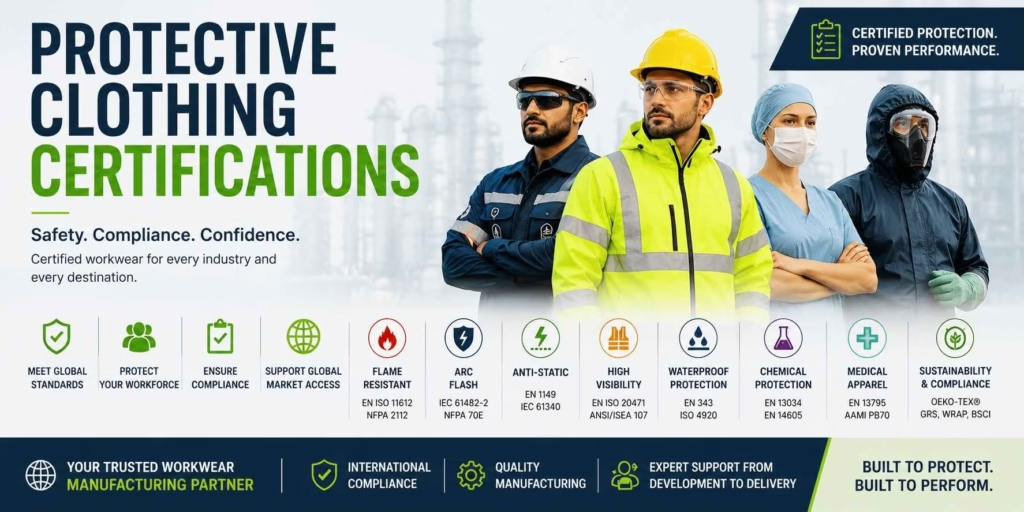
Protective Clothing Certifications
Protective Clothing Certifications are one of the most important requirements when sourcing industrial workwear, safety apparel, medical garments, and protective uniforms for international markets.
Global buyers, distributors, procurement companies, and private-label brands often require garments that comply with specific regional safety and compliance standards before placing production orders.
Protective Clothing Certifications help ensure garments meet safety, visibility, durability, flame resistance, anti-static protection, waterproof performance, chemical protection, and medical compliance requirements for different industries and work environments.
At Bengal Apparel BD, we support buyers with sourcing and manufacturing programs aligned with international Protective Clothing Certifications for the USA, Europe, GCC, Canada, Australia, and other global markets.
Related pages:
Protective Clothing Certifications for Global B2B Buyers
Protective Clothing Certifications are essential for global buyers sourcing industrial workwear, safety apparel, medical garments, and technical protective uniforms. Different industries and destination markets require different compliance standards to ensure worker safety, garment performance, and regulatory approval. From flame-resistant clothing and arc flash protection to high-visibility apparel and medical textiles, certified garments help businesses meet operational requirements while improving supply chain reliability. Understanding Protective Clothing Certifications also helps procurement teams choose the right manufacturing partner, reduce compliance risks, and ensure products meet international market expectations before bulk production begins.
Why Protective Clothing Certifications Matter
Protective Clothing Certifications help buyers verify that garments meet the required performance standards for their target industries and destination markets.
Different countries and industries have different compliance requirements for:
- Flame-resistant workwear
- Arc flash protection
- High-visibility garments
- Anti-static clothing
- Waterproof outerwear
- Chemical protection apparel
- Medical scrubs and surgical garments
For international sourcing programs, selecting the correct Protective Clothing Certifications before production helps reduce compliance risks and improves supply chain reliability.
Many industrial buyers now require certification documentation as part of their procurement approval process.
Flame Resistant Protective Clothing Certifications
Flame-resistant garments are widely used in oil and gas, utilities, industrial maintenance, welding, and manufacturing environments.
Common Flame Resistant Protective Clothing Certifications include:
- EN ISO 11612:2015
- EN ISO 11611:2015 Class 1
- EN ISO 11611:2015 Class 2
- NFPA 2112
- NFPA 701
- ISO 14116
- AS/NZS 4824
Related article:
FR Workwear Supplier
Official references:
Arc Flash Protective Clothing Certifications
Arc flash garments are designed for electrical and utility work environments where workers may face arc flash hazards.
Common Arc Flash Protective Clothing Certifications include:
- IEC 61482-2:2018 APC Class 1
- IEC 61482-2:2018 APC Class 2
- NFPA 70E CAT II
- NFPA 70E CAT III
- NFPA 70E CAT IV
- ASTM F1959
These standards are commonly required for electrical contractors, utility companies, and industrial maintenance programs.
High-Visibility Protective Clothing Certifications
High-visibility garments improve worker visibility in low-light and hazardous environments.
Common High-Visibility Clothing Certifications include:
- EN ISO 20471 Class 1
- EN ISO 20471 Class 2
- EN ISO 20471 Class 3
- ANSI/ISEA 107-2020 Type R Class 2
- ANSI/ISEA 107-2020 Type R Class 3
- CSA Z96-15
- AS/NZS 4602.1
Related pages:
Official references:
Medical Protective Clothing Certifications
Medical buyers often require Clothing Certifications for surgical garments, scrubs, and healthcare apparel.
Common certifications include:
- EN 13795-1:2019
- EN 13795-2:2019
- EN 14683:2019+AC:2019
- AAMI PB70 Level 1
- AAMI PB70 Level 2
- AAMI PB70 Level 3
- AAMI PB70 Level 4
- ASTM F1671
- FDA 510(k) Clearance
These standards help ensure garments meet healthcare safety and barrier protection requirements.
Official references:
Sustainability and Social Compliance Certifications
Sustainability certifications are increasingly important for global sourcing programs.
Many buyers now require:
- GRS
- GOTS
- OEKO-TEX Standard 100
- WRAP
- BSCI
- SEDEX
- RSC
- C-TPAT
These certifications help buyers evaluate environmental responsibility, chemical safety, ethical sourcing, and supply chain transparency.
Related article:
Sustainable Workwear Bangladesh
Official references:
Choosing the Right Protective Clothing Certifications
Choosing the correct Protective Clothing Certifications depends on:
- Industry application
- End-use environment
- Destination market
- Buyer compliance requirements
- Government regulations
- Customer safety standards
Many buyers combine multiple certifications into a single garment program such as:
- FR and anti-static
- FR and arc flash
- FR and high-visibility
- Waterproof and high-visibility
- Multi-norm industrial workwear
Before production begins, buyers should confirm certification requirements based on their destination market and operational environment.
Recommended destination markets include:
- USA
- Canada
- Europe
- GCC
- Australia
- UK
Protective Clothing Certifications Manufacturing Support in Bangladesh
Bangladesh has become an important sourcing destination for certified industrial workwear and safety apparel manufacturing.
Manufacturers in Bangladesh now support production programs aligned with multiple Clothing Certifications including:
- FR garments
- Arc flash clothing
- High-visibility workwear
- Waterproof outerwear
- Medical apparel
- Multi-norm industrial uniforms
At Bengal Apparel BD, we support buyers with:
- Product development
- Fabric sourcing
- Compliance coordination
- Certification support
- Sampling
- Quality inspections
- Export management
Related page:
MOQ Policy
FAQ
What are Protective Clothing Certifications?
Protective Certifications are compliance standards used to verify the safety, performance, and regulatory requirements of industrial garments and protective apparel.
Why are Protective Certifications important?
Protective Clothing Certifications help buyers ensure garments meet required safety standards for their industry and destination market.Protective Clothing Certifications are compliance standards used to verify the safety, performance, and regulatory requirements of industrial garments and protective apparel.
What certifications are required for FR workwear?
Common FR certifications include EN ISO 11612, EN ISO 11611, NFPA 2112, and ISO 14116.
What standards apply to high-visibility clothing?
Common high-visibility standards include EN ISO 20471 and ANSI/ISEA 107.
Why source certified workwear from Bangladesh?
Bangladesh offers competitive manufacturing costs, experienced garment production, scalable capacity, and growing expertise in technical workwear manufacturing.
Looking for Certified Protective Clothing Manufacturing Support?
At Bengal Apparel BD, we support sourcing programs aligned with international Protective Certifications for:
- Industrial distributors
- Procurement companies
- Safetywear brands
- Utility contractors
- Oil and gas suppliers
- Medical apparel buyers
- Private-label workwear brands
Our services include:
- Product development
- Fabric sourcing
- Compliance coordination
- Certification support
- Sampling
- Quality control
- Export coordination
Contact Bengal Apparel BD to discuss your certified workwear and protective clothing manufacturing requirements.