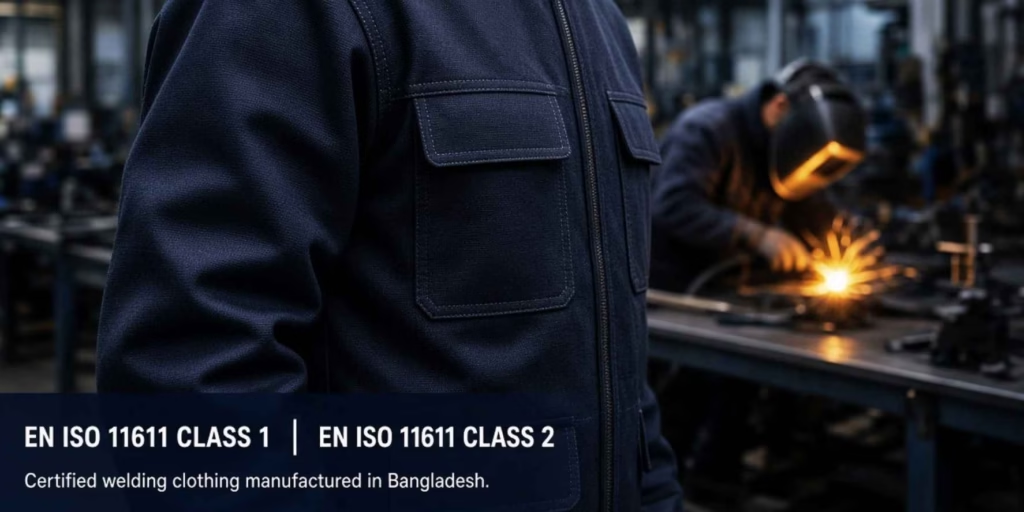
EN ISO 11611 Welding Clothing Manufacturer: What Procurement Teams Need to Know
Welding and allied processes expose workers to a specific combination of hazards that standard flame-resistant workwear is not designed to address: molten metal spatter, intense radiant heat from the welding arc, short contact with flame, and the risk of electric shock from accidental contact with live conductors during the welding task. Each of these hazards requires tested, certified protection, and the standard that governs it in European and international markets is EN ISO 11611. As a certified EN ISO 11611 welding clothing manufacturer, Bengal Apparel BD produces Class 1 and Class 2 certified garments for welding fabrication, shipbuilding, construction, petrochemical maintenance, and industrial manufacturing programs across Europe, the Middle East, and export markets worldwide.
This page covers what EN ISO 11611 certification requires, how Class 1 and Class 2 differ, how the standard relates to EN ISO 11612, what the garment must physically deliver beyond fabric test results, and what documentation to request before approving bulk production.
EN ISO 11611 Welding Clothing Manufacturer: Scope and What the Standard Actually Covers
ISO 11611:2015 specifies minimum basic safety requirements and test methods for protective clothing designed to protect the wearer’s body during welding and allied processes with comparable risks, including hoods, aprons, sleeves, and gaiters as well as the core garment pieces: jackets, trousers, coveralls, and two-piece suits. EN ISO 11611 is the European adoption of this international standard and is the version required for CE marking in the EU and UKCA marking in the UK.
The standard covers four primary hazard types that are specific to welding environments. First, molten metal spatter: small droplets of hot metal produced during MIG, MAG, MMA, and other arc welding processes that land on the garment surface and must not penetrate or ignite the fabric. Second, short contact with flame: the brief but intense flame contact that can occur during cutting, gouging, and high-energy welding processes. Third, radiant heat from the welding arc: the infrared and radiant energy emitted by the arc during operation, which transfers heat through the garment and can cause burns without direct contact. Fourth, limited electrical protection: EN ISO 11611 certified garments provide a degree of protection against accidental short-term contact with live conductors up to approximately 100 V DC under normal dry welding conditions, though this protection degrades with sweat, soiling, or contamination and is not a substitute for electrical insulation PPE in dedicated electrical work.
The standard does not cover dedicated hand, face, eye, or foot protection. EN ISO 11611 certified garments must always be combined with certified welding gloves to EN 12477, face and eye protection to EN 175, and appropriate footwear to address the full hazard profile of a welding workstation.
Class 1 vs Class 2: How to Match the Certification to the Welding Process
EN ISO 11611 classifies garments into two performance levels: Class 1 for lower-risk welding processes and Class 2 for higher-risk processes. The class must be matched to the specific welding process and working conditions of the wearer, not defaulted to Class 1 across a workforce without a process-specific risk assessment.
Class 1 is specified for gas welding, TIG welding, low-current MIG, micro-plasma, brazing, spot welding, and basic MMA with rutile electrodes. These processes produce lower levels of spatter and radiant heat. Class 1 is also the appropriate specification for machine-operated welding where the operator is positioned at a greater distance from the arc, and for open, well-ventilated environments where spatter disperses rather than concentrating on the garment.
Class 2 is specified for MMA welding with basic or cellulose electrodes, MAG welding with CO₂ or mixed gases, high-current MIG, flux-cored welding, plasma cutting, gouging, oxygen cutting, and thermal spraying. These processes produce significantly higher levels of spatter, greater radiant heat intensity, and a higher risk of flame contact. Class 2 is also required for confined space welding, overhead welding positions, and constrained working positions where the welder’s body is closer to the heat and spatter source than in open bench welding.
| Performance Requirement | Class 1 | Class 2 |
|---|---|---|
| Molten metal drops before burn-through (ISO 9150) | Minimum 15 drops | Minimum 25 drops |
| Radiant heat transfer time RHTI 24 (ISO 6942) | Minimum 7 seconds | Minimum 16 seconds |
| Tear strength | Minimum 15 N | Minimum 20 N |
| Typical welding processes | TIG, gas, low-current MIG, brazing | MMA, MAG, high-current MIG, plasma cutting, gouging |
| Typical environments | Open, well-ventilated, bench welding | Confined spaces, overhead, constrained positions |
Both classes require limited flame spread performance under ISO 15025, with no sustained burning, melting, or flaming debris after the ignition source is removed. Garments are marked with A1 (surface ignition tested) and A2 (edge ignition tested) flame codes alongside the class designation.
Key Performance Tests Behind Every EN ISO 11611 Certificate
A valid EN ISO 11611 certificate is backed by a specific set of laboratory tests conducted on both the fabric and the finished garment. Understanding what each test measures helps procurement managers evaluate test reports critically rather than accepting a certificate reference alone.
The molten metal drop test under ISO 9150 measures how many drops of molten metal a fabric surface can receive before temperature sensors behind the fabric record a defined temperature rise indicating potential burn injury. The minimum drop count differs between Class 1 and Class 2 as shown in the table above, and this is the single most differentiating test between the two classes for most welding environments.
The radiant heat transfer test under ISO 6942 measures the time in seconds before heat transferred through the fabric would cause a second-degree burn under radiant heat exposure simulating the arc. The RHTI 24 value (time to reach a threshold linked to pain and burn onset) must meet the class minimum, and higher values indicate greater protective margin above the standard threshold.
The limited flame spread test under ISO 15025 tests both surface ignition (A1) and edge ignition (A2) to confirm the fabric self-extinguishes, does not produce flaming debris or droplets that could ignite secondary materials, and does not char beyond defined limits. Both A1 and A2 results must appear on the garment label.
The electrical resistance test confirms the garment provides a minimum resistance of 10⁵ ohms under dry conditions, supporting the limited electrical contact protection the standard covers. This value is tested on new fabric and must be maintained after the declared maximum number of washing cycles.
All performance values must be maintained after the manufacturer’s declared maximum number of cleaning cycles, since this is a condition of continued certification validity. A certificate that does not specify the number of wash cycles for which performance has been confirmed is an incomplete certification document.
EN ISO 11611 vs EN ISO 11612: Why They Are Not Interchangeable
EN ISO 11611 and EN ISO 11612 are the two most commonly confused standards in the FR and protective clothing category, and the confusion creates real compliance gaps in programs that assume one covers the other.
EN ISO 11611 is the specific standard for welding and allied processes, covering the combination of molten metal spatter, short flame contact, radiant heat from the welding arc, and limited electrical contact that is unique to welding environments. EN ISO 11612 is a broader industrial heat and flame protection standard covering convective heat, radiant heat, contact heat, and larger molten metal splashes from aluminium and iron in general industrial environments. Both require flame-resistant fabric, but the specific test methods, hazard types, and performance thresholds are different.
A garment certified only to EN ISO 11612 does not automatically meet EN ISO 11611. The molten metal spatter test (ISO 9150) used in EN ISO 11611 is not part of EN ISO 11612, and the electrical resistance requirement in EN ISO 11611 is absent from EN ISO 11612. A welder wearing an EN ISO 11612 certified garment in a welding environment is not wearing certified welding protection, even if that garment is a high-performance FR coverall with strong thermal ratings.
The practical solution for workers who face both welding and broader heat and flame hazards in the same role is a multi-norm garment certified to both standards simultaneously. Many modern FR coveralls carry both EN ISO 11611 Class 1 and EN ISO 11612 certifications in a single piece, providing welding-specific protection alongside the broader thermal performance that general industrial environments require. Our multinorm FR coverall page covers combined certification programs where welding protection is one of several certifications required in the same garment.
Design and Construction Requirements Beyond Fabric Performance
EN ISO 11611 imposes specific design requirements on the finished garment that go beyond fabric test results and affect how the garment must be constructed at the factory level. These requirements exist because even a correctly certified fabric can allow spatter entry, heat concentration, or electrical contact through poorly designed pockets, exposed fasteners, or ill-fitting cuffs.
All pockets must have covering flaps wider than the pocket opening, preventing spatter from falling directly into the pocket and accumulating against the body. No continuous or exposed metal fasteners are permitted, since metal zippers, buttons, or rivets create thermal bridges that conduct heat to the skin and can conduct electrical current if contacted during welding. Cuffs must be adjustable and positioned to avoid trapping spatter between the cuff and the wrist. Trouser pockets must be angled to prevent spatter accumulation. The collar must be high and capable of being fastened closed to protect the neck, which is one of the highest-risk areas for radiant heat and spatter contact during overhead or vertical welding positions.
These construction requirements are verified by a Notified Body during the CE certification process for Class 2 garments, which are classified as Category III PPE under EU regulation 2016/425, the highest PPE category requiring third-party certification and ongoing production surveillance. Class 1 garments are Category II PPE, also requiring third-party certification. Neither class can be self-declared without Notified Body involvement for the EU market.
Current Edition and the ISO 11611:2024 Update
EN ISO 11611:2015 remains the version most commonly referenced in current certifications, tenders, and procurement specifications across Europe and international markets. ISO 11611:2024, the third edition published in June 2024, introduces explicit UV protection testing and classification at three UV risk levels linked to welding process irradiance, revised sampling and ageing rules, and updated manufacturer information requirements.
The European adoption of the 2024 version as an EN standard has faced technical complications around UV test methods and their interaction with high-visibility or lighter-coloured fabrics, which means EN ISO 11611:2015 continues to dominate current certification activity in Europe. Procurement teams specifying welding clothing for European markets should confirm which edition is required by the applicable regulations, tenders, or customer specifications, and request evidence of testing to the specific edition claimed on the certificate rather than assuming the most recent edition is always required.
For buyers whose programs may evolve to require 2024 edition compliance, confirming the supplier’s roadmap for transition testing is a reasonable due-diligence step at the quoting stage.
Fabric Options: FR Cotton, Inherent FR, and What Each Suits
EN ISO 11611 certified welding clothing is produced from two main fabric categories, and the choice between them affects performance, service life, comfort, and program cost.
FR-treated cotton is the most widely used fabric for Class 1 welding garments. Cotton provides good comfort and breathability for extended shift wear, and FR-treated cotton using Proban or similar durable press treatments achieves the necessary performance levels for Class 1 in most standard welding environments. The trade-off is durability: FR-treated cotton has a finite wash cycle life beyond which the treatment degrades and performance can no longer be guaranteed without retesting. Procurement programs using treated cotton should define replacement cycles and include wash-durability data as a mandatory document requirement.
Inherent FR fabrics, including modacrylic cotton blends and meta-aramid constructions, provide FR performance built into the fiber chemistry rather than applied as a surface treatment. For Class 2 applications, particularly high-current MIG, plasma cutting, and gouging in confined spaces, inherent FR fabrics are the more reliable specification since their thermal performance does not degrade with washing cycles. The higher cost of inherent FR fabric is generally offset by longer service life and the elimination of retest costs over a multi-year program horizon. Our Nomex vs Kevlar vs modacrylic fabric comparison covers the performance and cost differences between inherent FR fiber options in detail.
Fabric weight for EN ISO 11611 certified production typically falls between 340 and 400 gsm for cotton-based constructions, with higher weights required for Class 2 compliance where the molten metal drop threshold and radiant heat performance requirement are more demanding.
Multi-Norm Programs: Combining EN ISO 11611 with Other Certifications
Most EN ISO 11611 programs are not standalone. Workers in fabrication, shipbuilding, construction, and petrochemical maintenance face welding hazards alongside broader heat and flame risk, and in some environments, arc flash or antistatic requirements apply in the same role. Multi-norm garments certified to EN ISO 11611 alongside EN ISO 11612 and in some cases EN 1149-5 or IEC 61482-2 are the practical solution for these combined-hazard programs.
Combining certifications in a single garment requires fabric engineered to meet all specified tests simultaneously, which is not achievable with every FR fabric. The welding-specific tests in EN ISO 11611, particularly the molten metal drop test and electrical resistance requirement, impose constraints that affect fabric composition and construction in ways that can conflict with the finishing requirements of other standards. This is exactly why multi-norm garment programs require a manufacturer with specific experience in combined-standard fabric sourcing and construction, not simply a factory that holds individual certifications on separate product lines. Our flame-resistant workwear manufacturing page covers our approach to combined FR certification programs across our nine certified partner factories.
What to Request from Your EN ISO 11611 Welding Clothing Manufacturer
Before approving a sample or committing to bulk production, confirm six things in writing from any EN ISO 11611 welding clothing manufacturer.
First, the full test report from an accredited laboratory referencing the specific standard edition, either EN ISO 11611:2015 or ISO 11611:2024, the specific garment style tested, and the class achieved, confirming both the molten metal drop count and the RHTI 24 radiant heat result. Second, the Notified Body number and CE certificate confirming that the certification covers the finished garment construction you are ordering, not a fabric swatch or a different style. Third, the wash durability limit: the number of cleaning cycles for which all performance values have been confirmed, so you can define replacement cycles in your program documentation. Fourth, fabric composition by fiber percentage and weight in gsm, confirming whether the construction is FR-treated cotton or an inherent FR blend and what the implications are for service life and performance retention. Fifth, the A1 and A2 flame code, confirming both surface and edge ignition tests have been conducted. Sixth, confirmation of design compliance, specifically that pockets have covering flaps, no exposed metal fasteners are present, and cuffs and collar meet the standard’s construction requirements.
How Bengal Apparel BD Produces EN ISO 11611 Certified Garments
Bengal Apparel BD produces EN ISO 11611 Class 1 and Class 2 certified welding clothing through partner factories with documented experience in welding-specific FR construction requirements including covered pocket flaps, FR-rated sewing thread throughout every seam, concealed metal-free fastening systems, and the high-collar construction that EN ISO 11611 requires for full compliance on the finished garment rather than the fabric alone.
Third-party test reports for EN ISO 11611 Class 1 and Class 2 certification are provided as part of the standard pre-shipment documentation pack. For programs requiring EN ISO 11611 combined with EN ISO 11612, EN 1149-5 antistatic, or IEC 61482-2 arc flash certification in a single garment, confirm this at the quoting stage since each additional certification affects fabric specification, construction detail, and the specific test documentation package required. Our compliance and certifications page lists the full factory certification documentation available on every production run.
FOB Chittagong. MOQ from 1,000 pieces per style and color. Lead time 45 to 90 days from sample approval depending on fabric specification and class requirement.
FAQ
What is EN ISO 11611 and what does it cover?
EN ISO 11611 is the European and international standard for protective clothing used in welding and allied processes. It covers protection against molten metal spatter, short contact with flame, radiant heat from the welding arc, and limited electrical contact protection up to approximately 100 V DC. It applies to jackets, trousers, coveralls, and allied garment types used by welders and related process workers.
What is the difference between EN ISO 11611 Class 1 and Class 2?
Class 1 is for lower-risk welding processes in open environments including TIG, gas, low-current MIG, and brazing. Class 2 is for higher-risk processes including MMA with basic electrodes, high-current MIG, MAG, plasma cutting, gouging, and work in confined spaces or overhead positions. Class 2 requires a higher molten metal drop count (25 versus 15) and longer radiant heat transfer time (16 seconds versus 7 seconds) before the burn threshold is reached.
Is a garment certified to EN ISO 11612 also compliant with EN ISO 11611?
No. EN ISO 11612 and EN ISO 11611 are separate standards covering different hazard profiles with different test methods. EN ISO 11611 includes welding-specific tests including the molten metal drop test under ISO 9150 and an electrical resistance requirement that are not part of EN ISO 11612. A garment certified only to EN ISO 11612 does not carry EN ISO 11611 welding certification regardless of its thermal performance level.
Which edition of EN ISO 11611 is currently required for European markets?
EN ISO 11611:2015 is the edition most widely referenced in current European certifications, tenders, and procurement specifications. ISO 11611:2024 is the latest international edition but its European adoption as an EN standard has faced technical complications. Confirm the specific edition required by your applicable regulations or customer specifications before placing an order, and request evidence of testing to that edition specifically.
Do EN ISO 11611 garments require Notified Body certification?
Yes. EN ISO 11611 garments are classified as PPE under EU Regulation 2016/425, with Class 2 garments classified as Category III (the highest category) and Class 1 as Category II. Both categories require third-party certification by an EU Notified Body and cannot be self-declared by the manufacturer. Request the Notified Body number alongside the test report before approving any EN ISO 11611 garment for a European market program.
What is the minimum order quantity for EN ISO 11611 welding clothing?
MOQ starts from 1,000 pieces per style and color. For programs combining EN ISO 11611 with additional certifications such as EN ISO 11612 or EN 1149-5, contact us with your full technical brief and we will confirm what is achievable including options for smaller initial test orders.