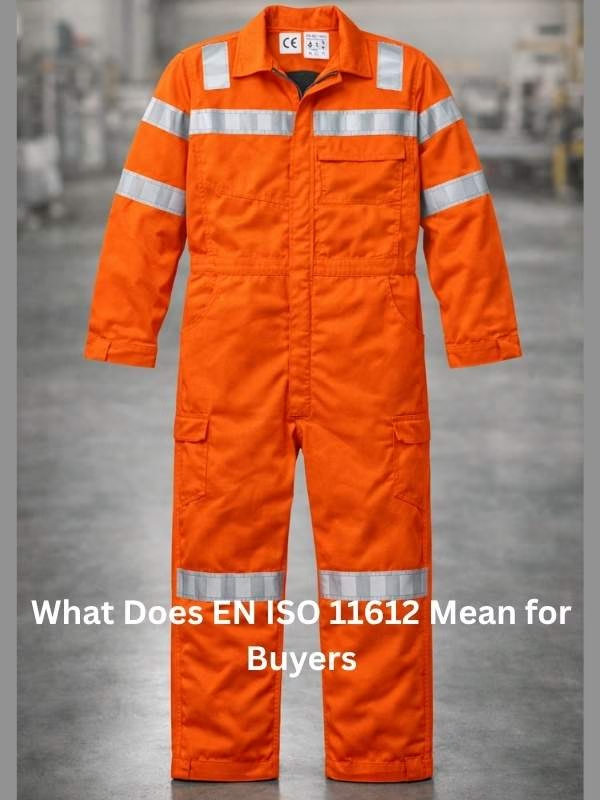
Finding a reliable FR coverall manufacturer for Europe means more than finding a factory that can sew a garment from flame-resistant fabric. It means finding a production partner who understands European PPE regulation, works with certified materials, produces the documentation required for EU market entry, and can supply consistently at the volumes your program requires.
Bengal Apparel BD manufactures EN ISO 11612 certified FR coveralls from Bangladesh for importers, distributors, and private-label brands supplying the European market. This post explains what European buyers need from a manufacturer, how Bangladesh production compares to European and regional alternatives, and what the sourcing process looks like in practice.
Why FR Coverall Manufacturer Selection Matters More for the European Market
The European market for FR coveralls is one of the most regulated in the world. The EU PPE Regulation (EU) 2016/425 classifies flame-resistant protective clothing as Category III PPE, the highest risk category, which means every garment must be certified by a notified body, not self-declared by the manufacturer.
For buyers supplying European end markets, this has a direct impact on sourcing decisions. A garment produced without the correct certification documentation cannot legally be placed on the EU market regardless of how well it is made. The certification is not an optional quality mark. It is a legal requirement.
This means that when you are evaluating an FR coverall manufacturer for Europe, compliance capability is the first filter, not price. A manufacturer who cannot produce EN-certified garments with the correct technical documentation is not a viable option for your market, regardless of unit cost.
Our protective clothing certifications page explains what EN ISO 11612 requires in practical terms, including the performance classifications that apply to heat and flame exposure at different levels.
EN ISO 11612 Explained: What European Buyers Need from the Garment
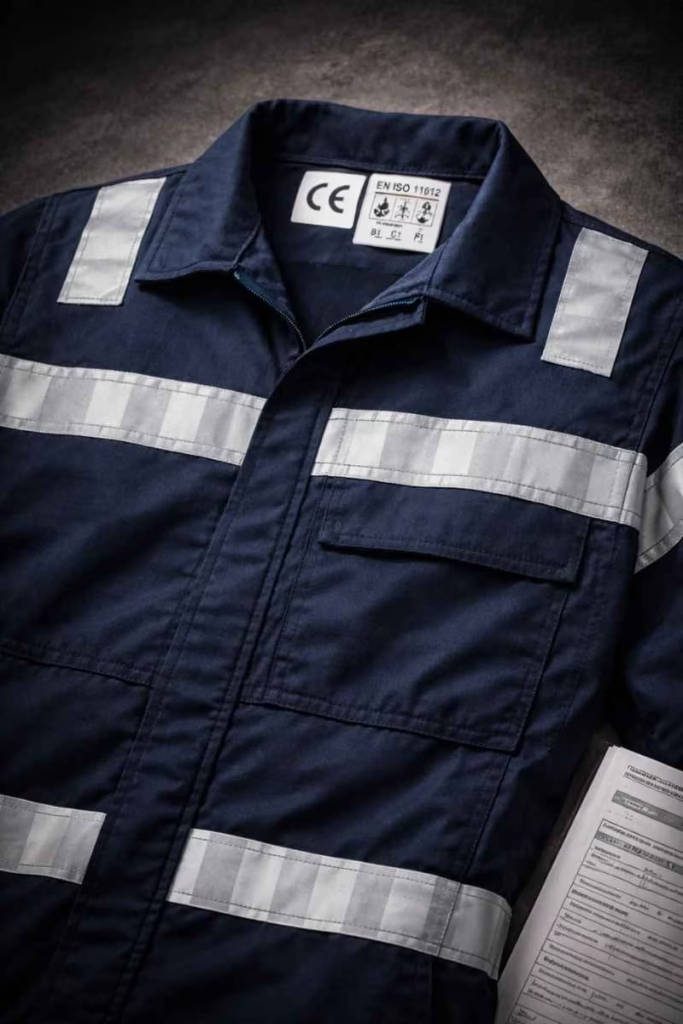
EN ISO 11612 is the primary European standard for flame and heat protective clothing. A garment certified to this standard has been tested and confirmed to meet defined performance levels across six protection categories:
A1 and A2 cover limited flame spread. A1 is the surface ignition test and A2 is the edge ignition test. Both must be passed for certification.
B covers convective heat. The classification runs from B1 to B3, with B3 representing the highest level of protection against heat transmitted through convection.
C covers radiant heat, classified C1 to C4.
D covers molten aluminium splash, classified D1 to D3.
E covers molten iron splash, classified E1 to E3.
F covers contact heat, classified F1 to F3.
A certified FR coverall will carry a classification code showing which levels it has achieved, for example A1+A2 B1 C2 F1. The specific classification required depends on the end use and the risk assessment applicable to the environment where the garment is worn.
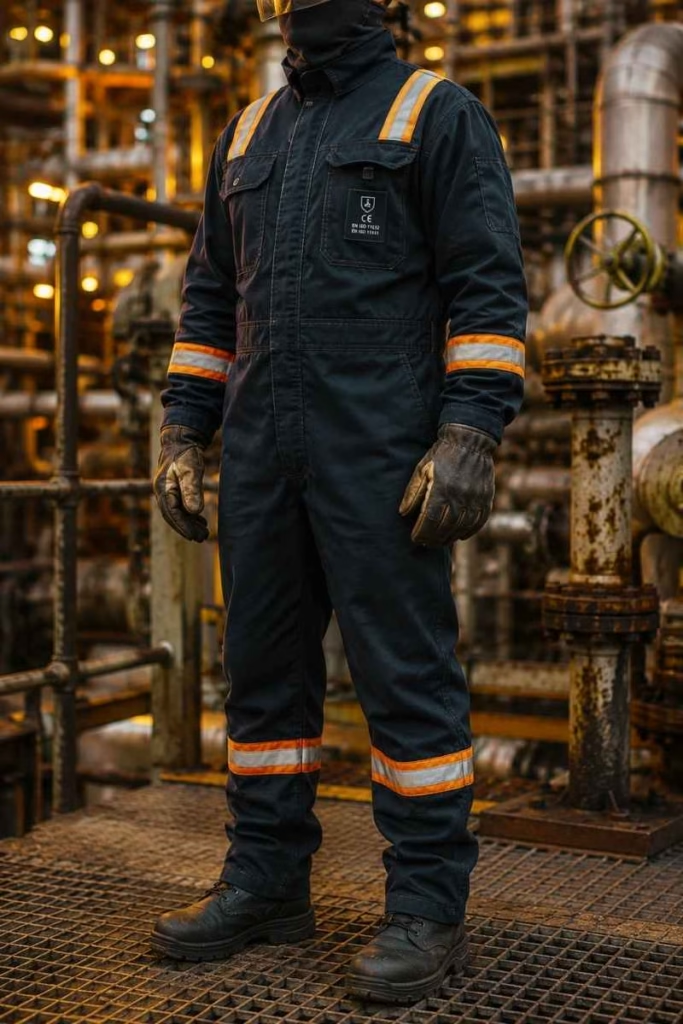
For oil and gas applications, the most common requirements are A1+A2 with B and C classifications. For utilities and electrical work environments where arc flash is also a risk, EN 1149-5 antistatic protection is typically required alongside EN ISO 11612. Our multi-norm workwear range covers garments certified to combined standards for buyers supplying multi-hazard environments.
Inherent FR vs Treated FR: The Decision That Affects Compliance Over Time
For European importers sourcing FR coveralls, the choice between inherent FR fabric and treated FR fabric has compliance implications that extend beyond the point of first certification.
Treated FR fabric starts as standard textile that has been coated or impregnated with a flame-retardant chemical finish. It can pass EN ISO 11612 testing when new. The problem is that the finish degrades with washing. Most treated FR fabrics carry a rated wash cycle count, after which the manufacturer cannot guarantee that the garment still meets the standard. For end users in regulated environments, a garment that has exceeded its wash cycle limit is effectively non-compliant, even if it looks intact.
Inherent FR fabric is made from fibres that are flame-resistant by their molecular structure. Nomex, Kevlar, and modacrylic are the most widely used inherent FR fibres in workwear production. The flame resistance cannot wash out because it is not a surface treatment. A garment made from inherent FR fabric maintains its certified performance throughout its working life, regardless of how many times it is washed.
For European buyers supplying garments to end users in oil and gas, petrochemical, utilities, and other environments where ongoing compliance is monitored and audited, inherent FR is the only specification that provides reliable protection across the full garment lifecycle. Our oil and gas FR coverall range is produced exclusively from inherent FR fabrics, primarily Nomex and Kevlar blends, certified to EN ISO 11612 and EN 1149-5.
For buyers who want to understand the full range of FR fabric options and their compliance implications, the OEKO-TEX Association’s Bluesign standard provides independent guidance on responsible FR textile production and chemical safety in certified fabric manufacturing.
Why Bangladesh Is a Credible Source for EN-Certified FR Coveralls
The association between Bangladesh and low-cost basic garments is outdated for buyers who have worked with certified workwear factories in the country. Bangladesh’s established workwear manufacturers produce to the same EN standards as factories in Turkey, Eastern Europe, and China, using the same certified fabric mills, the same notified body testing process, and the same documentation requirements.
The cost advantage is real and it comes from two sources: labor cost and manufacturing infrastructure scale. Neither compromises compliance. A garment tested and certified to EN ISO 11612 by a European notified body carries the same legal standing regardless of where it was sewn.
For European importers and distributors, the practical implication is that sourcing certified FR coveralls from Bangladesh produces the same compliant, documented product at a meaningfully lower unit cost than comparable European or Near-Eastern production. At volume, that margin difference compounds significantly across an annual supply program.
Our coverall manufacturing page outlines the full coverall range produced at Bengal Apparel BD’s partner factories, including FR, hi-vis, industrial, and medical coveralls, with certification scope and MOQ for each category.
What European Buyers Should Require from an FR Coverall Manufacturer
When evaluating an FR coverall manufacturer for European market supply, the documentation requirements are as important as the product specification. The following are the minimum requirements a compliant manufacturer should be able to provide:
EN ISO 11612 test report issued by an accredited notified body. This is the garment-level certification, not a factory certificate. It confirms that the specific garment construction and fabric combination has been tested and classified. A test report for a different garment or a different fabric is not transferable.
EU Declaration of Conformity signed by the manufacturer or the EU importer acting as the responsible entity. This is the legal document that supports CE marking under EU PPE Regulation 2016/425.
Fabric certification records confirming that the fabric used in production matches the fabric specified in the test report. A substitution of fabric batch without re-testing invalidates the certification.
Factory compliance documentation covering social and ethical production standards. For EU buyers, factory audits to BSCI, Amfori, or equivalent standards are increasingly required as part of supply chain due diligence under the EU Corporate Sustainability Due Diligence Directive.
Third-party inspection reports for bulk production, confirming that the garments produced match the certified specification before shipment.
Our compliance and certifications page outlines the certifications and audit standards maintained across Bengal Apparel BD’s partner factory network, and the documentation package available for EU market entry on each product category.
FR Coverall Manufacturer for Europe: The Sourcing Process
For European buyers placing their first order with a Bangladesh-based FR coverall manufacturer, the process follows a defined sequence that protects both parties and ensures the end product matches the requirement.
Inquiry and specification review. Share your product specification, target volume, EN classification requirement, and any private-label requirements. We respond within one business day with an initial assessment and pricing indication.
Sample development. A pre-production sample is produced to your specification. For FR coveralls, this includes fabric swatch approval, construction review, and fit confirmation before bulk production begins. Our workwear sample approval checklist gives buyers a structured framework for reviewing the sample before approving production.
Production and quality control. Bulk production follows the three-stage quality process: pre-production fabric and trim inspection, in-line production checks, and final inspection against the approved sample. Third-party inspection can be arranged at this stage for buyers who require independent verification.
Documentation and shipment. All compliance documentation including the EN test report, Declaration of Conformity, fabric certification records, and factory audit certificates is prepared alongside the shipment. Our ordering process page describes the full sequence from order confirmation to delivery.
Lead times for certified FR coveralls from Bangladesh typically run ten to fourteen weeks from order confirmation, reflecting the fabric sourcing requirements for certified inherent FR materials and the certification documentation preparation.
FR Coverall Categories Available for the European Market
Bengal Apparel BD produces the following FR coverall categories for European importers and distributors:
Standard FR coveralls certified to EN ISO 11612, available in Nomex, Kevlar blends, and modacrylic cotton. Suitable for industrial, utilities, and general manufacturing applications.
Multi-norm FR coveralls certified to EN ISO 11612 combined with EN 1149-5 antistatic and EN ISO 20471 hi-vis. For buyers supplying multi-hazard environments where a single garment must meet multiple protection requirements.
Oil and gas FR coveralls in Nomex/Kevlar 93/5/2 and similar inherent FR blends, certified to EN ISO 11612 A1+A2 B1 C1 F1 and EN 1149-5. Designed for petrochemical, refinery, and offshore environments.
Nomex Kevlar coveralls for the highest-demand FR applications. Our Nomex Kevlar coverall range covers buyers requiring maximum inherent FR performance with EN certification.
All categories are available with private-label branding, custom pocket configurations, reflective tape placement, and color options to buyer specification.
Summary
Sourcing from a certified FR coverall manufacturer for the European market requires a supplier who treats compliance documentation as a core deliverable, not an afterthought. The garment must carry a valid EN ISO 11612 certification from an accredited notified body, be produced from the certified fabric specified in the test report, and ship with the full documentation package required for EU market entry.
Bangladesh’s certified workwear manufacturers deliver this at production costs that are competitive with any comparable sourcing origin. For European importers and distributors building or expanding their FR workwear program, the combination of EN compliance capability and Bangladesh pricing represents a clear sourcing advantage.
If you are sourcing FR coveralls for the European market and want to confirm whether your specification is within our certified production scope, contact our team directly. We will review your requirement and respond with specific pricing and documentation within one business day.