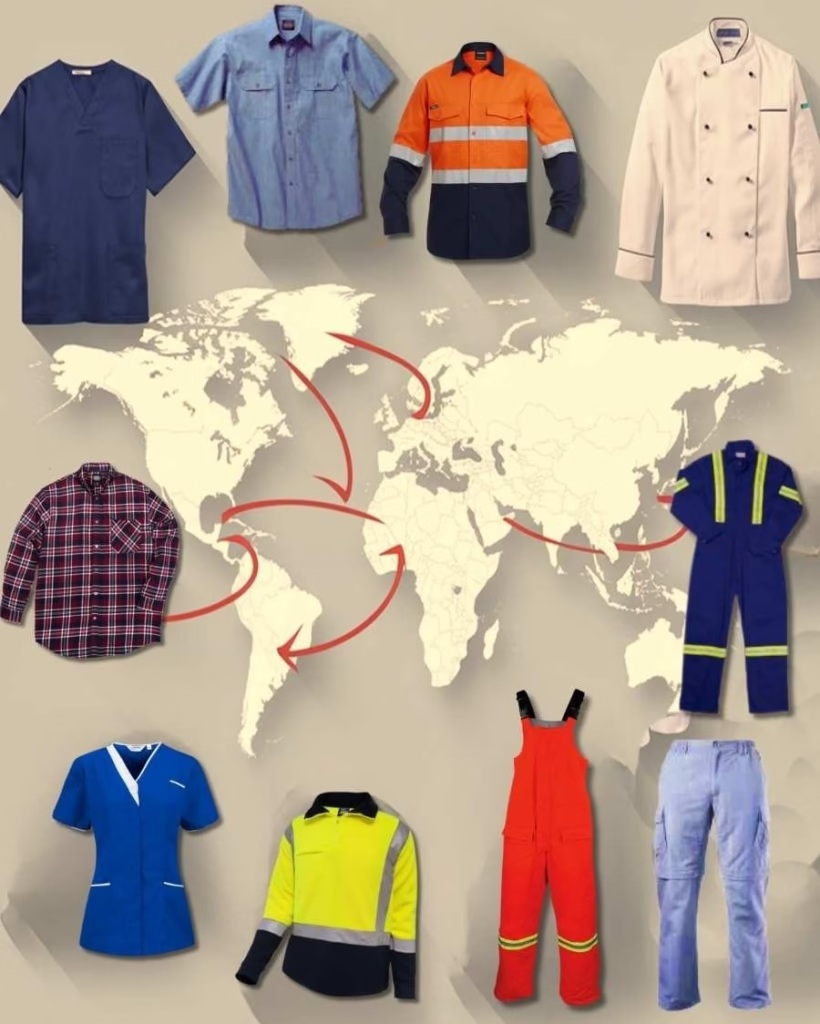
Choosing a workwear manufacturer Bangladesh vs India is now the most common comparison B2B buyers make when sourcing outside China. Both countries offer large-scale production, established export infrastructure, and growing technical capability in flame-resistant, hi-vis, and multinorm protective clothing. The right choice between them depends on your product category, your destination market, and how much weight you put on certification depth versus speed to market.
This guide compares Bangladesh and India across the factors that matter most to procurement managers sourcing industrial and safety workwear, including production cost, compliance certifications, lead time, capacity, and trade policy exposure heading into 2026. If you want the wider picture across all major sourcing countries first, our global workwear manufacturer comparison covers Bangladesh, China, Vietnam, and Turkey side by side.
Two Countries, Two Very Different Sourcing Cases
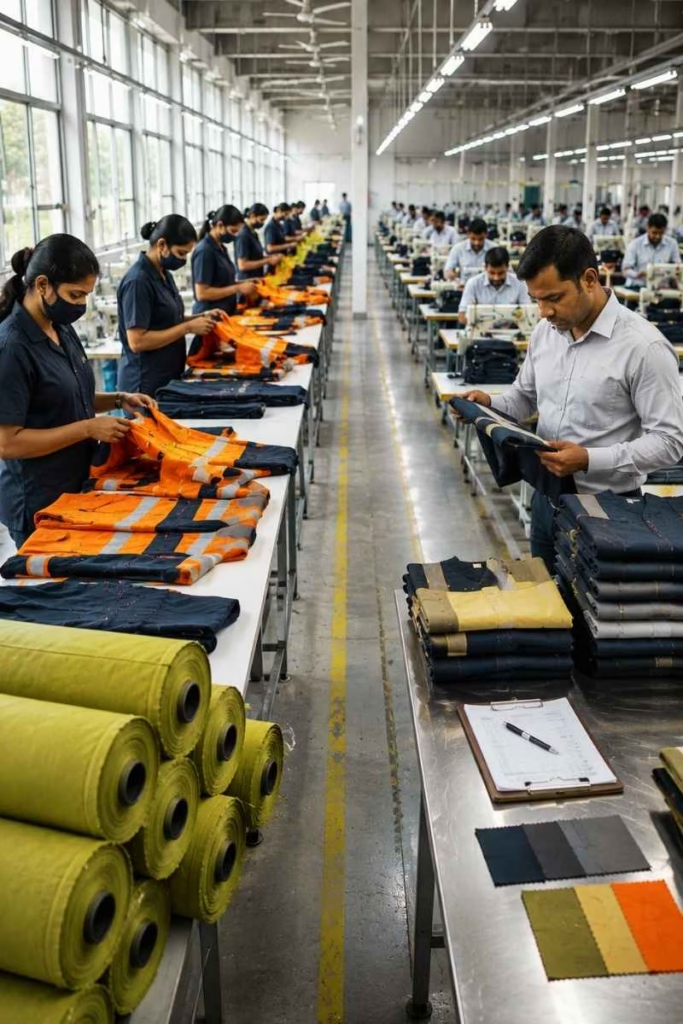
India and Bangladesh are often grouped together as low-cost Asian sourcing destinations, but the comparison is not as simple as price per piece. India has a larger and more diversified industrial base, with strong domestic demand for protective workwear from its own oil, gas, and manufacturing sectors. Bangladesh built its workwear capability almost entirely around export demand, which means its leading factories are structured specifically around the compliance and documentation standards that European, North American, and Middle Eastern buyers require.
That distinction shapes almost everything else in this comparison. India’s strength is depth and diversity of industrial capacity. Bangladesh’s strength is a certified partner factory network purpose-built for export compliance at competitive volume pricing.
Cost: Where Bangladesh Still Wins on Bulk Workwear
For most bulk technical workwear programs, Bangladesh remains the more cost-effective option. Lower labor costs, an extensive network of factories built specifically for export-grade garment production, and a mature fabric sourcing ecosystem keep unit pricing competitive, particularly on orders above 500 to 1,000 pieces per style.
India’s cost position varies more by region and factory tier. Established technical workwear manufacturers in India, particularly those targeting oil and gas or defense-adjacent buyers, often price closer to mid-tier European sourcing than to standard Bangladesh pricing. Smaller Indian factories can undercut Bangladesh on basic garments, but most do not carry the certification depth that buyers sourcing FR coveralls for oil and gas environments require.
For buyers running annual volume programs across multiple styles, Bangladesh typically delivers a better total cost outcome once certification, documentation, and rework risk are factored in alongside unit price.
Compliance and Certification: FR, Hi-Vis, and Multinorm Capability
This is where the comparison gets more nuanced. India has a smaller number of highly specialized manufacturers that have invested heavily in certifications like EN ISO 11612, NFPA 2112, and IEC 61482, often targeting Middle East oil and gas buyers directly through dedicated landing pages and technical content. These factories compete well on technical credibility for high-spec orders.
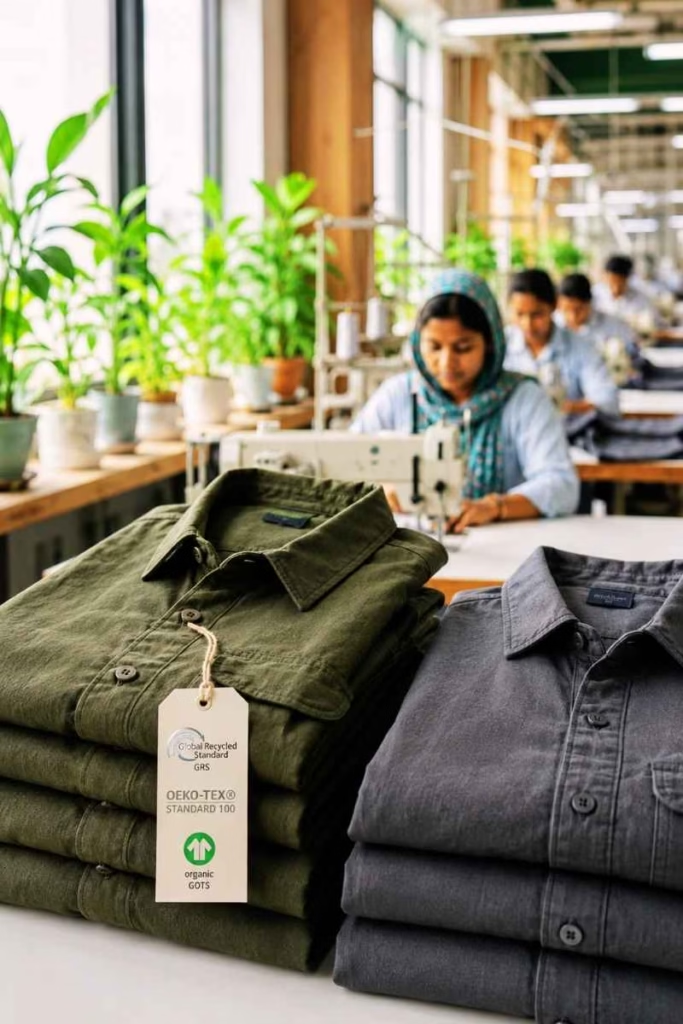
Bangladesh’s advantage is breadth rather than a handful of specialists. Bangladesh’s ready-made garment sector includes over 200 LEED-certified factories, among the highest concentration of green-certified manufacturing in the world. That same investment culture extends into safety and quality certification. WRAP, BSCI, SEDEX, OEKO-TEX, and ISO 9001:2015 are standard across the established export-grade factory base, not limited to a small number of niche specialists. WTO
For multi-norm garments combining several hazard certifications in one piece, Bangladesh factories serving oil and gas, electrical utility, and construction buyers commonly hold EN ISO 11612 and EN 1149-5 certification as a baseline, with NFPA 2112 capability available for buyers supplying North American markets. The difference is structural: in Bangladesh, certification depth is distributed across a wide partner network. In India, it is often concentrated in a smaller number of factories that have positioned themselves specifically around technical safety wear.
If your program needs one or two highly specialized technical garments, India’s specialist factories are worth evaluating directly. If your program spans multiple categories, such as FR coveralls, hi-vis jackets, and healthcare uniforms produced under hygiene-appropriate conditions, under one supply relationship, Bangladesh’s broader certified factory network is usually the more practical fit.
Lead Time and Production Capacity
Lead times in both countries run on similar timelines for standard bulk orders, typically 45 to 90 days from sample approval depending on garment complexity and order volume. Neither country holds a decisive structural advantage here. What differs more is capacity utilization and how easily a buyer can scale an order mid-program.
India’s larger domestic market means some factories split capacity between export and local demand, which can affect prioritization during peak periods. Bangladesh’s workwear-specific factories are more heavily weighted toward export production, which tends to make capacity planning more predictable for buyers running fixed annual programs.
Trade Policy and Tariff Exposure in 2026
Trade policy is becoming a larger factor in this comparison than it was even two years ago. Bangladesh is set to graduate from Least Developed Country status on 24 November 2026, a shift expected to raise European Union tariffs from zero to an average of around 12 percent, with additional reciprocal tariffs affecting United States-bound shipments as well. (Source: DHL )
India is positioned differently on several of these fronts. A new trade agreement has given India a zero-tariff arrangement on garment exports to the United Kingdom, a deal expected to significantly expand India’s UK-bound textile exports. Buyers shipping primarily into the UK market may find India’s tariff position more favorable going forward, while buyers focused on the US market have recently seen Bangladesh gain ground. Bangladesh’s apparel exports to the United States grew by nearly 22 percent year-on-year in the first seven months of 2025, a pace that outstripped overall US apparel import growth for the same period.( Source: Textile FocusThe Business Standard )
The practical takeaway: tariff exposure is now market-specific rather than uniform. A workwear program built for European distribution faces a different calculation than one built for the US or UK. This is worth confirming with your supplier before locking in a multi-year sourcing commitment to either country.
Where India Has the Edge
India is not a weaker option across the board, and buyers should not treat it that way. India’s domestic industrial and defense sector creates deep, real-world testing experience for certain technical garments, particularly arc-rated and flash-fire protective wear used in its own oil, gas, and power sectors. Some Indian manufacturers also offer more flexible low-MOQ proto-sampling for buyers still finalizing a technical spec, which can suit smaller private-label brands earlier in their sourcing journey.
India is generally the stronger option when a buyer needs one highly specialized, certification-heavy garment from a factory that already has deep institutional experience producing exactly that product, and when minimum order flexibility matters more than total program cost.
Side-by-Side Comparison: Workwear Manufacturer Bangladesh vs India
| Factor | Bangladesh | India |
|---|---|---|
| Unit cost on bulk orders | Generally lower | Competitive on basics, higher for specialist FR/multinorm |
| Certification breadth | Wide across the export factory base (WRAP, BSCI, OEKO-TEX, ISO 9001) | Concentrated in a smaller number of specialist factories |
| FR/multinorm depth | Strong baseline (EN ISO 11612, EN 1149-5), NFPA 2112 available | Strong in specific niche factories, especially arc flash and oil/gas |
| Standard lead time | 45 to 90 days | 45 to 90 days |
| EU tariff trajectory (2026+) | Rising from 0% toward ~12% post-LDC graduation | Stable, with new UK zero-tariff access |
| US tariff trend | Recent gains in US import share | Mixed, market dependent |
| Best fit | Multi-category programs needing broad certified capacity | Single-category, high-spec technical garments |
Which Country Fits Your Program
Three questions usually settle this decision.
Are you sourcing one technical product or a full program?
A full program spanning FR, hi-vis, healthcare, and industrial categories under one supplier relationship favors Bangladesh’s broader certified factory network. A single, highly specialized arc-rated or flash-fire garment may be worth sourcing from an Indian specialist directly.
Which destination market matters most?
If your primary market is the EU or US, confirm current tariff exposure for both countries before committing volume, since the landscape is shifting through 2026 and 2027 as Bangladesh’s LDC status changes and new bilateral agreements take effect elsewhere.
How important is documentation consistency across your supply base?
Buyers running multi-year programs generally find it easier to standardize compliance documentation, audit reports, and QC processes across Bangladesh’s wider network of similarly certified factories than across a smaller number of specialist Indian suppliers with varying certification profiles.
Why Bengal Apparel BD Is the Safer Bangladesh Partner
Bengal Apparel BD works through a network of nine certified partner factories, which means your program is not dependent on a single facility’s capacity, certification status, or production schedule. We match each order to the factory specifically equipped for that garment type, whether that is an FR coverall for oil and gas, a multi-norm garment covering several hazard classes, or a healthcare uniform program requiring hygiene-specific production conditions. For buyers comparing FR options specifically, our guide on choosing a reliable FR and multinorm workwear supplier covers the evaluation criteria in more depth.
If you are weighing Bangladesh against India for your next workwear program, the comparison should come down to your specific product mix and destination market rather than a general assumption about either country. We are happy to walk through your specification and tell you directly whether Bangladesh, and specifically our factory network, is the right fit, or whether your program would be better served elsewhere.