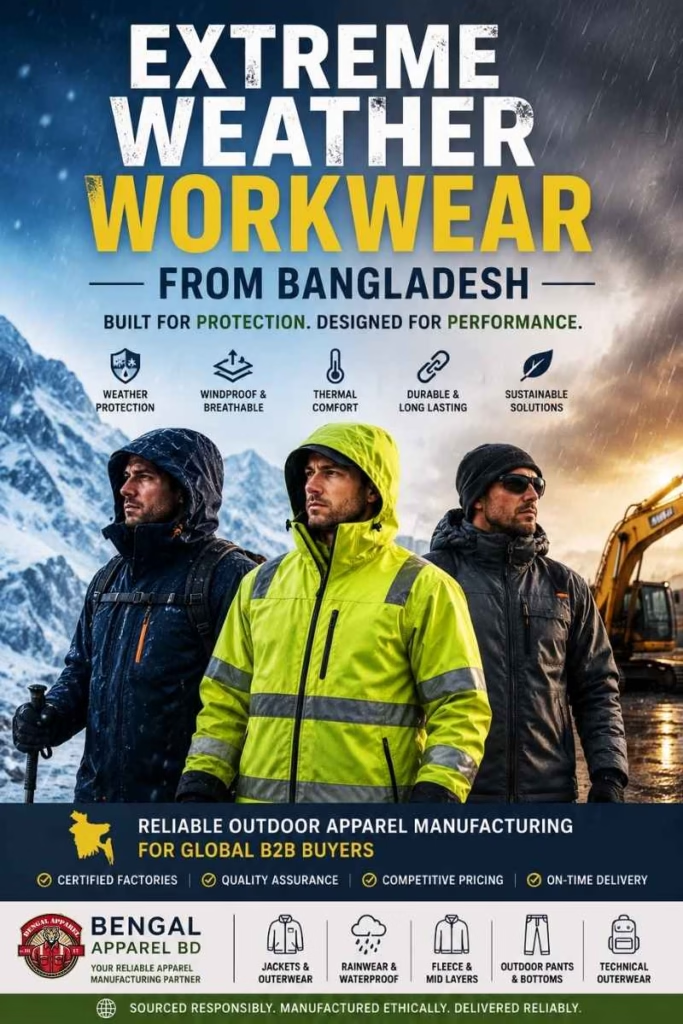
Field workers in Arctic oil fields, highway maintenance crews in Nordic winters, construction teams on exposed coastal sites, and utility workers in high-altitude environments all face the same sourcing challenge: standard workwear is not enough. Extreme weather conditions require garments built specifically to maintain worker protection and performance when temperature, wind, rain, and wet conditions are at their worst.
Bangladesh manufactures certified extreme weather workwear for B2B buyers across Europe, North America, the GCC, Canada, and Australia. The technical fabric supply chain, certified factory infrastructure, and OEM production capability available in Bangladesh make it a practical sourcing destination for high-specification cold-weather and adverse-weather workwear programs at volume.
This guide covers what extreme weather workwear Bangladesh categories produce, what performance specifications matter for cold and wet climate programs, and what procurement teams need to verify before placing an order.
What Extreme Weather Workwear Bangladesh Means for B2B Buyers
Extreme weather workwear is not the same as general outdoor clothing. The difference lies in construction specification, performance testing, and certification.
A consumer outdoor jacket is tested for recreational use. An extreme weather workwear garment for industrial or field service application must perform reliably across a full shift in sustained rain, high wind, or sub-zero temperatures without degrading the worker’s ability to operate safely. In many programs, these garments must also carry hi-vis certification, FR certification, or both.
For procurement teams, the relevant question is not which consumer brands perform well in extreme weather. It is which fabric specifications, construction standards, and certification combinations deliver compliant, durable garments at a cost that works for a large-volume supply program.
Extreme Weather Workwear Categories We Manufacture
Insulated Parkas and Extreme Cold Coveralls
Insulated outer layers for Arctic and sub-zero environments are the most demanding garments in any extreme weather workwear program. Shell fabrics at 150 to 190 GSM ripstop polyester with DWR finish provide the outer weather barrier. Synthetic hollow fibre fills at 160 to 200g/m² deliver the thermal performance required for sustained work in temperatures below minus 20 degrees Celsius.
For oil and gas and utilities programs where flame hazard is also present, insulated FR parkas combining EN ISO 11612 certified inherent FR shell fabric with compatible FR-rated insulation are available. These garments allow workers in cold-climate petrochemical and refinery environments to wear a single certified outer layer rather than combining a non-FR insulated jacket with a separate FR coverall underneath.
For full-body cold-weather protection, insulated coveralls with bib-and-brace or full zip constructions are produced in FR and non-FR versions. Reinforced knees and seat, storm cuffs, and draft-blocking inner layers are standard construction features for extreme cold programs.
Waterproof Outer Shells and Rain Coveralls
Waterproof workwear for extreme weather programs is rated by hydrostatic head. For sustained heavy rain and high-wind environments, a minimum of 10,000mm hydrostatic head is required. For offshore, marine, and high-exposure environments, 20,000mm constructions are available.
Fully taped seams are mandatory for any extreme weather waterproof program. Critically taped constructions (seams taped at main stress points only) are not adequate for sustained immersion-risk or heavy precipitation environments. All seam taping should be confirmed as a specification requirement before sampling, not assumed.
Waterproof breathability is measured by Moisture Vapour Transmission Rate (MVTR). For workers generating significant physical exertion in rain gear, a minimum MVTR of 10,000 g/m²/24h prevents condensation build-up inside the garment that would otherwise reduce thermal performance and increase cold injury risk.
C6 fluorocarbon-free DWR finishes are required for all programs supplying into European markets under REACH restrictions. Confirm this specification with any supplier before accepting a sample.
For programs where waterproof outer layers must also carry EN ISO 20471 hi-vis certification, waterproof hi-vis parkas and coveralls in Class 2 and Class 3 are produced alongside standard waterproof outer shells.
Softshell Extreme Weather Workwear
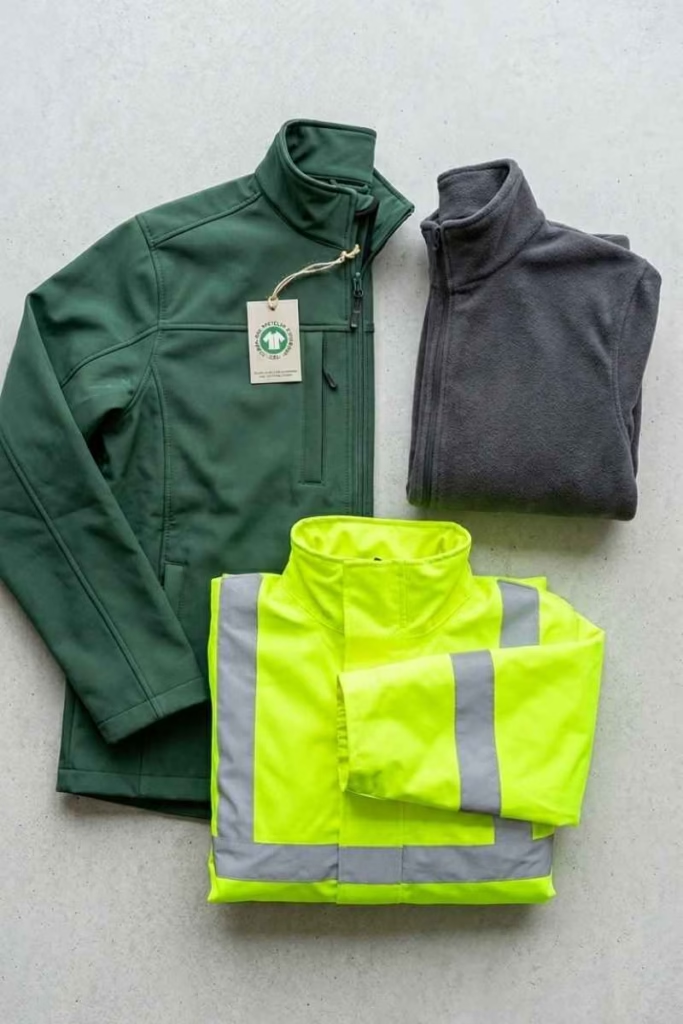
Bonded softshell constructions provide wind resistance and light water repellency in a flexible, stretch-comfortable garment suitable for active outdoor work in changeable conditions. Fabric weights at 320 to 380 GSM provide meaningful wind blocking performance while maintaining the mobility required for field service and construction tasks.
Softshell extreme weather workwear is most commonly specified as a mid-layer in a full layering system, worn over a moisture-wicking base layer and under a waterproof hard shell in the most severe conditions. For programs supplying to workers in variable climates including Northern Europe, Canada, and high-altitude GCC sites in winter, softshell garments form the core of a three-layer approach.
Base Layers and Moisture Management Underlayers
Thermal regulation in extreme weather begins at the skin layer. Moisture-wicking base layers in 100% polyester or poly-blend constructions at 140 to 180 GSM draw sweat away from the skin and allow evaporation, preventing the chilling effect of damp fabric against skin during rest periods.
For FR programs, inherent FR base layers in Nomex or modacrylic blends are available. These are particularly relevant for oil and gas workers in cold climates who wear FR protection through all layers and cannot substitute a non-FR base layer beneath a certified FR outer shell.
Merino wool-blend base layers are available for premium programs targeting high-end field service or exploration applications.
Hi-Vis Extreme Weather Outer Shells
For workers in road maintenance, rail, and construction who face both extreme weather and EN ISO 20471 visibility requirements, hi-vis waterproof outer shells combine fluorescent background panels and certified retroreflective tape with fully waterproof shell construction.
These garments must be tested as a complete assembly. The EN ISO 20471 certification covers the finished garment including the tape placement and background material area. A waterproof shell constructed from certified hi-vis fabric but not tested as a complete garment does not carry a valid EN ISO 20471 certification. This is a common documentation gap in budget extreme weather workwear programs and should be confirmed at the specification stage.
Performance Specifications for Extreme Weather Workwear Programs
| Specification | Moderate Conditions | Severe Conditions | Extreme Conditions |
|---|---|---|---|
| Hydrostatic head | 5,000mm | 10,000mm | 20,000mm+ |
| MVTR | 5,000 g/m²/24h | 10,000 g/m²/24h | 15,000 g/m²/24h+ |
| Insulation fill weight | 80 to 120g/m² | 140 to 160g/m² | 180 to 200g/m² |
| Shell fabric weight | 150 GSM | 170 GSM | 190 GSM+ |
| DWR wash durability | 15 cycles | 25 cycles | 30+ cycles |
| Seam construction | Critically taped | Fully taped | Fully taped + welded |
All figures should be confirmed by accredited laboratory test reports. Request documentation before sample approval, not after bulk commitment.
Certifications Relevant to Extreme Weather Workwear Programs
EN 343: Waterproof and Breathability Standard
EN 343 is the European standard for protective clothing against rain. It classifies garments on two dimensions: waterproofing performance (Class 1 to 3) and breathability (Class 1 to 3). Class 3-3 is the highest rating, covering both maximum waterproofing and maximum breathability. For extreme weather workwear programs supplying into European markets, EN 343 Class 3-1 or 3-3 is the appropriate specification depending on the activity level of the end user.
EN ISO 11612: FR Extreme Weather Workwear
For programs combining extreme cold and flame hazard, EN ISO 11612 certified FR construction across all layers is required. The entire garment system including insulation and shell must not melt, drip, or contribute to injury in a flame event. This rules out standard synthetic insulation materials and requires specialist FR-rated fill or inherent FR batting in insulated extreme weather FR programs.
EN ISO 20471: Hi-Vis in Extreme Weather
For road and infrastructure workers in extreme weather, EN ISO 20471 certification must be demonstrated on the finished outer garment including all waterproof panels, tape placement, and storm flaps. Tape must maintain retroreflective performance in wet conditions as well as dry.
OEKO-TEX Standard 100
OEKO-TEX Standard 100 certification confirms chemical safety across all garment components. For extreme weather workwear programs entering European markets, OEKO-TEX certification is a standard procurement requirement.
Sustainable Extreme Weather Workwear Options
For buyers with sustainability procurement requirements, GRS certified recycled polyester is available for shell fabrics and insulation fills across the extreme weather workwear range. Recycled polyester performs comparably to virgin equivalents on waterproof and breathability performance when used in equivalent fabric constructions.
GRS certification requires chain of custody documentation from the recycling facility to the finished garment. Both the fabric mill scope certificate and the shipment-specific transaction certificate are provided as standard for GRS programs.
For CSDDD-compliant programs entering European markets, RSC factory monitoring reports, GRS transaction certificates, and OEKO-TEX documentation are prepared as standard export deliverables. For a full guide to sustainable sourcing from Bangladesh, see our sustainable workwear Bangladesh page.
What to Verify Before Placing an Extreme Weather Workwear Order
Hydrostatic head and MVTR test reports for the specific waterproof fabric in your order. Generic fabric test reports from the mill are not sufficient. Request the report for the construction being used in your program.
Seam tape specification confirmed in writing before sampling. Fully taped versus critically taped is a construction decision that cannot be corrected after bulk cutting begins.
DWR chemical specification confirming C6 fluorocarbon-free finish for EU market programs.
EN 343 classification for the finished garment if waterproof workwear is entering European markets. Fabric-level EN 343 data does not replace garment-level certification.
FR compatibility across all layers for programs combining extreme cold and flame hazard. Every layer in the system must be FR rated.
GRS transaction certificate per shipment for programs with recycled content claims.
For a full overview of our quality control process and factory certifications, see our manufacturing capabilities page and compliance page.
Working with Bengal Apparel BD for Extreme Weather Workwear
Bengal Apparel BD manages extreme weather workwear production through nine certified partner factories in Dhaka. Each program is allocated to the facility best suited for that specific garment type, fabric construction, and certification requirement.
For the full range of outdoor and extreme weather workwear categories we produce, visit our outdoor clothing manufacturer Bangladesh page. For technical protective programs combining extreme weather performance with FR or hi-vis certification, see our industrial workwear products page.
As a workwear supplier from Bangladesh, we supply extreme weather workwear programs to importers, distributors, and private-label brands across Europe, North America, the GCC, Canada, and Australia.
MOQ: 500 pieces per style for pilot programs Standard MOQ: 3,000 pieces per style Lead time: 75 days from sample approval Incoterms: FOB Chittagong
Sourcing from our certified network allows global brands to consolidate their seasonal purchasing requirements under one roof by combining specialized coats with standard outdoor clothing products orders.