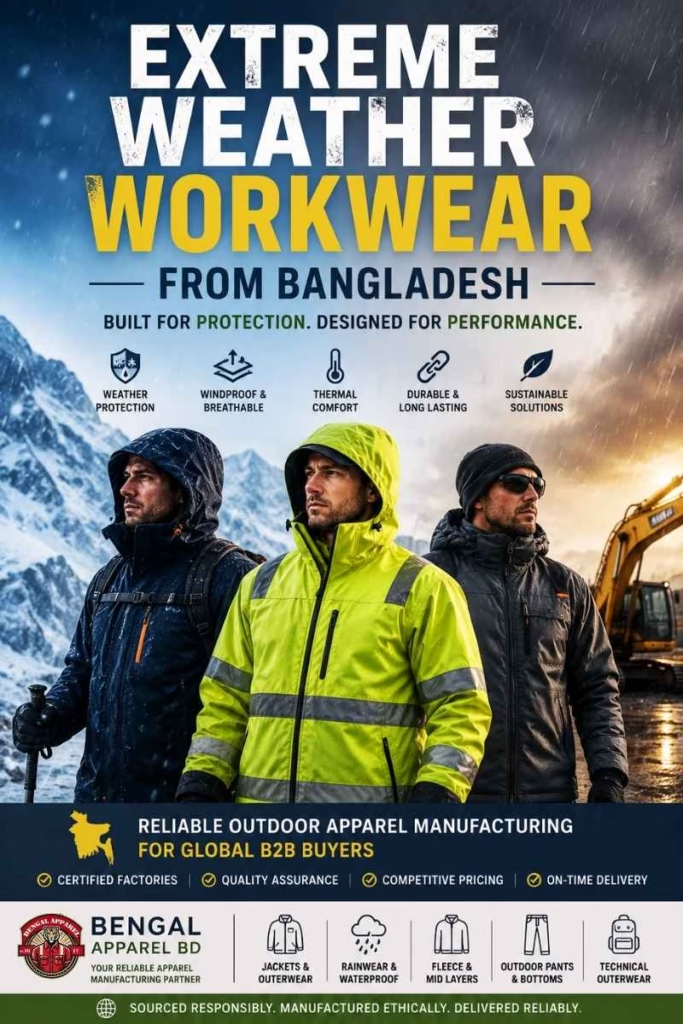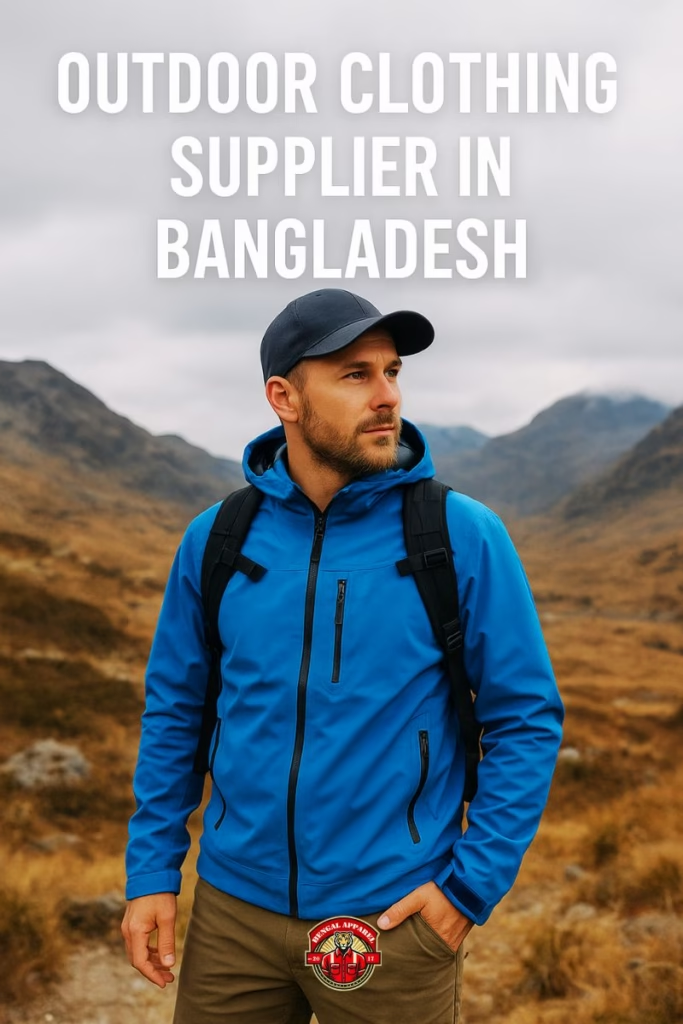
Global importers and private-label brands sourcing outdoor clothing are increasingly consolidating their supply base in Bangladesh. The reasons are practical: competitive production costs, an advancing technical fabric supply chain, certified factory infrastructure, and the ability to handle both small pilot programs and large seasonal runs from a single sourcing relationship.
Choosing the right outdoor clothing supplier in Bangladesh, however, requires more than comparing unit prices. Fabric performance specifications, certification requirements, wash durability, sustainable material options, and export documentation all vary significantly between suppliers. A well-specified program from a compliance-ready partner is a different product from a cheap garment with an outdoor label on it.
This guide is written for B2B buyers in the evaluation stage: importers, distributors, and private-label brands who are assessing Bangladesh as a sourcing destination for outdoor clothing programs and want to understand what to look for, what to ask, and what to verify before committing to a supplier.
Why Bangladesh Is a Credible Outdoor Clothing Supplier Destination
Bangladesh’s reputation in garment manufacturing is built primarily on volume and cost. What is less understood outside the industry is the depth of technical capability that has developed alongside that volume base over the past decade.
Local mills now produce outdoor-specific fabrics including bonded softshell constructions, waterproof PU-coated polyester, recycled polar fleece, ripstop nylon, and moisture-wicking performance blends. These are not imported European fabrics assembled in a Bangladeshi factory. They are locally developed and produced textiles with test documentation from accredited laboratories.
The factory infrastructure supporting outdoor clothing supplier programs in Bangladesh holds a range of social and technical compliance certifications. WRAP, BSCI, SEDEX, OEKO-TEX, RSC, and C-TPAT are the most commonly held across the major production facilities. For B2B buyers building CSDDD-compliant supply chains, RSC monitoring reports and OEKO-TEX documentation provide the independent third-party evidence required for supply chain due diligence.
Bangladesh also holds more LEED-certified green production facilities than any other country. For buyers whose outdoor clothing programs need to meet environmental sourcing criteria, this physical infrastructure supports genuine sustainability claims rather than marketing language.
What Outdoor Clothing Categories Bangladesh Suppliers Produce
A credible outdoor clothing supplier in Bangladesh should be able to demonstrate capability across the following categories. If a supplier only produces one or two of these, they are a specialist rather than a full-range outdoor clothing partner.
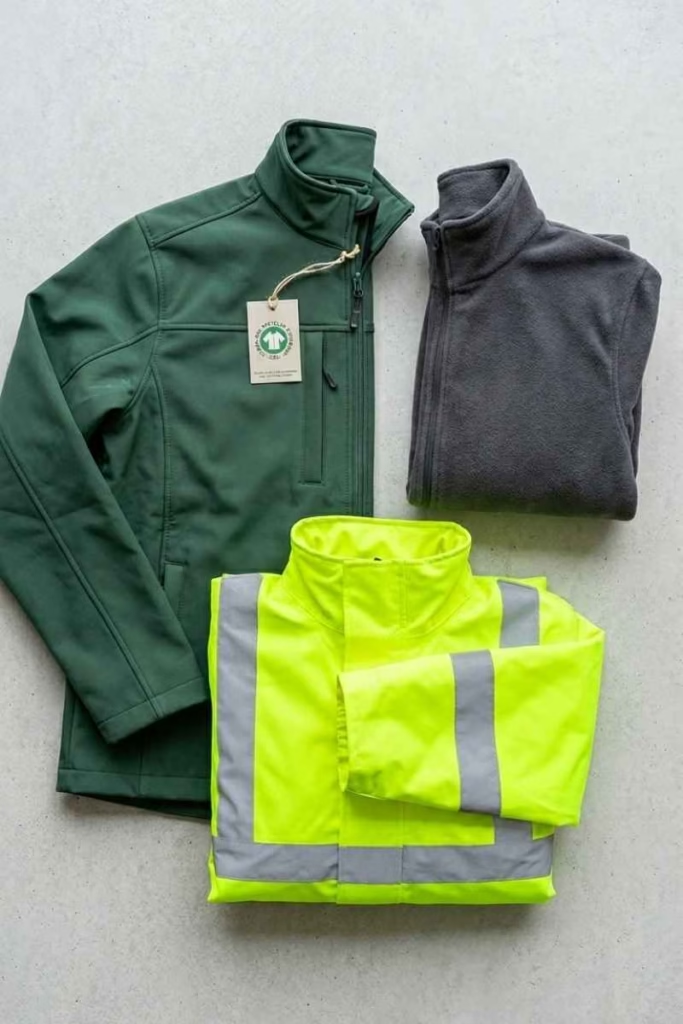
Softshell jackets and gilets are the highest-volume category in most European and North American B2B outdoor programs. Bonded softshell fabric at 280 to 380 GSM with DWR finish is the standard construction. Stretch woven face with bonded fleece or microfleece backing provides wind resistance, light water repellency, and comfort in a single layer without excessive bulk.
Waterproof rainwear ranges from entry-level PU-coated polyester at 1,500mm hydrostatic head for promotional programs to fully taped 3-layer waterproof-breathable constructions at 10,000mm and above for technical field service and outdoor work programs. C6 fluorocarbon-free DWR finishes are now required for most EU programs under REACH restrictions.
Polar fleece and microfleece mid-layers at 180 to 300 GSM. GRS certified recycled polyester fleece is available and performs comparably to virgin equivalents on warmth, pill resistance, and wash durability. For programs requiring recycled content claims, fleece is the most cost-effective entry point into a GRS certified outdoor clothing program.
Insulated jackets and parkas with synthetic hollow fibre fills from 80g/m² to 200g/m² for corporate and workwear programs. Down and down-blend fills for premium retail programs. Shell fabrics in 40 to 70 GSM ripstop polyester with DWR finish.
Performance shirts and base layers in 100% polyester moisture-wicking constructions, poly-cotton blends, and GOTS certified organic cotton options. UPF 50+ ratings available for programs targeting high UV-exposure markets including Australia, the GCC, and southern Europe.
Cargo trousers and convertible shorts in ripstop nylon and stretch poly-cotton, with utility pocket configurations and reinforced knee panels for field service and outdoor work applications.
For the full product range and specifications, visit our outdoor clothing manufacturer Bangladesh page.
Key Questions to Ask an Outdoor Clothing Supplier in Bangladesh
Most of the risk in outdoor clothing sourcing from Bangladesh sits at the specification and documentation stage, not at the production stage. A supplier with good factories but weak documentation is a compliance problem waiting to happen. Here are the questions that separate a reliable outdoor clothing supplier in Bangladesh from one that will cause problems at audit or customs.
Can you provide hydrostatic head and MVTR test reports for the specific waterproof fabric in my order? These are not generic fabric tests. They must cover the specific construction being used in your program. Request the test report before sample approval, not after bulk production.
Is the DWR finish C6 fluorocarbon-free? For programs entering EU markets, REACH compliance requires C6-free DWR. If a supplier cannot confirm this with documentation, the garment may face import restrictions.
If GRS recycled polyester is specified, can you provide both the scope certificate and the transaction certificate for each shipment? The scope certificate covers the facility. The transaction certificate covers your specific order batch. Both are required for a compliant GRS claim. A supplier who provides only the scope certificate is not providing full GRS documentation.
What is your wash durability data for the DWR finish? Budget DWR treatments degrade after 10 to 15 wash cycles. Performance specifications require 25 cycles minimum. Ask for the specific data, not a general claim.
Is your factory RSC monitored and is the inspection report publicly available? RSC inspection reports are verifiable through the RSC public portal. If a supplier’s factory cannot be found there, ask why.
What AQL level is applied at final inspection and who conducts it? AQL 2.5 is standard for most B2B outdoor clothing programs. Third-party inspection by SGS, Intertek, or Bureau Veritas is fully supported. If a supplier only offers self-inspection, that is insufficient for most B2B buyer requirements.
Sustainable Outdoor Clothing Sourcing from Bangladesh
The outdoor clothing market has stronger sustainability expectations from end consumers and procurement teams than most other workwear categories. Buyers sourcing outdoor clothing programs for European retail distribution, corporate gifting, and field service applications increasingly face certification requirements at the tender stage.
Three certification layers matter for B2B outdoor clothing supplier programs from Bangladesh.
GRS certified recycled polyester applies to shell fabrics, fleece, and insulation fills. It is the most accessible sustainable option for outdoor clothing programs and carries a modest cost premium at volume. For programs requiring recycled content claims in marketing materials or tender documentation, GRS transaction certificates per shipment are the required proof.
GOTS certified organic cotton applies to base layers and cotton-blend performance shirts. Full production chain certification from fibre through finishing is required. Certificate numbers are publicly verifiable at global-standard.org.
OEKO-TEX Standard 100 covers chemical safety across every garment component. It is verifiable by certificate number through the OEKO-TEX public database and is a baseline requirement for most European outdoor clothing retail programs.
For a detailed guide to sustainable sourcing from Bangladesh including CSDDD documentation requirements, see our sustainable workwear Bangladesh page.
How to Evaluate an Outdoor Clothing Supplier in Bangladesh: A Checklist
Before placing a bulk outdoor clothing order with any Bangladesh supplier, run through this checklist.
Factory certification: confirm current WRAP, BSCI, or SEDEX certificate and RSC monitoring status. For US programs, confirm C-TPAT certification for customs clearance advantages.
Fabric test documentation: hydrostatic head and MVTR for waterproof constructions, DWR wash durability data, GRS transaction certificates for recycled content claims, OEKO-TEX certificate number verifiable through public database.
Sample development timeline: two to four weeks from technical pack receipt for multi-component outdoor garments is realistic. Shorter claims should be verified before acceptance.
MOQ and scale flexibility: confirm whether the supplier can handle pilot programs at lower MOQ as well as full seasonal runs. A supplier who only works at high volume is not suitable for new product development programs.
Export capability: confirm Incoterms offered, port of loading (standard is FOB Chittagong for Bangladesh), and what documentation is included in the shipment package.
Working with Bengal Apparel BD as Your Outdoor Clothing Supplier in Bangladesh
Bengal Apparel BD manages outdoor clothing production through nine certified partner factories in Dhaka. We are a B2B sourcing company, not a single factory. Each outdoor clothing program is allocated to the facility best suited for that specific garment type and certification requirement.
Our outdoor clothing supplier programs cover the full range of categories above, with GRS, GOTS, and OEKO-TEX certified options available across the range. Full compliance documentation is prepared as a standard export deliverable on every order, not as an optional extra.
For a full overview of our manufacturing capabilities and certified factory network, and to browse the complete outdoor clothing range, visit our outdoor clothing products page.
MOQ: 500 pieces per style for pilot programs Standard MOQ: 3,000 pieces per style Lead time: 75 days from sample approval Incoterms: FOB Chittagong
Frequently Asked Questions
What is the difference between an outdoor clothing manufacturer and an outdoor clothing supplier in Bangladesh?
A manufacturer owns a single production facility. An outdoor clothing supplier in Bangladesh, like Bengal Apparel BD, manages production across multiple certified factories, matching each garment type to the facility best equipped for that product category and compliance requirement. This gives buyers access to a wider range of production capabilities and certifications than a single factory can provide.
What certifications should an outdoor clothing supplier in Bangladesh hold?
Factory social compliance: WRAP, BSCI, SEDEX, or RSC monitoring as a minimum. For US programs: C-TPAT. For material sustainability: GRS for recycled content programs, GOTS for organic cotton, OEKO-TEX Standard 100 for chemical safety. For waterproof constructions: fabric-level hydrostatic head and MVTR test reports from an accredited laboratory.
Can outdoor clothing from Bangladesh meet EU sustainability requirements including CSDDD?
Yes. RSC factory monitoring reports, GRS transaction certificates, OEKO-TEX documentation, and supplier declarations of compliance are all available as standard export deliverables. These documents form the core of a CSDDD-compliant supply chain evidence file for outdoor clothing programs.
What is the MOQ for outdoor clothing programs from Bangladesh?
MOQ from 500 pieces per style for pilot and new product programs. Standard production MOQ is 3,000 pieces per style. Contact us with your volume and specification for a specific recommendation.
How long does sampling take for outdoor clothing programs from Bangladesh?
Two to four weeks from receipt of a complete technical pack for multi-component garments including shell, lining, insulation, and trim specification. Simpler single-layer constructions can be sampled in two weeks.
Is private label outdoor clothing production available?
Yes. Full OEM and private label production, including branded woven labels, hangtags, custom packaging, embroidery, and heat-seal badge application, is supported across all outdoor clothing categories.