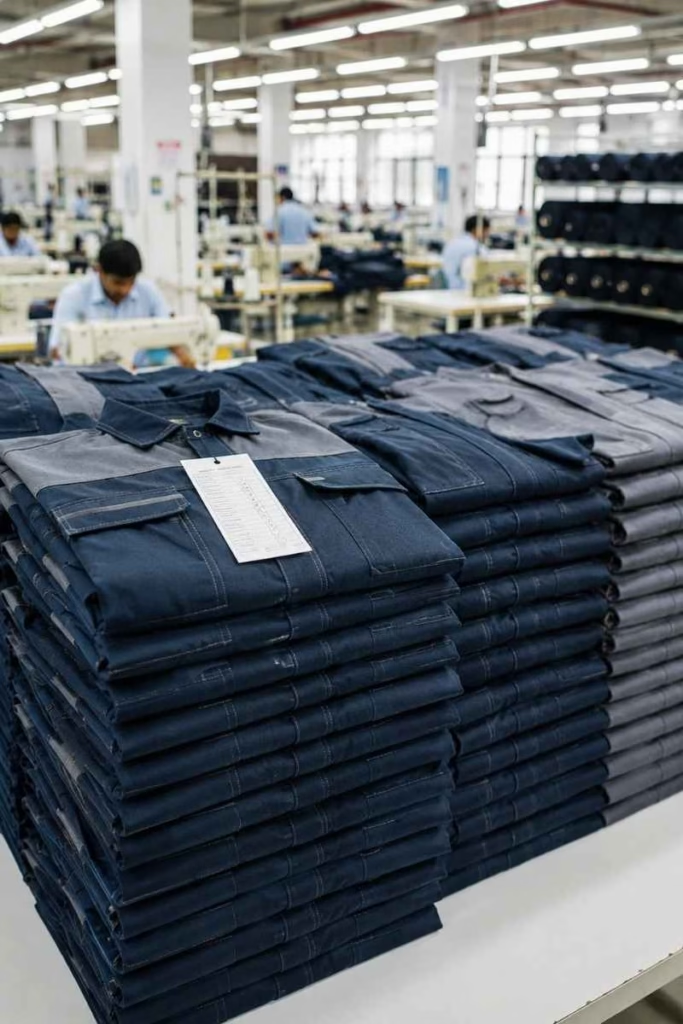
Bulk uniform orders are one of the most cost-effective ways to supply a workforce, but they carry a different set of risks than smaller test purchases. When you are ordering hundreds or thousands of garments in a single run, the decisions you make before production begins determine whether the order delivers the outcome you need or creates a problem you have to absorb at scale.
This guide covers the key decisions involved in placing bulk uniform orders from Bangladesh, including how to plan your specification, manage quality across a large run, control lead time, and build a supplier relationship that supports repeat ordering without starting from scratch each time.
Why Bulk Uniform Orders Require More Specification Detail, Not Less
The most common mistake buyers make with bulk uniform orders is treating them the same way they treat a small purchase. With a small order, a loose specification is manageable. If something is slightly off, the financial exposure is limited. With a bulk order, the same loose specification produces the same variation across every unit in the run.
Fabric GSM left unspecified means the factory selects based on availability or margin. Seam type not called out means the factory uses whatever is standard in their production line. Size grading not checked across the full range means garments at the extremes of your size break fit differently from those in the middle. None of these issues show up in a single sample. All of them show up when 600 garments arrive and a proportion of your workforce cannot wear them correctly.
Bulk uniform orders reward specification discipline. The more precisely you define what you need before production begins, the more consistently you receive it at the end. Our workwear sample approval checklist gives you a structured framework for locking down specification before approving bulk production, covering fabric, construction, fit, and compliance in a single pre-production review.
Step One: Define Your Volume and Size Distribution Before Approaching Suppliers
Before you contact any supplier, you need two numbers: total units and size distribution across those units.
Total units determine which suppliers can actually fulfil your order. Some factories have minimum production runs below which their cost structure does not allow them to price competitively. Others have capacity constraints that affect lead time at certain volumes. Knowing your total quantity up front allows a supplier to give you an accurate price and a realistic delivery timeline rather than a provisional figure that changes once production planning begins.
Size distribution matters because most factories price and plan production based on cut ratios. A bulk uniform order with an unusual size distribution, for example heavily weighted toward larger sizes, may require additional fabric allocation and affects the efficiency of the cutting room. Providing your size breakdown at the inquiry stage rather than at the point of purchase order prevents last-minute adjustments that delay production.
Our MOQ page sets out the minimum order quantities that apply across different product categories at Bengal Apparel BD. For buyers placing their first order or running a new program, it also explains how test orders relate to full bulk runs in terms of pricing and production priority.
Step Two: Specify Fabric Before Specifying Price
Price is the first thing most buyers want to discuss. Fabric specification should come first. The fabric determines most of the garment’s cost, all of its durability, and in the case of protective workwear, its compliance status. Discussing price before agreeing on fabric means you are comparing quotes that may be based on entirely different materials.
For standard industrial workwear bulk orders, specify fiber composition and GSM as a minimum. A 65/35 polyester-cotton blend at 240 GSM is a materially different product from a 100% cotton at 180 GSM, even if both arrive described as “workwear fabric.” The difference shows up in durability, wash performance, and cost per wear over the garment’s working life.
For flame-resistant workwear bulk orders, fabric specification is a compliance requirement. Inherently FR fabrics retain their protective properties through the garment’s full wash life. Treated FR fabrics are cheaper but degrade with repeated washing. Placing a bulk FR order without specifying inherent versus treated is a significant compliance risk, particularly for buyers supplying garments to oil and gas or other regulated environments where EN ISO 11612 or NFPA 2112 certification must be maintained in use.
For hi-vis workwear bulk orders, specify the retroreflective tape grade and the fluorescent background fabric class in line with the EN ISO 20471 requirement for the end market. Tape specification is as important as fabric specification for compliance retention across the garment’s wash cycle.
Step Three: Build Quality Control Into the Order, Not Onto the End of It
Quality control on bulk uniform orders is most effective when it is structured into the production process rather than applied as a final inspection before shipment. A final inspection alone catches problems too late to fix without delaying delivery or accepting substandard goods.
A three-stage quality process works as follows:
Pre-production: Fabric and trim inspection before cutting begins. This confirms that the materials going into production match the approved specification. A fabric batch that arrives at the factory different from the approved swatch should be caught and resolved here, not after 500 garments have been cut from it.
In-line inspection: Checks conducted during production, typically at the cutting and sewing stages. In-line inspection identifies construction issues while there is still time to correct them within the production run rather than after it is complete.
Final inspection: A structured check of finished garments against the approved sample before packing. This covers measurements, construction, branding, labelling, and packaging compliance.
Our ordering process page describes how this quality structure applies across all orders placed through Bengal Apparel BD, including how third-party inspection can be arranged for buyers who require independent verification before shipment.
Step Four: Understand Lead Time Realistically
Lead time on bulk uniform orders is made up of several stages: sample development, sample approval, fabric sourcing and ordering, production, quality inspection, and shipping. Each stage has a duration, and delays at any point extend the total.
The most common cause of lead time overrun is late sample approval. When a buyer delays feedback on a pre-production sample, production cannot begin. A one-week delay in sample approval typically produces a one-week delay in delivery, sometimes more if the factory has filled its production slot with another order in the interim.
Realistic lead times for bulk uniform orders from Bangladesh range from eight to fourteen weeks from order confirmation, depending on product complexity, fabric sourcing requirements, and order volume. For standard cotton-blend workwear at established specifications, eight to ten weeks is achievable. For certified protective workwear requiring specific certified fabrics sourced from approved mills, ten to fourteen weeks is more realistic.
Buyers who plan their procurement calendar around these timelines, rather than working backward from a delivery deadline and compressing the production schedule, consistently have better outcomes. Expedited production is possible but adds cost and increases the risk of quality variation.
For buyers building an annual supply plan, our purchasing guide outlines how to structure your sourcing calendar to align order placement with production capacity and avoid peak-season delays.
Step Five: Plan Re-Orders as Part of the Initial Order
One of the advantages of placing bulk uniform orders through a capable factory is the ability to re-order to the same specification without starting the development process again. This only works if the original order is documented correctly.
The information that needs to be on record for a re-order to reproduce the original accurately includes: fabric mill and batch reference, approved fabric swatch, approved size set measurements, approved sample, trim and hardware specifications including zipper brand and grade, labelling and packaging requirements, and any custom branding details.
A supplier who maintains this documentation and can reference it on re-order is a supplier who can supply consistently over time. A supplier who treats each order as a new development project adds time and cost to every subsequent purchase.
If your uniform program involves annual or seasonal re-orders, discuss documentation and re-order continuity with your supplier before placing the first bulk order. The conversation is straightforward for any supplier who has a managed process. It flags a risk if they cannot answer it clearly.
Why Bangladesh Is Competitive for Bulk Uniform Orders
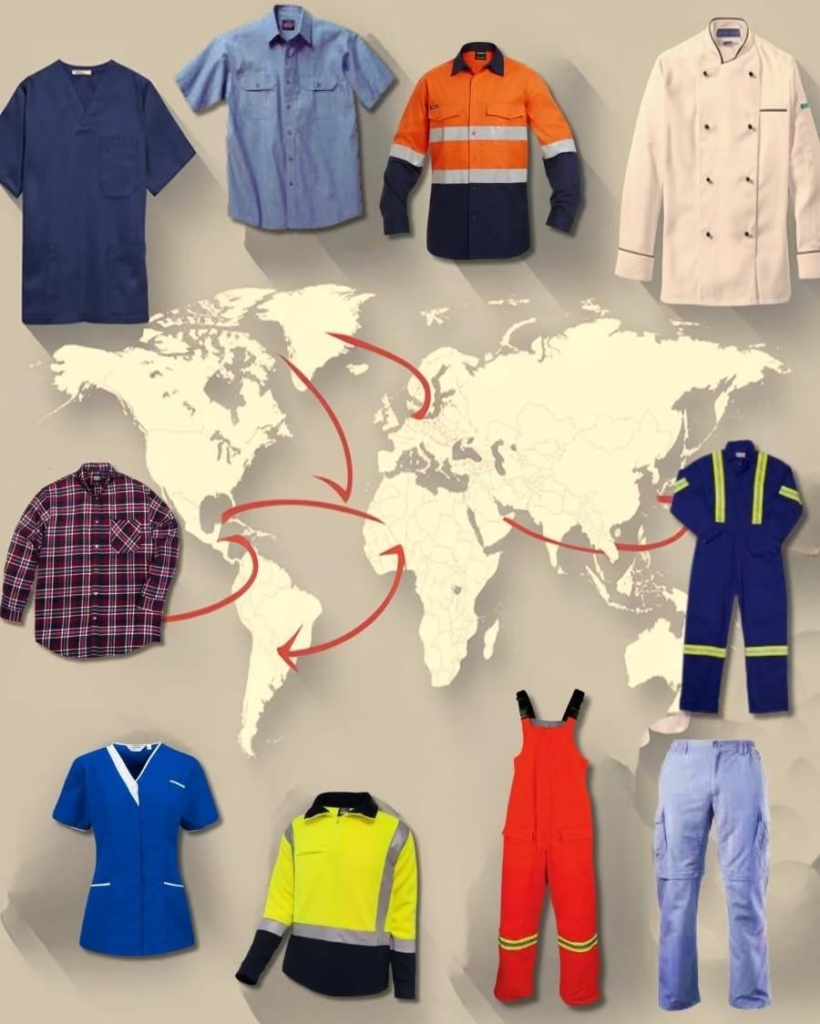
Bangladesh’s garment industry has the production infrastructure, certified factory base, and fabric sourcing network to supply bulk uniform orders across all major workwear categories at competitive pricing. The second-largest garment exporter globally, Bangladesh consistently supplies buyers in the USA, Europe, the Middle East, Australia, and Canada at volume.
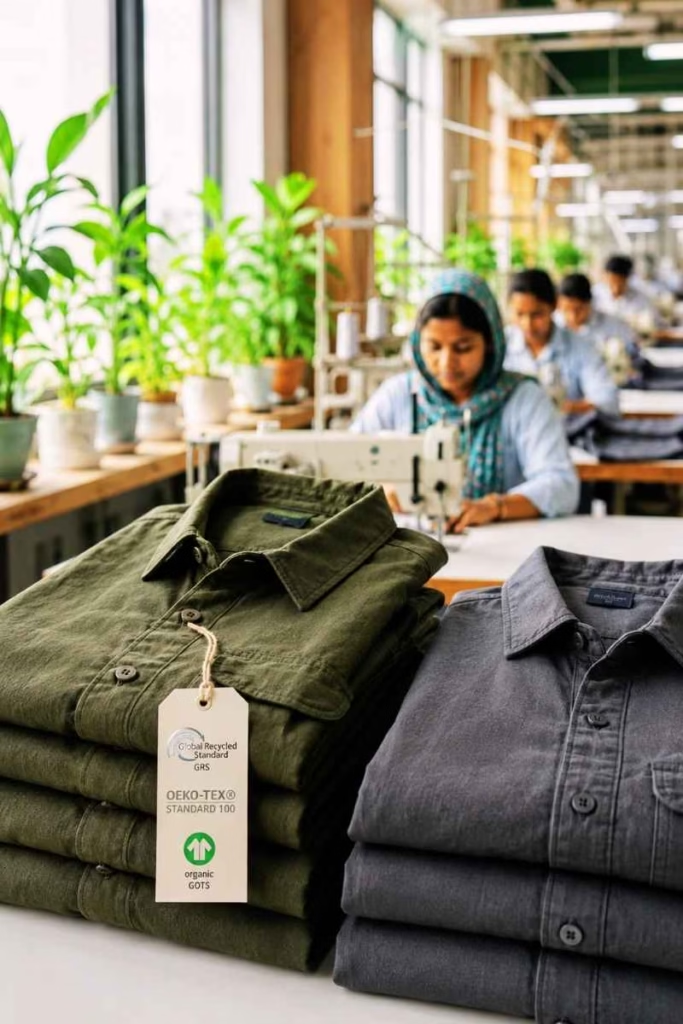
The cost advantage is most pronounced at the fabric and labor levels. Certified mills supplying EN-standard FR fabrics, OEKO-TEX certified cotton blends, and performance polyesters are accessible through established factory networks in Bangladesh, at pricing that reflects production volume rather than European or North American retail margins.
For buyers sourcing certified workwear, the compliance documentation available from certified Bangladesh factories, including EN test reports, factory audit certificates, and fabric certification records, meets the import requirements of all major regulated markets. Our compliance and certifications page outlines the certifications held across our partner factory network and the documentation available for each product category.
The International Trade Centre maintains updated guidance on Bangladesh’s position in global textiles and apparel trade, which is a useful reference for buyers building a sourcing case for their procurement teams.
Common Mistakes to Avoid in Bulk Uniform Orders
Approving a sample without checking the full size range. A garment that fits correctly at size M may not fit correctly at size XXL. Always request a fit check across at least three size points before approving bulk production.
Accepting a verbal lead time without building in approval time. Lead time quoted by suppliers typically starts from order confirmation. The time required to approve a pre-production sample is additional. Factor both into your delivery planning.
Not specifying country of origin documentation requirements upfront. Buyers importing into the EU, USA, or other regulated markets may need specific documentation for customs clearance. Raise documentation requirements at the inquiry stage, not at the point of shipment.
Switching suppliers between re-orders to save small amounts on unit price. The cost of re-developing specification, approving new samples, and absorbing the variation risk of a new factory almost always exceeds the saving on unit price for buyers placing regular volume orders.
Summary
Bulk uniform orders from Bangladesh deliver cost, compliance, and consistency when they are planned and specified correctly. The buyers who get the best results define their fabric and construction requirements before discussing price, build quality control into the production process rather than onto the end of it, plan their sourcing calendar around realistic lead times, and document their specification for re-order continuity.
If you are planning a bulk uniform order and want to confirm whether your specification is correctly structured for production, contact our team directly. We will review your requirements and provide a clear, specific response before any commitment is made.