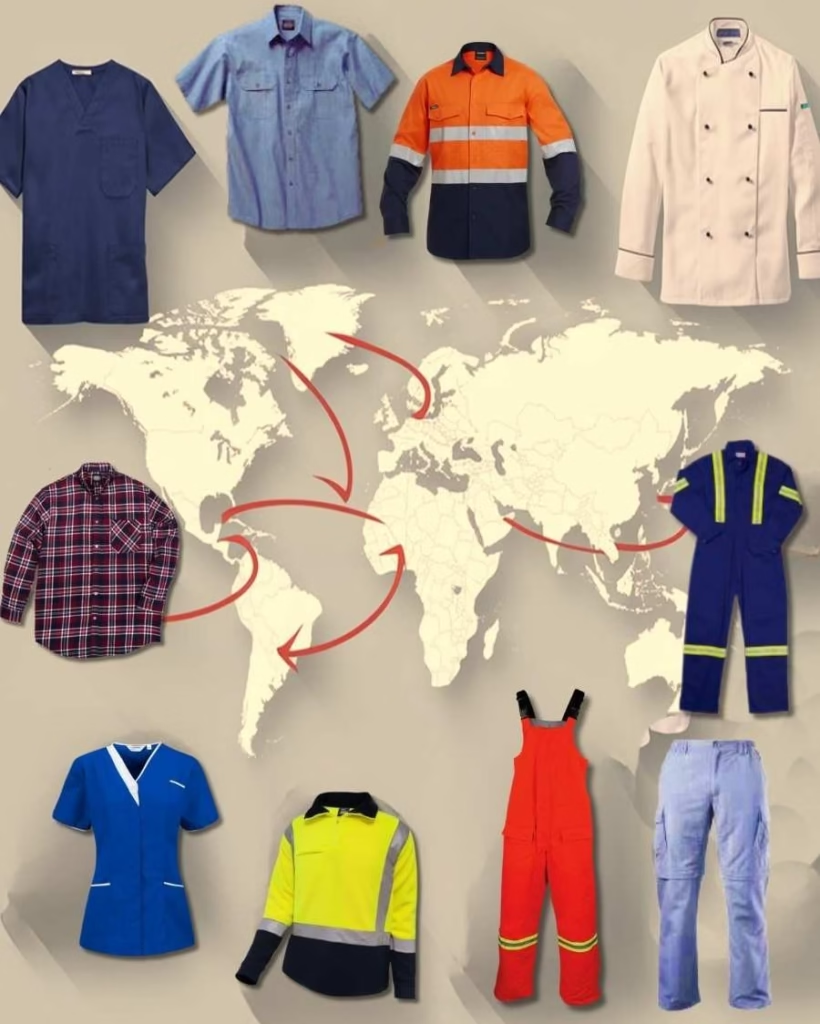
Workwear manufacturing technology has changed significantly over the past decade, and those changes have a direct impact on what you receive as a buyer. When you place a bulk order, you are not just buying a finished garment. You are buying the output of a production system, and that system determines whether your order arrives on spec, on time, and at a cost that works for your business.
This guide explains the main technologies now used in workwear production and what each one means for you in terms of quality consistency, customization, lead time, and long-term cost.
Why Workwear Manufacturing Technology Matters to B2B Buyers
Most importers and procurement managers evaluate suppliers on price and certifications. Those are the right starting points. But two suppliers can quote the same price and hold the same certificates while delivering very different results. The difference often comes down to what happens on the production floor.
Workwear manufacturing technology is what separates consistent, compliant output from variable results. Automated systems produce more consistent output than manual processes. Digital printing holds color better across large runs. Precise cutting reduces the material waste that quietly inflates unit costs. Understanding these differences helps you ask better questions during supplier evaluation and avoid problems after the order is placed.
If you are early in the supplier selection process, our guide on how to source workwear from Bangladesh covers the full process from factory verification to shipment.
Automated Cutting: The Baseline for Consistent Sizing
Manual fabric cutting depends entirely on the skill and attention of the operator. On a run of 500 units, small variations accumulate. By the time you reach the end of a production batch, garments can differ in ways that are not visible in a single-unit inspection but show up clearly when workers actually wear them.
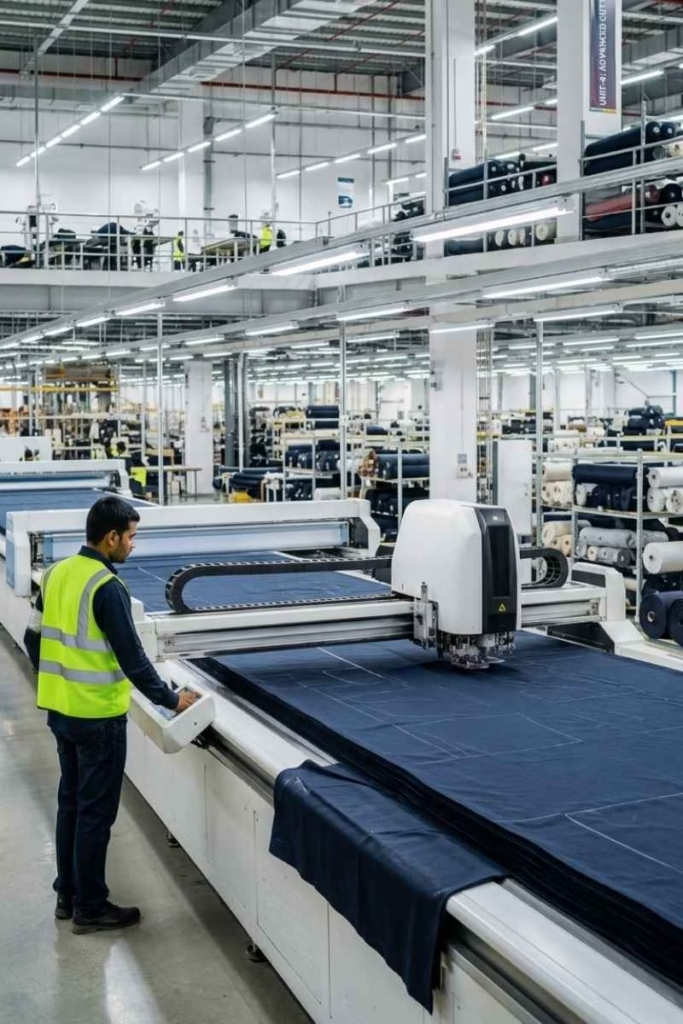
Computer-controlled cutting machines solve this. The cutting path is programmed from a digital pattern, so every piece in every size is cut to exactly the same dimensions. The system also nests patterns tightly across the fabric roll, which reduces offcut waste and keeps material costs down.
For buyers ordering industrial workwear or FR coveralls at volume, automated cutting means your size range is consistent from the first unit to the last. It also makes it easier to approve a pre-production sample with confidence, because the bulk production will replicate the sample rather than approximate it.
When reviewing a supplier’s capabilities, ask directly whether they use computer-aided cutting (CAD/CAM) or manual cutting. The answer tells you a lot about the consistency you can expect.
Digital Fabric Printing: Consistent Color Across Large Runs
Traditional screen printing requires a separate screen for each color and each design change. Setup takes time, minimum order quantities are higher, and re-orders can produce slight color variations if the screens are remade.
Digital fabric printing works differently. The design is printed directly from a digital file, which means there are no screens to prepare and no minimum run tied to setup costs. Color is controlled precisely at source, so a hi-vis yellow printed in January will match a re-order placed in October.
For buyers sourcing branded workwear or uniforms with specific corporate color requirements, this matters. Inconsistent color across a fleet of garments creates a visible quality problem that reflects on the buyer, not the factory.
Digital printing also supports shorter lead times on smaller supplemental orders, which is useful when you need to top up stock between major seasonal orders.
Welded and Taped Seam Technology: Relevant for Protective Workwear
For standard workwear, sewn seams are sufficient. For protective garments, particularly multi-norm workwear and oil and gas FR coveralls, seam construction is a compliance issue, not just a quality issue.
Taped seams use a heat-bonded barrier over the stitch line to prevent liquid penetration. Welded seams go further, fusing panels without stitching at all, which eliminates needle punctures entirely. This is where workwear manufacturing technology directly affects certification validity, not just production efficiency. Both techniques require specialized equipment and trained operators, and not every factory has them.
If you are sourcing garments certified to EN 14116, EN ISO 11612, or EN 343, the seam treatment specified in the standard is part of the certification. A factory producing garments to these standards without the correct seam technology is not actually producing compliant garments, regardless of what the label says.
This is one reason why reviewing a factory’s actual equipment list during supplier qualification matters, not just their certificate folder. Our protective clothing certifications page explains what the key EN standards require in practical terms.
Rapid Prototyping and Pre-Production Samples
Before bulk production begins, most B2B buyers require a pre-production sample. How quickly a factory can produce that sample and how accurately it reflects the final bulk depends heavily on their development process.
Factories that use digital pattern-making and 3D fit simulation can produce a sample faster and with fewer revision cycles than those working from hand-cut paper patterns. The digital pattern becomes the production file, so there is no manual translation step where errors can creep in.
For buyers with complex technical specifications — for example, Nomex Kevlar coveralls with specific pocket configurations or reflective tape placement — this reduces the time between spec submission and approved sample, which directly shortens overall lead time.
Once you have a sample in hand, a thorough inspection before approving bulk production is essential. Our workwear sample approval checklist covers exactly what to check, from fabric GSM and seam strength to FR tape application and label compliance.
Sustainability and Material Efficiency: Now a Procurement Requirement
Environmental compliance is no longer a background consideration for most buyers in the EU, USA, and Australia. Procurement policies increasingly require suppliers to demonstrate reduced waste and responsible material sourcing.
Automated cutting systems reduce fabric waste by optimizing the layout of all pattern pieces before any cutting begins. This is measurable and auditable. Digital printing reduces water and chemical use compared to wet-process dyeing. Both contribute to lower environmental impact per unit, which your procurement team can document. Workwear manufacturing technology, in this context, is not just a production concern but a compliance documentation tool.
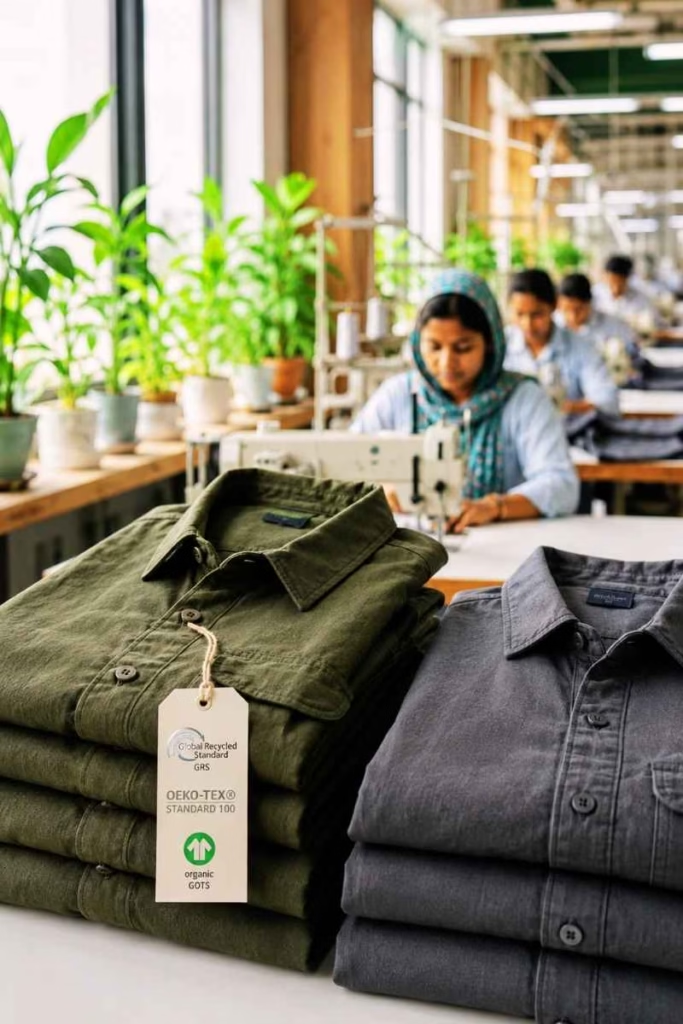
For buyers sourcing OEKO-TEX certified workwear fabrics, knowing that your supplier’s production process supports those fabric properties rather than compromising them through harsh finishing steps matters for your end compliance reporting.
For a broader view of responsible material selection, the OEKO-TEX Association’s standard overview is a useful external reference for understanding what certification at the fabric level actually covers.
What This Means When Evaluating a Supplier
Technology alone does not make a good supplier. A factory can have modern equipment and still miss delivery dates or produce inconsistent quality if its production management is weak. But the absence of basic production technology is a clear risk indicator.
When you are comparing suppliers, consider asking these questions:
On cutting: Do you use CAD/CAM automated cutting, or manual cutting? What is your cutting room capacity per day?
On printing: What printing methods do you use for fabric decoration? Can you hold color consistency across re-orders placed months apart?
On seam technology: For the specific standards I am sourcing to, what seam construction do you use? Do you have taped or welded seam capability in-house?
On sampling: What is your typical timeline from approved tech pack to pre-production sample? Do you use digital pattern-making?
On traceability: Can you provide material batch records that connect the certified fabric to the finished garment?
A supplier who can answer these questions clearly and specifically is a supplier who understands their own process. One who cannot is a risk.
A Note on Bangladesh's Production Capability
Bangladesh is the second-largest garment exporter in the world, and its workwear sector has invested heavily in production technology over the past decade. Many certified factories producing to European PPE standards operate automated cutting rooms, digital printing lines, and in-house testing equipment.
This matters for buyers who associate “low-cost sourcing” with “low-tech production.” The correlation does not hold for established workwear manufacturers. Cost advantage in Bangladesh comes from labor and infrastructure, not from cutting corners on equipment.
Our manufacturing capabilities page outlines the production systems and certifications at Bengal Apparel BD’s partner factories in detail.
Summary
Workwear manufacturing technology is not a secondary detail when evaluating a supplier. It determines whether your order will be consistent, compliant, and repeatable at scale. Automated cutting supports size consistency. Digital printing supports color accuracy. Seam welding and taping support protective performance. Digital pattern-making shortens development time.
For B2B buyers placing regular volume orders, these are not premium features. They are the baseline requirements for a supplier relationship that works over time.
If you are sourcing protective or branded workwear and want to understand whether your current or prospective supplier has the right production capability for your specification, contact our team directly. We will assess your requirement and confirm whether it is within our certified production scope before any commitment is made.